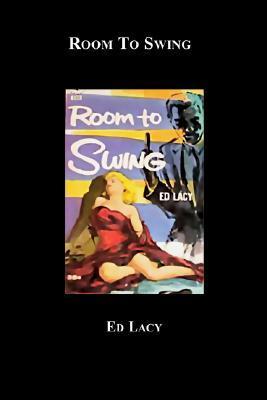
1958 Edgar Award Winner. First appearance of Toussaint Moore, a black private investigator from New York, framed in his own city for a white man’s murder. Moore ends up in a small Ohio town, close to the Kentucky border, trying to prove his own innocence and dealing the attitudes of the time. Fascinating novel, written by Lacy (Len Zinberg), a politically active author from the ’30s whose knowledge of the culture is derived from his marriage to an African-American woman. Toussaint “Touie” Moore is considered the first credible black detective.
From trailblazing novelist Walter Mosley: a former NYPD cop once imprisoned for a crime he did not commit must solve two cases: that of a man wrongly condemned to die, and his own.
Joe King Oliver was one of the NYPD's finest investigators, until, dispatched to arrest a well-heeled car thief, he is framed for assault by his enemies within the NYPD, a charge which lands him in solitary at Rikers Island.
A decade later, King is a private detective, running his agency with the help of his teenage daughter, Aja-Denise. Broken by the brutality he suffered and committed in equal measure while behind bars, his work and his daughter are the only light in his solitary life. When he receives a card in the mail from the woman who admits she was paid to frame him those years ago, King realizes that he has no choice but to take his own case: figuring out who on the force wanted him disposed of--and why.
Running in parallel with King's own quest for justice is the case of a Black radical journalist accused of killing two on-duty police officers who had been abusing their badges to traffic in drugs and women within the city's poorest neighborhoods.
Joined by Melquarth Frost, a brilliant sociopath, our hero must beat dirty cops and dirtier bankers, craven lawyers, and above all keep his daughter far from the underworld in which he works. All the while, two lives hang in the balance: King's client's, and King's own.
Forty-four years after the fact, James Willop heads for South Carolina to determine if his uncle, fourteen in 1944, committed the murder of two small white girls for which he was executed
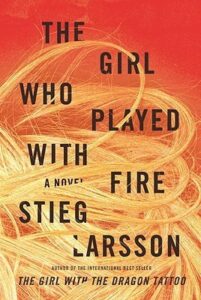
The Expose Millenium publisher Mikael Blomkvist has made his reputation exposing corrupt establishment figures. So when a young journalist approaches him with an investigation into sex trafficking, Blomkvist cannot resist waging war on the powerful figures who control this lucrative industry.
The Murder When a young couple is found dead in their Stockholm apartment, it's a straightforward job for Inspector Bublanski and his team. The killer left the weapon at the scene - and the fingerprints on the gun point in only one direction.
The Girl Who Played with Fire Ex-security analyst Lisbeth Salander is wanted for murder. Her history of unpredictable and vengeful behaviour makes her an official danger to society - but no-one can find her. The only way Salander can be reached is by computer. But she can break into almost any network she chooses...
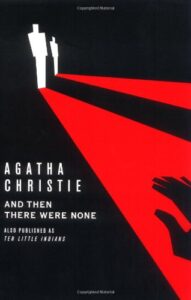
First, there were ten—a curious assortment of strangers summoned as weekend guests to a little private island off the coast of Devon. Their host, an eccentric millionaire unknown to all of them, is nowhere to be found. All that the guests have in common is a wicked past they're unwilling to reveal—and a secret that will seal their fate. For each has been marked for murder. A famous nursery rhyme is framed and hung in every room of the mansion:
"Ten little boys went out to dine; One choked his little self and then there were nine. Nine little boys sat up very late; One overslept himself and then there were eight. Eight little boys traveling in Devon; One said he'd stay there then there were seven. Seven little boys chopping up sticks; One chopped himself in half and then there were six. Six little boys playing with a hive; A bumblebee stung one and then there were five. Five little boys going in for law; One got in Chancery and then there were four. Four little boys going out to sea; A red herring swallowed one and then there were three. Three little boys walking in the zoo; A big bear hugged one and then there were two. Two little boys sitting in the sun; One got frizzled up and then there was one. One little boy left all alone; He went out and hanged himself and then there were none."
When they realize that murders are occurring as described in the rhyme, terror mounts. One by one they fall prey. Before the weekend is out, there will be none. Who has choreographed this dastardly scheme? And who will be left to tell the tale? Only the dead are above suspicion.
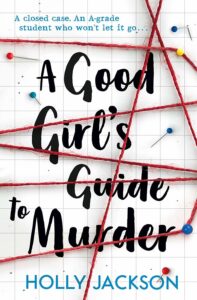
Pretty and popular high school senior Andie Bell was murdered by her boyfriend, Sal Singh, who then killed himself. It was all anyone could talk about. And five years later, Pip sees how the tragedy still haunts her town.
But she can't shake the feeling that there was more to what happened that day. She knew Sal when she was a child, and he was always so kind to her. How could he possibly have been a killer?
Now a senior herself, Pip decides to reexamine the closed case for her final project, at first just to cast doubt on the original investigation. But soon she discovers a trail of dark secrets that might actually prove Sal innocent . . . and the line between past and present begins to blur. Someone in Fairview doesn't want Pip digging around for answers, and now her own life might be in danger.
Award-winning author Richard Price here offers a viscerally affecting and accomplished portrait of inner-city America.
Veteran homicide detective Rocco Klein's passion for the job gave way long ago. His beat is a rough New Jersey neighborhood where the drug murders blur together, until the day Victor Dunham — a twenty-year-old with a steady job and a clean record — confesses to a shooting outside a fast-food joint. It doesn't take long for Rocco's attention to turn to Victor's brother, a street-corner crack dealer named Strike who seems a more likely suspect for the crime.
At once an intense mystery, and a revealing study of two men on opposite sides of an unwinnable war, Clockers is a stunningly well-rendered chronicle of modern life on the streets.
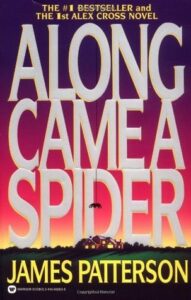
What have we got? A missing little girl named Maggie Rose... a family of three brutally murdered in the projects of Washington, D.C.... the thrill-killing of a beautiful elementary school teacher... a psychopathic serial kidnapper/murderer who is so terrifying that the FBI, the Secret Service, and the police cannot outsmart him - even after he's been captured.
Gary Soneji wants to commit the crime of the century. Alex Cross is the brilliant homicide detective pitted against him. Jezzie Flanagan is the first female supervisor of the Secret Service. They complete one of the most unusual suspense triangles in any thriller you have ever read.
Alex and Jezzie are about to have a forbidden love affair—at the worst possible time for both of them. Because Gary Soneji is playing at the top of his game. The latest of the unspeakable crimes happens in Alex Cross's precinct and it happens under the nose of Jezzie and her men.
Alex faces the ultimate test: how do you outmaneuver a brilliant psychopath?
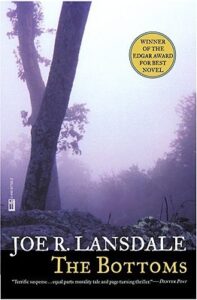
The narrator of The Bottoms is Harry Collins, an old man obsessively reflecting on certain key experiences of his childhood. In 1933, the year that forms the centerpiece of the narrative, Harry is 11 years old and living with his mother, father, and younger sister on a farm outside of Marvel Creek, Texas, near the Sabine River bottoms. Harry's world changes forever when he discovers the corpse of a young black woman tied to a tree in the forest near his home. The woman, who is eventually identified as a local prostitute, has been murdered, molested, and sexually mutilated. She is also, as Harry will soon discover, the first in a series of similar corpses, all of them the victims of a new, unprecedented sort of monster: a traveling serial killer.
From his privileged position as the son of constable (and farmer and part-time barber) Jacob Collins, Harry watches as the distinctly amateur investigation unfolds. As more bodies -- not all of them "colored" -- surface, the mood of the local residents darkens. Racial tensions -- never far from the surface, even in the best of times -- gradually kindle. When circumstantial evidence implicates an ancient, innocent black man named Mose, the Ku Klux Klan mobilizes, initiating a chilling, graphically described lynching that will occupy a permanent place in Harry Collins's memories. With Mose dead and the threat to local white women presumably put to rest, the residents of Marvel Creek resume their normal lives, only to find that the actual killer remains at large and continues to threaten the safety and stability of the town.
Lansdale uses this protracted murder investigation to open up a window on an insular, poverty-stricken, racially divided community. With humor, precision, and great narrative economy, he evokes the society of Marvel Creek in all its alternating tawdriness and nobility, offering us a varied, absolutely convincing portrait of a world that has receded into history. At the same time, he offers us a richly detailed re-creation of the vibrant, dangerous physical landscapes that were part of that world and have since been buried under the concrete and cement of the industrialized juggernaut of the late 20th century. In Lansdale's hands, the gritty realities of Depression-era Texas are as authentic -- and memorable -- as anything in recent American fiction.
Welcome Back!
Track your reading progress and sync your library.