Suicide or murder? Newly arrived in Papua, where even the luscious vegetation seems to conspire with the bureaucrats to bewilder her, Stella Warwick is determined to prove her husband did not take his own life. Defying the patronising concern of officials, she ventures deep into the jungle, striding ever closer to the horrifying heart of the mystery
Helen Eustis’s The Horizontal Man (1946) won an Edgar Award for best first novel and continues to fascinate as a singular mixture of detection, satire, and psychological portraiture. A poet on the faculty of an Ivy League school (modeled on Eustis’s alma mater, Smith College) is found murdered, setting off ripple effects of anxiety, suspicion, and panic in the hothouse atmosphere of an English department rife with talk of Freud and Kafka.
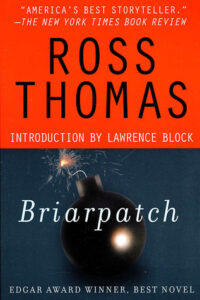
A long-distance call from a Texas city on his birthday gives Benjamin Dill the news that his sister—it's her birthday, too, they were born exactly ten years apart—has died in a car bomb explosion. It's the chief of police calling—Felicity Dill worked for him; she was a homicide detective. Dill is there that night, the beginning of his dogged search for her killer. What he finds is no surprise to him, because Benjamin Dill is never surprised at what awful things people will do—but it's a real surprise to the reader. As Newsday said when the novel was first published, "One sure thing about Ross Thomas's novels: A reader won't get bored waiting for the action to start."
A small town hides big secrets in this atmospheric, page-turning debut mystery by award-winning author Jane Harper.
In the grip of the worst drought in a century, the farming community of Kiewarra is facing life and death choices daily when three members of a local family are found brutally slain.
Federal Police investigator Aaron Falk reluctantly returns to his hometown for the funeral of his childhood friend, loath to face the townsfolk who turned their backs on him twenty years earlier.
But as questions mount, Falk is forced to probe deeper into the deaths of the Hadler family. Because Falk and Luke Hadler shared a secret. A secret Falk thought was long buried. A secret Luke's death now threatens to bring to the surface in this small Australian town, as old wounds bleed into new ones.
On an urban battleground dangerously divided along racial lines, probation officer Steve Baum is desperately struggling to hold on to the last remaining shreds of his idealism - until Darryl King invades his world. A deranged young sociopath, one of the most bloodthirsty creations of a diseased society, Darryl has come to drag Baum along with him into an inescapable morass of terror and corruption. And as their ravaged city explodes, they will stand face-to-face - mortal enemies trapped together in the heart of a devastating inferno that threatens to consume them both.
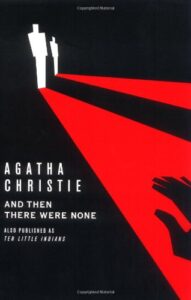
First, there were ten—a curious assortment of strangers summoned as weekend guests to a little private island off the coast of Devon. Their host, an eccentric millionaire unknown to all of them, is nowhere to be found. All that the guests have in common is a wicked past they're unwilling to reveal—and a secret that will seal their fate. For each has been marked for murder. A famous nursery rhyme is framed and hung in every room of the mansion:
"Ten little boys went out to dine; One choked his little self and then there were nine. Nine little boys sat up very late; One overslept himself and then there were eight. Eight little boys traveling in Devon; One said he'd stay there then there were seven. Seven little boys chopping up sticks; One chopped himself in half and then there were six. Six little boys playing with a hive; A bumblebee stung one and then there were five. Five little boys going in for law; One got in Chancery and then there were four. Four little boys going out to sea; A red herring swallowed one and then there were three. Three little boys walking in the zoo; A big bear hugged one and then there were two. Two little boys sitting in the sun; One got frizzled up and then there was one. One little boy left all alone; He went out and hanged himself and then there were none."
When they realize that murders are occurring as described in the rhyme, terror mounts. One by one they fall prey. Before the weekend is out, there will be none. Who has choreographed this dastardly scheme? And who will be left to tell the tale? Only the dead are above suspicion.
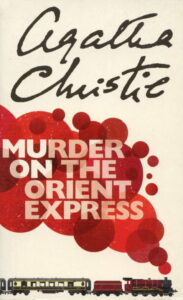
Just after midnight, a snowdrift stops the famous Orient Express in its tracks as it travels through the mountainous Balkans. The luxurious train is surprisingly full for the time of the year but, by the morning, it is one passenger fewer. An American tycoon lies dead in his compartment, stabbed a dozen times, his door locked from the inside.
One of the passengers is none other than detective Hercule Poirot. On vacation.
Isolated and with a killer on board, Poirot must identify the murderer—in case he or she decides to strike again.
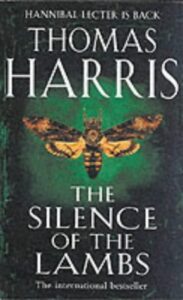
A serial murderer known only by a grotesquely apt nickname—Buffalo Bill—is stalking women. He has a purpose, but no one can fathom it, for the bodies are discovered in different states. Clarice Starling, a young trainee at the FBI Academy, is surprised to be summoned by Jack Crawford, chief of the Bureau's Behavioral Science section. Her assignment: to interview Dr. Hannibal Lecter—Hannibal the Cannibal—who is kept under close watch in the Baltimore State Hospital for the Criminally Insane.
Dr. Lecter is a former psychiatrist with a grisly history, unusual tastes, and an intense curiosity about the darker corners of the mind. His intimate understanding of the killer and of Clarice herself form the core of "The Silence of the Lambs"—an ingenious, masterfully written book and an unforgettable classic of suspense fiction.
It was an open and shut case. All the evidence said Caroline Crale poisoned her philandering husband, a brilliant painter. She was quickly and easily convicted and sentenced to life in prison. Now, sixteen years later, in a posthumous letter, Mrs. Crale has assured her grown daughter that she was innocent. But instead of setting the young woman's mind at ease, the letter only raises disquieting questions. Did Caroline indeed write the truth? And if she didn't kill her husband, who did?
To find out, the Crale’s daughter asks Hercule Poirot to reopen the case. His investigation takes him deep into the conflicting memories and motivations of the five other people who were with the Crales on the fatal day. With his keen understanding of human psychology, he manages to discover the surprising truth behind the artist's death.
Welcome Back!
Track your reading progress and sync your library.