Arcadia takes us back and forth between the nineteenth and twentieth centuries, ranging over the nature of truth and time, the difference between the Classical and the Romantic temperament, and the disruptive influence of sex on our orbits in life. Focusing on the mysteries--romantic, scientific, literary--that engage the minds and hearts of characters whose passions and lives intersect across scientific planes and centuries, it is "Stoppard's richest, most ravishing comedy to date, a play of wit, intellect, language, brio and... emotion. It's like a dream of levitation: you're instantaneously aloft, soaring, banking, doing loop-the-loops and then, when you think you're about to plummet to earth, swooping to a gentle touchdown of not easily described sweetness and sorrow... Exhilarating" (Vincent Canby, The New York Times).
"Twelve times a week," answered Uta Hagen when asked how often she'd like to play Martha in Who's Afraid of Virginia Woolf? In the same way, audiences and critics alike could not get enough of Edward Albee's masterful play. A dark comedy, it portrays husband and wife George and Martha in a searing night of dangerous fun and games. By the evening's end, a stunning, almost unbearable revelation provides a climax that has shocked audiences for years. With the play's razor-sharp dialogue and the stripping away of social pretense, Newsweek rightly foresaw Who's Afraid of Virginia Woolf? as "a brilliantly original work of art--an excoriating theatrical experience, surging with shocks of recognition and dramatic fire [that] will be igniting Broadway for some time to come."
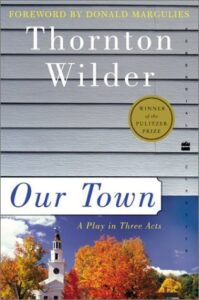
Our Town was first produced and published in 1938 to wide acclaim. This Pulitzer Prize-winning drama of life in the small village of Grover's Corners, an allegorical representation of all life, has become a classic. It is Thornton Wilder's most renowned and most frequently performed play.
Love and wit conquer all in Shakespeare's sparkling comedy of self-delusion and disguise.
Padua holds many suitors for the hand of fair Bianca, but Bianca may not be married until her spinster sister, Kate, is wed. Could any man be rash enough to take on Kate?
The witty adventurer Petruchio undertakes the task. While he sets about transforming Kate from foul-tempered termagant to loving wife, young Lucentio and his clever servant, Tranio, plot to win Bianca.
Frances Barber and Roger Allam are Kate and Petruchio. Lucentio is played by Alan Cox.
One of George Bernard Shaw's best-known plays, Pygmalion was a rousing success on the London and New York stages, an entertaining motion picture and a great hit with its musical version, My Fair Lady. An updated and considerably revised version of the ancient Greek legend of Pygmalion and Galatea, the 20th-century story pokes fun at the antiquated British class system.
In Shaw's clever adaptation, Professor Henry Higgins, a linguistic expert, takes on a bet that he can transform an awkward cockney flower seller into a refined young lady simply by polishing her manners and changing the way she speaks. In the process of convincing society that his creation is a mysterious royal figure, the Professor also falls in love with his elegant handiwork.
The irresistible theme of the emerging butterfly, together with Shaw's brilliant dialogue and splendid skills as a playwright, have made Pygmalion one of the most popular comedies in the English language. A staple of college drama courses, it is still widely performed.
A Doll's House (1879), is a masterpiece of theatrical craft which, for the first time portrayed the tragic hypocrisy of Victorian middle class marriage on the stage. The play ushered in a new social era and "exploded like a bomb into contemporary life".
The Student Edition contains these exclusive features:
· A chronology of the playwright's life and work
· An introduction giving the background of the play
· Commentary on themes, characters. language and style
· Notes on individual words and phrases in the text
· Questions for further study
· Bibliography for further reading.
'For a salesman, there is no rock bottom to life. He don't put a bolt to a nut, he don't tell you the law or give you medicine. He's a man way out there in the blue, riding on a smile and a shoeshine.'
Willy Loman has been a salesman for 34 years. At 60, he is cast aside, his usefulness now exhausted. With no future to dream about he must face the crushing disappointments of his past. He takes one final brave action, but is he heroic at last?, or a self-deluding fool?
No play in the modern theater has so captured the imagination and heart of the American public as Tennessee Williams's The Glass Menagerie. As Williams's first popular success, it launched the brilliant, if somewhat controversial, career, of our pre-eminent lyric playwright. Since its premiere in Chicago in 1944, with the legendary Laurette Taylor in the role of Amanda, Menagaerie has been the bravura piece for great actresses from Jessica Tandy to Joanne Woodward, and is studied and performed in classrooms and theatres around the world.
The Glass Menagerie (in the reading text the author preferred) is now available only in its New Directions Paperbook edition. A new introduction by the editor of The Tennessee Williams Annual Review, Robert Bray, reappraises the play more than half a century after it won the New York Drama Critics Circle Award. This edition of The Glass Menagerie also includes Williams's essay on the impact of sudden fame on a struggling writer, "The Catastrophe of Success," as well as a short section of Williams's own "Production Notes."
(back cover)