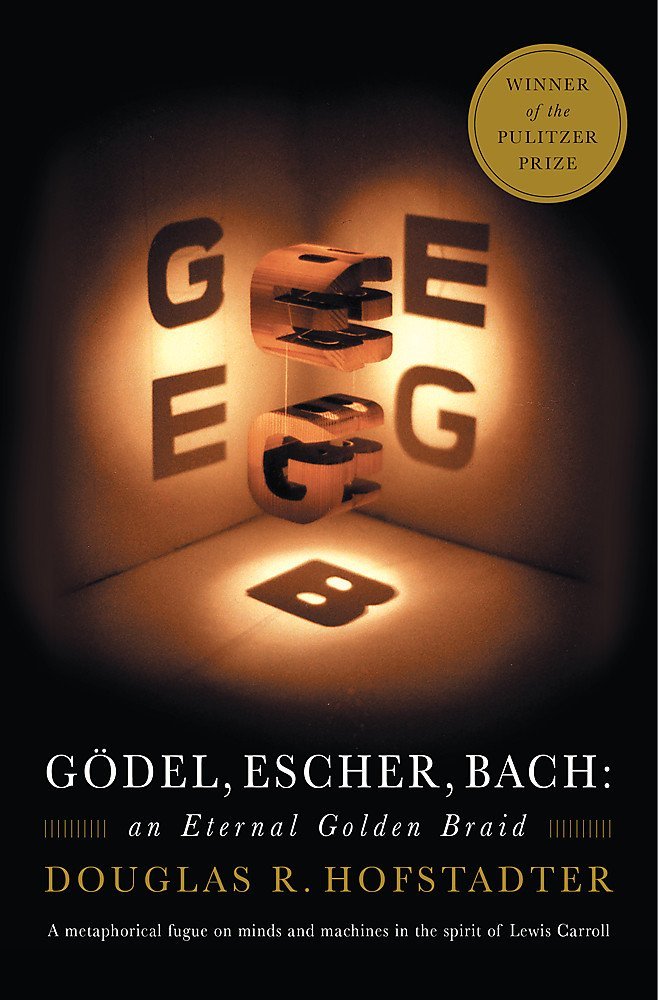
Douglas Hofstadter’s book is concerned directly with the nature of “maps” or links between formal systems. However, according to Hofstadter, the formal system that underlies all mental activity transcends the system that supports it. If life can grow out of the formal chemical substrate of the cell, if consciousness can emerge out of a formal system of firing neurons, then so too will computers attain human intelligence. Gödel, Escher, Bach is a wonderful exploration of fascinating ideas at the heart of cognitive science: meaning, reduction, recursion, and much more.
Books similar to Gödel, Escher, Bach: An Eternal Golden Braid
From a renowned historian comes a groundbreaking narrative of humanity’s creation and evolution—a #1 international bestseller—that explores the ways in which biology and history have defined us and enhanced our understanding of what it means to be “human.” One hundred thousand years ago, at least six different species of humans inhabited Earth. Yet today there is only one—homo sapiens. What happened to the others? And what may happen to us? Most books about the history of humanity pursue either a historical or a biological approach, but Dr. Yuval Noah Harari breaks the mold with this highly original book that begins about 70,000 years ago with the appearance of modern cognition. From examining the role evolving humans have played in the global ecosystem to charting the rise of empires, Sapiens integrates history and science to reconsider accepted narratives, connect past developments with contemporary concerns, and examine specific events within the context of larger ideas. Dr. Harari also compels us to look ahead, because over the last few decades humans have begun to bend laws of natural selection that have governed life for the past four billion years. We are acquiring the ability to design not only the world around us, but also ourselves. Where is this leading us, and what do we want to become? Featuring 27 photographs, 6 maps, and 25 illustrations/diagrams, this provocative and insightful work is sure to spark debate and is essential reading for aficionados of Jared Diamond, James Gleick, Matt Ridley, Robert Wright, and Sharon Moalem.
In Sapiens, he explored our past. In Homo Deus, he looked to our future. Now, one of the most innovative thinkers on the planet turns to the present to make sense of today's most pressing issues.
How do computers and robots change the meaning of being human? How do we deal with the epidemic of fake news? Are nations and religions still relevant? What should we teach our children?
Yuval Noah Harari's 21 Lessons for the 21st Century is a probing and visionary investigation into today's most urgent issues as we move into the uncharted territory of the future. As technology advances faster than our understanding of it, hacking becomes a tactic of war, and the world feels more polarized than ever, Harari addresses the challenge of navigating life in the face of constant and disorienting change and raises the important questions we need to ask ourselves in order to survive.
In twenty-one accessible chapters that are both provocative and profound, Harari builds on the ideas explored in his previous books, untangling political, technological, social, and existential issues and offering advice on how to prepare for a very different future from the world we now live in: How can we retain freedom of choice when Big Data is watching us? What will the future workforce look like, and how should we ready ourselves for it? How should we deal with the threat of terrorism? Why is liberal democracy in crisis?
Harari's unique ability to make sense of where we have come from and where we are going has captured the imaginations of millions of readers. Here he invites us to consider values, meaning, and personal engagement in a world full of noise and uncertainty. When we are deluged with irrelevant information, clarity is power. Presenting complex contemporary challenges clearly and accessibly, 21 Lessons for the 21st Century is essential reading.
At the heart of this classic, seminal book is Julian Jaynes's still-controversial thesis that human consciousness did not begin far back in animal evolution but instead is a learned process that came about only three thousand years ago and is still developing. The implications of this revolutionary scientific paradigm extend into virtually every aspect of our psychology, our history and culture, our religion -- and indeed our future.
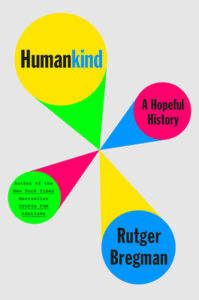
From the author of Utopia For Realists, a revolutionary argument that the innate goodness and cooperation of human beings has been the greatest factor in our success
If one basic principle has served as the bedrock of bestselling author Rutger Bregman's thinking, it is that every progressive idea -- whether it was the abolition of slavery, the advent of democracy, women's suffrage, or the ratification of marriage equality -- was once considered radical and dangerous by the mainstream opinion of its time. With Humankind, he brings that mentality to bear against one of our most entrenched ideas: namely, that human beings are by nature selfish and self-interested.
By providing a new historical perspective of the last 200,000 years of human history, Bregman sets out to prove that we are in fact evolutionarily wired for cooperation rather than competition, and that our instinct to trust each other has a firm evolutionary basis going back to the beginning of Homo sapiens. Bregman systematically debunks our understanding of the Milgram electrical-shock experiment, the Zimbardo prison experiment, and the Kitty Genovese "bystander effect."
In place of these, he offers little-known true stories: the tale of twin brothers on opposing sides of apartheid in South Africa who came together with Nelson Mandela to create peace; a group of six shipwrecked children who survived for a year and a half on a deserted island by working together; a study done after World War II that found that as few as 15% of American soldiers were actually capable of firing at the enemy.
The ultimate goal of Humankind is to demonstrate that while neither capitalism nor communism has on its own been proven to be a workable social system, there is a third option: giving "citizens and professionals the means (left) to make their own choices (right)." Reorienting our thinking toward positive and high expectations of our fellow man, Bregman argues, will reap lasting success. Bregman presents this idea with his signature wit and frankness, once again making history, social science and economic theory accessible and enjoyable for lay readers.
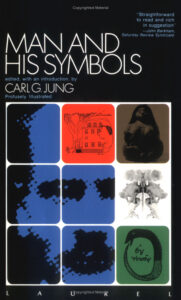
Man and His Symbols owes its existence to one of Jung's own dreams. The great psychologist dreamed that his work was understood by a wide public, rather than just by psychiatrists, and therefore he agreed to write and edit this fascinating book. Here, Jung examines the full world of the unconscious, whose language he believed to be the symbols constantly revealed in dreams. Convinced that dreams offer practical advice, sent from the unconscious to the conscious self, Jung felt that self-understanding would lead to a full and productive life. Thus, the reader will gain new insights into himself from this thoughtful volume, which also illustrates symbols throughout history. Completed just before his death by Jung and his associates, it is clearly addressed to the general reader.
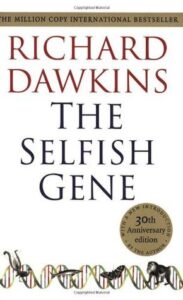
"The Selfish Gene" caused a wave of excitement among biologists and the general public when it was first published in 1976. Its vivid rendering of a gene's eye view of life, in lucid prose, gathered together the strands of thought about the nature of natural selection into a conceptual framework with far-reaching implications for our understanding of evolution. Time has confirmed its significance. Intellectually rigorous, yet written in non-technical language, "The Selfish Gene" is widely regarded as a masterpiece of science writing, and its insights remain as relevant today as on the day it was published.
Chapters: 1. Why are people? 2. The replicators 3. Immortal coils 4. The gene machine 5. Aggression stability and the selfish machine 6. Genesmanship 7. Family planning 8. Battle of the generations 9. Battle of the sexes 10. You scratch my back, I'll ride on yours 11. Memes: the new replicators 12. Nice guys finish first 13. The long reach of the gene
In ihrem bahnbrechenden Buch Warum wir Hunde lieben, Schweine essen und Kühe anziehen untersucht Melanie Joy, wie wir dazu kommen, manche Tiere als Freunde zu betrachten, andere dagegen als Nahrung - ohne dass wir diese Unterscheidung plausibel begründen könnten. Joy erläutert die komplexen sozialen und psychologischen Mechanismen, durch die bestimmte Lebewesen in unseren Augen zu Lebensmitteln werden. Und sie zeigt, dass diese Mechanismen unterschwellig wirken, ähnlich wie bei anderen Formen der Diskriminierung. Für das unsichtbare Glaubenssystem, das darin wurzelt, hat sie einen eigenen Begriff geprägt: "Karnismus". Warum wir Hunde lieben, Schweine essen und Kühe anziehen ist also kein weiteres Buch, das uns erklärt, weshalb wir kein Fleisch essen sollten. Stattdessen erfahren wir hier, warum wir es tun, und erhalten so die Möglichkeit, unsere Konsumentscheidungen aus einer anderen Perspektive zu betrachten.
One of the most important philosophical works of our time, a work that has had tremendous influence on philosophy, literature, and psychology, and has literally changed the intellectual map of the modern world.
Welcome Back!
Track your reading progress and sync your library.