Nevil Shute’s most beloved novel, a tale of love and war, follows its enterprising heroine from the Malayan jungle during World War II to the rugged Australian outback.
Jean Paget, a young Englishwoman living in Malaya, is captured by the invading Japanese and forced on a brutal seven-month death march with dozens of other women and children. A few years after the war, Jean is back in England, the nightmare behind her. However, an unexpected inheritance inspires her to return to Malaya to give something back to the villagers who saved her life. Jean’s travels leads her to a desolate Australian outpost called Willstown, where she finds a challenge that will draw on all the resourcefulness and spirit that carried her through her war-time ordeals.
A novel of the cruelty of war, and tenuousness of life and the impossibility of love.
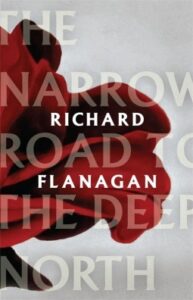
Richard Flanagan's story — of Dorrigo Evans, an Australian doctor haunted by a love affair with his uncle's wife — journeys from the caves of Tasmanian trappers in the early twentieth century to a crumbling pre-war beachside hotel, from a Thai jungle prison to a Japanese snow festival, from the Changi gallows to a chance meeting of lovers on the Sydney Harbour Bridge.
Taking its title from 17th-century haiku poet Basho's travel journal, The Narrow Road to the Deep North is about the impossibility of love. At its heart is one day in a Japanese slave labour camp in August 1943. As the day builds to its horrific climax, Dorrigo Evans battles and fails in his quest to save the lives of his fellow POWs, a man is killed for no reason, and a love story unfolds.
Librarian's note: An alternate cover edition can be found here
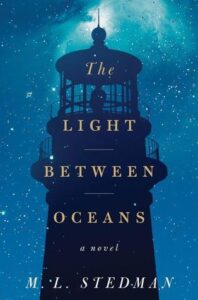
Australia, 1926. After four harrowing years fighting on the Western Front, Tom Sherbourne returns home to take a job as the lighthouse keeper on Janus Rock, nearly half a day's journey from the coast. To this isolated island, where the supply boat comes once a season and shore leaves are granted every other year at best, Tom brings a young, bold, and loving wife, Isabel. Years later, after two miscarriages and one stillbirth, the grieving Isabel hears a baby's cries on the wind. A boat has washed up onshore carrying a dead man and a living baby.
Tom, whose records as a lighthouse keeper are meticulous and whose moral principles have withstood a horrific war, wants to report the man and infant immediately. But Isabel has taken the tiny baby to her breast. Against Tom's judgment, they claim her as their own and name her Lucy. When she is two, Tom and Isabel return to the mainland and are reminded that there are other people in the world. Their choice has devastated one of them.
M. L. Stedman's mesmerizing, beautifully written debut novel seduces us into accommodating Isabel's decision to keep this "gift from God." And we are swept into a story about extraordinarily compelling characters seeking to find their North Star in a world where there is no right answer, where justice for one person is another's tragic loss.
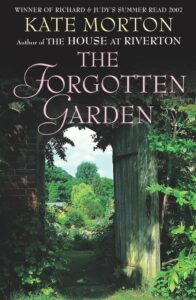
A foundling, an old book of dark fairy tales, a secret garden, an aristocratic family, a love denied, and a mystery. The Forgotten Garden is a captivating, atmospheric and compulsively readable story of the past, secrets, family and memory from the international best-selling author Kate Morton.
Cassandra is lost, alone and grieving. Her much loved grandmother, Nell, has just died and Cassandra, her life already shaken by a tragic accident ten years ago, feels like she has lost everything dear to her. But an unexpected and mysterious bequest from Nell turns Cassandra’s life upside down and ends up challenging everything she thought she knew about herself and her family.
Inheriting a book of dark and intriguing fairytales written by Eliza Makepeace—the Victorian authoress who disappeared mysteriously in the early twentieth century—Cassandra takes her courage in both hands to follow in the footsteps of Nell on a quest to find out the truth about their history, their family and their past; little knowing that in the process, she will also discover a new life for herself.
Librarian's note: An alternate cover edition can be found here
It is 1939. Nazi Germany. The country is holding its breath. Death has never been busier, and will be busier still.
By her brother's graveside, Liesel's life is changed when she picks up a single object, partially hidden in the snow. It is The Gravedigger's Handbook, left behind there by accident, and it is her first act of book thievery. So begins a love affair with books and words, as Liesel, with the help of her accordian-playing foster father, learns to read. Soon she is stealing books from Nazi book-burnings, the mayor's wife's library, wherever there are books to be found.
But these are dangerous times. When Liesel's foster family hides a Jew in their basement, Liesel's world is both opened up, and closed down.
In superbly crafted writing that burns with intensity, award-winning author Markus Zusak has given us one of the most enduring stories of our time.
(Note: this title was not published as YA fiction)
Ian McEwan's symphonic novel of love and war, childhood and class, guilt and forgiveness provides all the satisfaction of a brilliant narrative and the provocation we have come to expect from this master of English prose.
On a hot summer day in 1935, thirteen-year-old Briony Tallis witnesses the flirtation between her older sister, Cecilia, and Robbie Turner, the son of a servant. But Briony's incomplete grasp of adult motives—together with her precocious literary gifts—brings about a crime that will change all their lives.
As it follows that crime's repercussions through the chaos and carnage of World War II and into the close of the twentieth century, Atonement engages the reader on every conceivable level, with an ease and authority that mark it as a genuine masterpiece.
A #1 bestseller on The New York Times, USA Today, Washington Post, and Los Angeles Times!
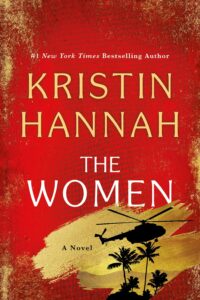
From the celebrated author of The Nightingale and The Four Winds comes Kristin Hannah's The Women―at once an intimate portrait of coming of age in a dangerous time and an epic tale of a nation divided.
Women can be heroes. When twenty-year-old nursing student Frances “Frankie” McGrath hears these words, it is a revelation. Raised in the sun-drenched, idyllic world of Southern California and sheltered by her conservative parents, she has always prided herself on doing the right thing. But in 1965, the world is changing, and she suddenly dares to imagine a different future for herself. When her brother ships out to serve in Vietnam, she joins the Army Nurse Corps and follows his path.
As green and inexperienced as the men sent to Vietnam to fight, Frankie is over-whelmed by the chaos and destruction of war. Each day is a gamble of life and death, hope and betrayal; friendships run deep and can be shattered in an instant. In war, she meets―and becomes one of―the lucky, the brave, the broken, and the lost.
But war is just the beginning for Frankie and her veteran friends. The real battle lies in coming home to a changed and divided America, to angry protesters, and to a country that wants to forget Vietnam.
The Women is the story of one woman gone to war, but it shines a light on all women who put themselves in harm’s way and whose sacrifice and commitment to their country has too often been forgotten. A novel about deep friendships and bold patriotism, The Women is a richly drawn story with a memorable heroine whose idealism and courage under fire will come to define an era.
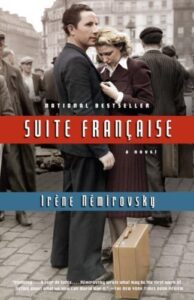
The first two stories of a masterwork once thought lost, written by a pre-WWII bestselling author who was deported to Auschwitz and died before her work could be completed.
By the early l940s, when Ukrainian-born Irène Némirovsky began working on what would become Suite Française—the first two parts of a planned five-part novel—she was already a highly successful writer living in Paris. But she was also a Jew, and in 1942 she was arrested and deported to Auschwitz: a month later she was dead at the age of thirty-nine. Two years earlier, living in a small village in central France—where she, her husband, and their two small daughters had fled in a vain attempt to elude the Nazis—she'd begun her novel, a luminous portrayal of a human drama in which she herself would become a victim. When she was arrested, she had completed two parts of the epic, the handwritten manuscripts of which were hidden in a suitcase that her daughters would take with them into hiding and eventually into freedom. Sixty-four years later, at long last, we can read Némirovsky's literary masterpiece
The first part, "A Storm in June," opens in the chaos of the massive 1940 exodus from Paris on the eve of the Nazi invasion during which several families and individuals are thrown together under circumstances beyond their control. They share nothing but the harsh demands of survival—some trying to maintain lives of privilege, others struggling simply to preserve their lives—but soon, all together, they will be forced to face the awful exigencies of physical and emotional displacement, and the annihilation of the world they know. In the second part, "Dolce," we enter the increasingly complex life of a German-occupied provincial village. Coexisting uneasily with the soldiers billeted among them, the villagers—from aristocrats to shopkeepers to peasants—cope as best they can. Some choose resistance, others collaboration, and as their community is transformed by these acts, the lives of these these men and women reveal nothing less than the very essence of humanity.
Suite Française is a singularly piercing evocation—at once subtle and severe, deeply compassionate, and fiercely ironic—of life and death in occupied France, and a brilliant, profoundly moving work of art.
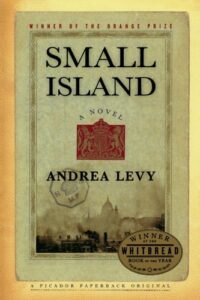
Hortense Joseph arrives in London from Jamaica in 1948 with her life in her suitcase, her heart broken, her resolve intact. Her husband, Gilbert Joseph, returns from the war expecting to be received as a hero, but finds his status as a black man in Britain to be second class. His white landlady, Queenie, raised as a farmer's daughter, befriends Gilbert, and later Hortense, with innocence and courage, until the unexpected arrival of her husband, Bernard, who returns from combat with issues of his own to resolve.
Told in these four voices, Small Island is a courageous novel of tender emotion and sparkling wit, of crossings taken and passages lost, of shattering compassion and of reckless optimism in the face of insurmountable barriers---in short, an encapsulation of the immigrant's life.
Welcome Back!
Track your reading progress and sync your library.