In the Deep South of the 1950s, journalist John Howard Griffin decided to cross the color line. Using medication that darkened his skin to deep brown, he exchanged his privileged life as a Southern white man for the disenfranchised world of an unemployed black man. His audacious, still chillingly relevant eyewitness history is a work about race and humanity-that in this new millennium still has something important to say to every American.
Black Boy is a classic of American autobiography, a subtly crafted narrative of Richard Wright's journey from innocence to experience in the Jim Crow South. An enduring story of one young man's coming of age during a particular time and place, Black Boy remains a seminal text in our history about what it means to be a man, black, and Southern in America.
Touches readers of all colors as a vivid portrait of growing up, a haunting meditation on race and identity, and a lyrical valentine to a mother from her son.Who is Ruth McBride Jordan? A self-declared "light-skinned" woman evasive about her ethnicity, yet steadfast in her love for her twelve black children. James McBride, journalist, musician and son, explores his mother's past, as well as his own upbringing and heritage, in a poignant and powerful debut, The Color Of A Black Man's Tribute to His White Mother. The son of a black minister and a woman who would not admit she was white, James McBride grew up in "orchestrated chaos" with his eleven siblings in the poor, all-black projects of Red Hook, Brooklyn. "Mommy," a fiercely protective woman with "dark eyes full of pep and fire," herded her brood to Manhattan's free cultural events, sent them off on buses to the best (and mainly Jewish) schools, demanded good grades and commanded respect. As a young man, McBride saw his mother as a source of embarrassment, worry, and confusion--and reached thirty before he began to discover the truth about her early life and long-buried pain. In The Color of Water, McBride retraces his mother's footsteps and, through her searing and spirited voice, recreates her remarkable story. The daughter of a failed itinerant Orthodox rabbi, she was born Rachel Shilsky (actually Ruchel Dwara Zylska) in Poland on April 1, 1921. Fleeing pogroms, her family emigrated to America and ultimately settled in Suffolk, Virginia, a small town where anti-Semitism and racial tensions ran high. With candor and immediacy, Ruth describes her parents' loveless marriage; her fragile, handicapped mother; her cruel, sexually-abusive father; and the rest of the family and life she abandoned. At seventeen, after fleeing Virginia and settling in New York City, Ruth married a black minister and founded the all-black New Brown Memorial Baptist Church in her Red Hook living room. "God is the color of water," Ruth McBride taught her children, firmly convinced that life's blessings and life's values transcend race. Twice widowed, and continually confronting overwhelming adversity and racism, Ruth's determination, drive and discipline saw her dozen children through college--and most through graduate school. At age 65, she herself received a degree in social work from Temple University. Interspersed throughout his mother's compelling narrative, McBride shares candid recollections of his own experiences as a mixed-race child of poverty, his flirtations with drugs and violence, and his eventual self-realization and professional success. The Color of Water touches readers of all colors as a vivid portrait of growing up, a haunting meditation on race and identity, and a lyrical valentine to a mother from her son.
Selected by The New York Times Book Review as a Notable Book of the Year Years in the making-the definitive biography of the legendary black activist.
Of the great figure in twentieth-century American history perhaps none is more complex and controversial than Malcolm X. Constantly rewriting his own story, he became a criminal, a minister, a leader, and an icon, all before being felled by assassins' bullets at age thirty-nine. Through his tireless work and countless speeches he empowered hundreds of thousands of black Americans to create better lives and stronger communities while establishing the template for the self-actualized, independent African American man. In death he became a broad symbol of both resistance and reconciliation for millions around the world.
Manning Marable's new biography of Malcolm is a stunning achievement. Filled with new information and shocking revelations that go beyond the Autobiography, Malcolm X unfolds a sweeping story of race and class in America, from the rise of Marcus Garvey and the Ku Klux Klan to the struggles of the civil rights movement in the fifties and sixties. Reaching into Malcolm's troubled youth, it traces a path from his parents' activism through his own engagement with the Nation of Islam, charting his astronomical rise in the world of Black Nationalism and culminating in the never-before-told true story of his assassination. Malcolm X will stand as the definitive work on one of the most singular forces for social change, capturing with revelatory clarity a man who constantly strove, in the great American tradition, to remake himself anew.
A national bestseller when it first appeared in 1963, The Fire Next Time galvanized the nation and gave passionate voice to the emerging civil rights movement. At once a powerful evocation of James Baldwin’s early life in Harlem and a disturbing examination of the consequences of racial injustice, the book is an intensely personal and provocative document. It consists of two “letters,” written on the occasion of the centennial of the Emancipation Proclamation, that exhort Americans, both black and white, to attack the terrible legacy of racism. Described by The New York Times Book Review as “sermon, ultimatum, confession, deposition, testament, and chronicle…all presented in searing, brilliant prose,” The Fire Next Time stands as a classic of our literature.
Through a life of passion and struggle, Malcolm X became one of the most influential figures of the 20th Century. In this riveting account, he tells of his journey from a prison cell to Mecca, describing his transition from hoodlum to Muslim minister. Here, the man who called himself "the angriest Black man in America" relates how his conversion to true Islam helped him confront his rage and recognize the brotherhood of all mankind.
An established classic of modern America, "The Autobiography of Malcolm X" was hailed by the New York Times as "Extraordinary. A brilliant, painful, important book." Still extraordinary, still important, this electrifying story has transformed Malcolm X's life into his legacy. The strength of his words, and the power of his ideas continue to resonate more than a generation after they first appeared.
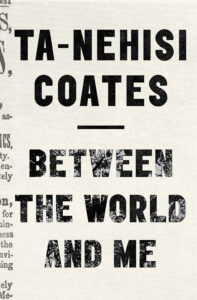
“This is your country, this is your world, this is your body, and you must find some way to live within the all of it.” In a profound work that pivots from the biggest questions about American history and ideals to the most intimate concerns of a father for his son, Ta-Nehisi Coates offers a powerful new framework for understanding our nation’s history and current crisis. Americans have built an empire on the idea of “race,” a falsehood that damages us all but falls most heavily on the bodies of black women and men—bodies exploited through slavery and segregation, and, today, threatened, locked up, and murdered out of all proportion. What is it like to inhabit a black body and find a way to live within it? And how can we all honestly reckon with this fraught history and free ourselves from its burden?
Between the World and Me is Ta-Nehisi Coates’s attempt to answer these questions in a letter to his adolescent son. Coates shares with his son—and readers—the story of his awakening to the truth about his place in the world through a series of revelatory experiences, from Howard University to Civil War battlefields, from the South Side of Chicago to Paris, from his childhood home to the living rooms of mothers whose children’s lives were taken as American plunder. Beautifully woven from personal narrative, reimagined history, and fresh, emotionally charged reportage, Between the World and Me clearly illuminates the past, bracingly confronts our present, and offers a transcendent vision for a way forward.
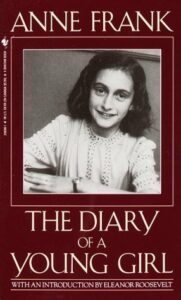
Discovered in the attic where she spent the final years of her life, Anne Frank’s Diary has become a timeless classic; a powerful reminder of the horrors of war and a moving testament to the resilience of the human spirit.
In 1942, as the Nazis occupied Holland, thirteen-year-old Anne Frank and her Jewish family fled their home in Amsterdam and went into hiding. For the next two years, until they were betrayed to the Gestapo, the Franks and another family lived in the cramped “Secret Annexe” of an old office building. Cut off from the outside world, they endured hunger, boredom, the strain of close quarters, and the constant fear of discovery and death.
Through it all, Anne documented her experiences in a diary filled with vivid observations. At times thoughtful, poignant, and even unexpectedly funny, her writing offers a remarkable window into the strength and vulnerability of the human spirit. It’s both a compelling self-portrait of a bright, spirited young woman and a heartbreaking glimpse of a life that should have been far longer.
Corrie ten Boom was a woman admired the world over for her courage, her forgiveness, and her memorable faith. In World War II, she and her family risked their lives to help Jews escape the Nazis, and their reward was a trip to Hitler's concentration camps. But she survived and was released—as a result of a clerical error—and now shares the story of how faith triumphs over evil.
For thirty-five years Corrie's dramatic life story, full of timeless virtues, has prepared readers to face their own futures with faith, relying on God's love to overcome, heal, and restore. Now releasing in a thirty-fifth anniversary edition for a new generation of readers, The Hiding Place tells the riveting story of how a middle-aged Dutch watchmaker became a heroine of the Resistance, a survivor of Hitler's death camps, and one of the most remarkable evangelists of the twentieth century.
Welcome Back!
Track your reading progress and sync your library.