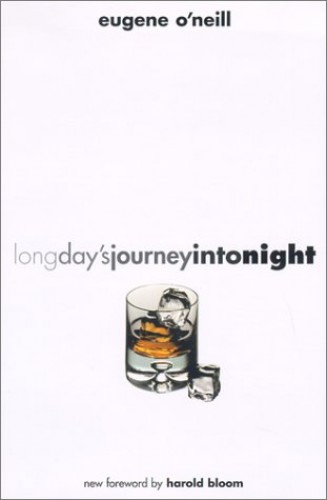
Long Day’s Journey Into Night is the story of one devastating day in the Tyrone family.
The play is autobiographical, and O’Neill draws his drug-addicted mother, his close-fisted father, his drunken and degenerate elder brother, and his tormented self, with terrifying veracity.
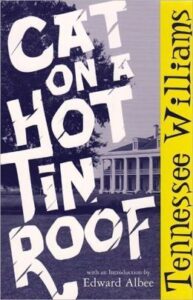
Cat on a Hot Tin Roof first heated up Broadway in 1955 with its gothic American story of brothers vying for their dying father’s inheritance amid a whirlwind of sexuality, untethered in the person of Maggie the Cat. The play also daringly showcased the burden of sexuality repressed in the agony of her husband, Brick Pollitt. In spite of the public controversy Cat stirred up, it was awarded the Pulitzer Prize and the Drama Critics Circle Award for that year. Williams, as he so often did with his plays, rewrote Cat on a Hot Tin Roof for many years—the present version was originally produced at the American Shakespeare Festival in 1974 with all the changes that made Williams finally declare the text to be definitive, and was most recently produced on Broadway in the 2003–2004 season. This definitive edition also includes Williams&rsquoi; essay “Person-to-Person,” Williams’ notes on the various endings, and a short chronology of the author’s life. One of America’s greatest living playwrights, as well as a friend and colleague of Williams, Edward Albee has written a concise introduction to the play from a playwright’s perspective, examining the candor, sensuality, power, and impact of Cat on a Hot Tin Roof then and now.
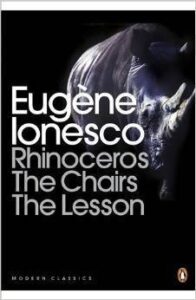
These three great plays by one of the founding fathers of the theatre of the absurd, are alive and kicking with tragedy and humour, bleakness and farce. In Rhinoceros we are shown the innate brutality of people as everyone, except for Berenger, turn into clumsy, unthinking rhinoceroses. The Chairs depicts the futile struggle of two old people to convey the meaning of life to the rest of humanity, while The Lesson is a chilling, but anarchically funny drama of verbal domination. In these three 'antiplays' dream, nonsense and fantasy combine to create an unsettling, bizarre view of society.
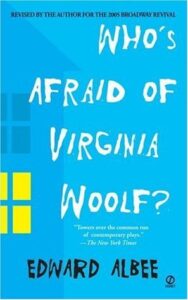
"Twelve times a week," answered Uta Hagen when asked how often she'd like to play Martha in Who's Afraid of Virginia Woolf? In the same way, audiences and critics alike could not get enough of Edward Albee's masterful play. A dark comedy, it portrays husband and wife George and Martha in a searing night of dangerous fun and games. By the evening's end, a stunning, almost unbearable revelation provides a climax that has shocked audiences for years. With the play's razor-sharp dialogue and the stripping away of social pretense, Newsweek rightly foresaw Who's Afraid of Virginia Woolf? as "a brilliantly original work of art--an excoriating theatrical experience, surging with shocks of recognition and dramatic fire [that] will be igniting Broadway for some time to come."
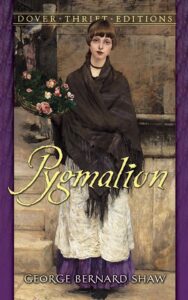
One of George Bernard Shaw's best-known plays, Pygmalion was a rousing success on the London and New York stages, an entertaining motion picture and a great hit with its musical version, My Fair Lady. An updated and considerably revised version of the ancient Greek legend of Pygmalion and Galatea, the 20th-century story pokes fun at the antiquated British class system.
In Shaw's clever adaptation, Professor Henry Higgins, a linguistic expert, takes on a bet that he can transform an awkward cockney flower seller into a refined young lady simply by polishing her manners and changing the way she speaks. In the process of convincing society that his creation is a mysterious royal figure, the Professor also falls in love with his elegant handiwork.
The irresistible theme of the emerging butterfly, together with Shaw's brilliant dialogue and splendid skills as a playwright, have made Pygmalion one of the most popular comedies in the English language. A staple of college drama courses, it is still widely performed.
The story revolves around two seemingly homeless men simply waiting for someone—or something—named Godot. Vladimir and Estragon wait near a tree, inhabiting a drama spun of their own consciousness. The result is a comical wordplay of poetry, dreamscapes, and nonsense, which has been interpreted as mankind’s inexhaustible search for meaning. Beckett’s language pioneered an expressionistic minimalism that captured the existential post-World War II Europe. His play remains one of the most magical and beautiful allegories of our time.
'For a salesman, there is no rock bottom to life. He don't put a bolt to a nut, he don't tell you the law or give you medicine. He's a man way out there in the blue, riding on a smile and a shoeshine.'
Willy Loman has been a salesman for 34 years. At 60, he is cast aside, his usefulness now exhausted. With no future to dream about he must face the crushing disappointments of his past. He takes one final brave action, but is he heroic at last?, or a self-deluding fool?
No play in the modern theater has so captured the imagination and heart of the American public as Tennessee Williams's The Glass Menagerie. As Williams's first popular success, it launched the brilliant, if somewhat controversial, career, of our pre-eminent lyric playwright. Since its premiere in Chicago in 1944, with the legendary Laurette Taylor in the role of Amanda, Menagaerie has been the bravura piece for great actresses from Jessica Tandy to Joanne Woodward, and is studied and performed in classrooms and theatres around the world.
The Glass Menagerie (in the reading text the author preferred) is now available only in its New Directions Paperbook edition. A new introduction by the editor of The Tennessee Williams Annual Review, Robert Bray, reappraises the play more than half a century after it won the New York Drama Critics Circle Award. This edition of The Glass Menagerie also includes Williams's essay on the impact of sudden fame on a struggling writer, "The Catastrophe of Success," as well as a short section of Williams's own "Production Notes." (back cover)
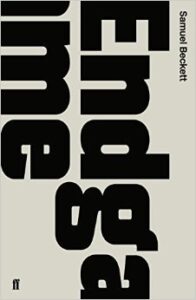
Samuel Beckett was awarded the Nobel Prize for Literature in 1969; his literary output of plays, novels, stories, and poetry has earned him an uncontested place as one of the greatest writers of our time. Endgame, originally written in French and translated into English by Beckett himself, is now considered by many critics to be his greatest single work. A pinnacle of Beckett's characteristic raw minimalism, it is a pure and devastating distillation of the human essence in the face of approaching death.
Welcome Back!
Track your reading progress and sync your library.