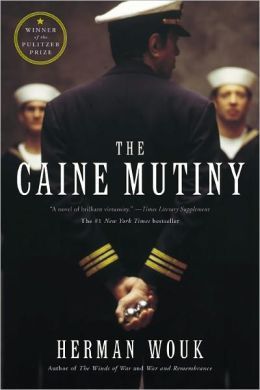
The novel that inspired the now-classic film The Caine Mutiny and the hit Broadway play The Caine Mutiny Court-Martial, Herman Wouk’s boldly dramatic, brilliantly entertaining novel of life-and mutiny-on a Navy warship in the Pacific theater was immediately embraced, upon its original publication in 1951, as one of the first serious works of American fiction to grapple with the moral complexities and the human consequences of World War II. In the intervening half century, The Caine Mutiny has become a perennial favorite of readers young and old, has sold millions of copies throughout the world, and has achieved the status of a modern classic.
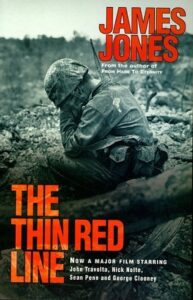
"When compared to the fact that he might very well be dead by this time tomorrow, whether he was courageous or not today was pointless, empty. When compared to the fact that he might be dead tomorrow, everything was pointless. Life was pointless. Whether he looked at a tree or not was pointless. It just didn't make any difference. It was pointless to the tree, it was pointless to every man in his outfit, pointless to everybody in the whole world. Who cared? It was not pointless only to him; and when he was dead, when he ceased to exist, it would be pointless to him too. More important: Not only would it be pointless, it would have been pointless, all along."
Such is the ultimate significance of war in The Thin Red Line (1962), James Jones's fictional account of the battle between American and Japanese troops on the island of Guadalcanal. The narrative shifts effortlessly among multiple viewpoints within C-for-Charlie Company, from commanding officer Capt. James Stein, his psychotic first sergeant Eddie Welsh, and the young privates they send into battle. The descriptions of combat conditions—and the mental states it induces—are unflinchingly realistic, including the dialog (in which a certain word Norman Mailer rendered as "fug" 15 years earlier in The Naked and the Dead appears properly spelled on numerous occasions). This is more than a classic of combat fiction; it is one of the most significant explorations of male identity in American literature, establishing Jones as a novelist of the caliber of Herman Melville and Stephen Crane.
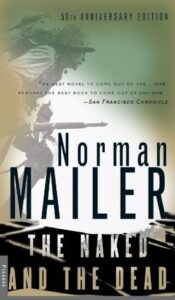
Hailed as one of the finest novels to come out of the Second World War, The Naked and the Dead received unprecedented critical acclaim upon its publication and has since become part of the American canon. This fiftieth anniversary edition features a new introduction created especially for the occasion by Norman Mailer.
Written in gritty, journalistic detail, the story follows an army platoon of foot soldiers who are fighting for the possession of the Japanese-held island of Anopopei. Composed in 1948, The Naked and the Dead is representative of the best in twentieth-century American writing.
Like no other masterpiece of historical fiction, Herman Wouk's sweeping epic of World War II is the great novel of America's Greatest Generation.
Wouk's spellbinding narrative captures the tide of global events, as well as all the drama, romance, heroism, and tragedy of World War II, as it immerses us in the lives of a single American family drawn into the very center of the war's maelstrom.
The Winds of War and its sequel War and Remembrance stand as the crowning achievement of one of America's most celebrated storytellers.
Three stories are told: a young Southerner wants to become a writer; a turbulent love-hate affair between a brilliant Jew and a beautiful Polish woman; and of an awful wound in that woman's past--one that impels both Sophie and Nathan toward destruction.
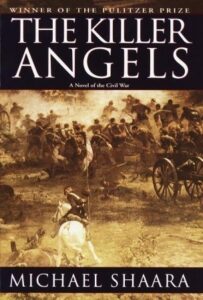
In the four most bloody and courageous days of our nation's history, two armies fought for two dreams. One dreamed of freedom, the other of a way of life. Far more than rifles and bullets were carried into battle. There were memories. There were promises. There was love. And far more than men fell on those Pennsylvania fields. Shattered futures, forgotten innocence, and crippled beauty were also the casualties of war. The Killer Angels is unique, sweeping, unforgettable—a dramatic re-creation of the battleground for America's destiny.
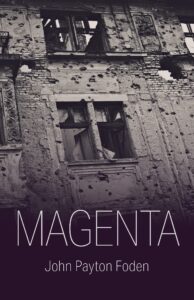
Magenta is a harrowing journey into war-torn Sarajevo, and into the blackest reaches of the human condition. The novel follows a journalist, Silva, as she and her team make their way deep into a city under siege, in order to recover the body of Thierry, an award-winning filmmaker who has been killed there. But the postmodern odyssey that follows is beyond anything Silva could have expected, as she must make her way through a world in which good and evil lose their meaning, where survival is the only remaining value, and where there is always greater terror lurking around the next corner of the dark and broken labyrinth that a once great city has become. Even if Silva herself survives the city, the abyss she has stared into will have stared back into her - and changed everything.
The first two stories of a masterwork once thought lost, written by a pre-WWII bestselling author who was deported to Auschwitz and died before her work could be completed.
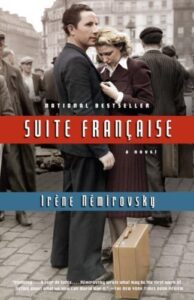
By the early l940s, when Ukrainian-born Irène Némirovsky began working on what would become Suite Française—the first two parts of a planned five-part novel—she was already a highly successful writer living in Paris. But she was also a Jew, and in 1942 she was arrested and deported to Auschwitz: a month later she was dead at the age of thirty-nine. Two years earlier, living in a small village in central France—where she, her husband, and their two small daughters had fled in a vain attempt to elude the Nazis—she'd begun her novel, a luminous portrayal of a human drama in which she herself would become a victim. When she was arrested, she had completed two parts of the epic, the handwritten manuscripts of which were hidden in a suitcase that her daughters would take with them into hiding and eventually into freedom. Sixty-four years later, at long last, we can read Némirovsky's literary masterpiece
The first part, "A Storm in June," opens in the chaos of the massive 1940 exodus from Paris on the eve of the Nazi invasion during which several families and individuals are thrown together under circumstances beyond their control. They share nothing but the harsh demands of survival—some trying to maintain lives of privilege, others struggling simply to preserve their lives—but soon, all together, they will be forced to face the awful exigencies of physical and emotional displacement, and the annihilation of the world they know. In the second part, "Dolce," we enter the increasingly complex life of a German-occupied provincial village. Coexisting uneasily with the soldiers billeted among them, the villagers—from aristocrats to shopkeepers to peasants—cope as best they can. Some choose resistance, others collaboration, and as their community is transformed by these acts, the lives of these these men and women reveal nothing less than the very essence of humanity.
Suite Française is a singularly piercing evocation—at once subtle and severe, deeply compassionate, and fiercely ironic—of life and death in occupied France, and a brilliant, profoundly moving work of art.
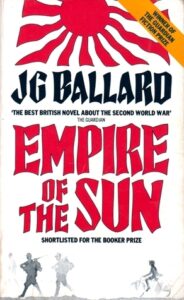
The classic, award-winning novel, made famous by Steven Spielberg's film, tells of a young boy's struggle to survive World War II in China.
Jim is separated from his parents in a world at war. To survive, he must find a deep strength greater than all the events that surround him.
Shanghai, 1941 — a city aflame from the fateful torch of Pearl Harbor. In streets full of chaos and corpses, a young British boy searches in vain for his parents. Imprisoned in a Japanese concentration camp, he is witness to the fierce white flash of Nagasaki, as the bomb bellows the end of the war...and the dawn of a blighted world.
Ballard's enduring novel of war and deprivation, internment camps and death marches, and starvation and survival is an honest coming-of-age tale set in a world thrown utterly out of joint.
Welcome Back!
Track your reading progress and sync your library.