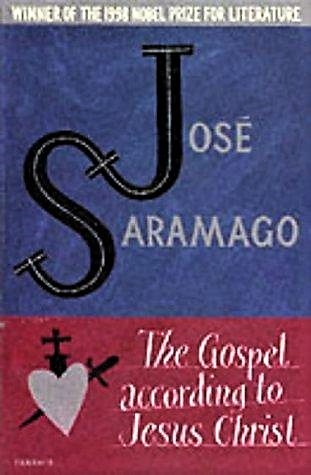
This is a skeptic’s journey into the meaning of God and of human existence. At once an ironic rendering of the life of Christ and a beautiful novel, Saramago’s tale has sparked intense discussion about the meaning of Christianity and the Church as an institution. Translated by Giovanni Pontiero.
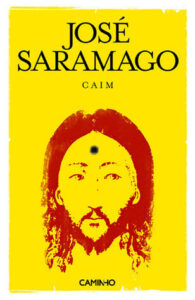
Neste novo romance, o vencedor do prêmio Nobel José Saramago reconta episódios bíblicos do Velho Testamento sob o ponto de vista de Caim, que, depois de assassinar seu irmão, trava um incomum acordo com deus e parte numa jornada que o levará do jardim do Éden aos mais recônditos confins da criação. Se, em O Evangelho segundo Jesus Cristo, José Saramago nos deu sua visão do Novo Testamento, neste Caim ele se volta aos primeiros livros da Bíblia, do Éden ao dilúvio, imprimindo ao Antigo Testamento a música e o humor refinado que marcam sua obra. Num itinerário heterodoxo, Saramago percorre cidades decadentes e estábulos, palácios de tiranos e campos de batalha, conforme o leitor acompanha uma guerra secular, e de certo modo involuntária, entre criador e criatura. No trajeto, o leitor revisitará episódios bíblicos conhecidos, mas sob uma perspectiva inteiramente diferente. Para atravessar esse caminho árido, um deus às turras com a própria administração colocará Caim, assassino do irmão Abel e primogênito de Adão e Eva, num altivo jegue, e caberá à dupla encontrar o rumo entre as armadilhas do tempo que insistem em atraí-los. A Caim, que leva a marca do senhor na testa e portanto está protegido das iniquidades do homem, resta aceitar o destino amargo e compactuar com o criador, a quem não reserva o melhor dos julgamentos. Tal como o diabo de O Evangelho, o deus que o leitor encontra aqui não é o habitual dos sermões: ao reinventar o Antigo Testamento, Saramago recria também seus principais protagonistas, dando a eles uma roupagem ao mesmo tempo complexa e irônica, cujo tom de farsa da narrativa só faz por acentuar.
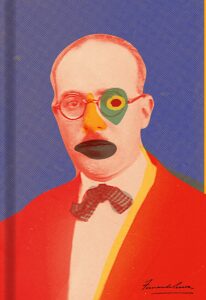
The Book of Disquiet is the Portuguese modernist master Fernando Pessoa’s greatest literary achievement. An “autobiography” or “diary” containing exquisite melancholy observations, aphorisms, and ruminations, this classic work grapples with all the eternal questions. Now, for the first time the texts are presented chronologically, in a complete English edition by master translator Margaret Jull Costa. Most of the texts in The Book of Disquiet are written under the semi-heteronym Bernardo Soares, an assistant bookkeeper. This existential masterpiece was first published in Portuguese in 1982, forty-seven years after Pessoa’s death. A monumental literary event, this exciting, new, complete edition spans Fernando Pessoa’s entire writing life.
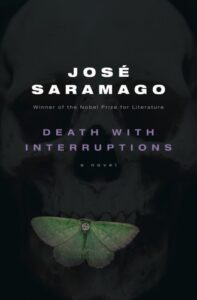
Nobel Prize-winner Jose Saramago's brilliant new novel poses the question what happens when the grim reaper decides there will be no more death?
On the first day of the new year, no one dies. This, of course, causes consternation among politicians, religious leaders, morticians, and doctors. Among the general public, on the other hand, there is initially mass celebration. Flags are hung out on balconies; people dance in the streets. They have achieved the great goal of humanity: eternal life. Then reality hits home—families are left to care for the permanently dying; life-insurance policies become meaningless; and funeral parlors are reduced to arranging burials for pet dogs, cats, hamsters, and parrots.
Death sits in her chilly apartment, where she lives alone with scythe and filing cabinets and contemplates her experiment: What if no one ever died again? What if she, death with a small "d," became human and were to fall in love?
Fernando Pessoa was many writers in one. He attributed his prolific writings to a wide range of alternate selves, each of which had a distinct biography, ideology, and horoscope. When he died in 1935, Pessoa left behind a trunk filled with unfinished and unpublished writings, among which were the remarkable pages that make up his posthumous masterpiece, The Book of Disquiet, an astonishing work that, in George Steiner's words, "gives to Lisbon the haunting spell of Joyce's Dublin or Kafka's Prague." Published for the first time some fifty years after his death, this unique collection of short, aphoristic paragraphs comprises the "autobiography" of Bernardo Soares, one of Pessoa's alternate selves. Part intimate diary, part prose poetry, part descriptive narrative, captivatingly translated by Richard Zenith, The Book of Disquiet is one of the greatest works of the twentieth century.
On election day in the capital, it is raining so hard that no one has bothered to go out to vote. The politicians are growing jittery. Should they reschedule the elections for another day? Around three o' clock, the rain finally stops. Promptly at four, voters rush to the polling stations, as if they had been ordered to appear.
But when the ballots are counted, more than 70 percent are blank. The citizens are rebellious. A state of emergency is declared. But are the authorities acting too precipitously? Or even blindly? The word evokes terrible memories of the plague of blindness that hit the city four years before, and of the one woman who kept her sight. Could she be behind the blank ballots? A police superintendent is put on the case.
What begins as a satire on governments and the sometimes dubious efficacy of the democratic system turns into something far more sinister. A singular novel from the author of Blindness.
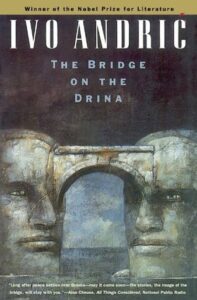
A vivid depiction of the suffering history has imposed upon the people of Bosnia from the late sixteenth century to the beginning of World War I, The Bridge on the Drina earned Ivo Andric the Nobel Prize for Literature in 1961.
A great stone bridge built three centuries ago in the heart of the Balkans by a Grand Vezir of the Ottoman Empire dominates the setting of Andric's stunning novel. Spanning generations, nationalities, and creeds, the bridge stands witness to the countless lives played out upon it: Radisav, the workman, who tries to hinder its construction and is impaled on its highest point; to the lovely Fata, who throws herself from its parapet to escape a loveless marriage; to Milan, the gambler, who risks everything in one last game on the bridge with the devil his opponent; to Fedun, the young soldier, who pays for a moment of spring forgetfulness with his life. War finally destroys the span, and with it the last descendant of that family to which the Grand Vezir confided the care of his pious bequest - the bridge.
The epic novel of man and nature that won its author the Nobel Prize in Literature, in the first new English translation in more than ninety years
When it was first published in 1917, Growth of the Soil was immediately recognized as a masterpiece. More than one-hundred years later it still remains a transporting literary experience. In the story of Isak, who leaves his village to clear a homestead and raise a family amid the untilled tracts of the Norwegian back country, Knut Hamsun evokes the elemental bond between humans and the land. Newly translated by the acclaimed Hamsun scholar Sverre Lyngstad, Hamsun's novel is a work of preternatural calm, stern beauty, and biblical power--and the crowning achievement of one of the greatest writers of the twentieth century.
For more than seventy years, Penguin has been the leading publisher of classic literature in the English-speaking world. With more than 1,800 titles, Penguin Classics represents a global bookshelf of the best works throughout history and across genres and disciplines. Readers trust the series to provide authoritative texts enhanced by introductions and notes by distinguished scholars and contemporary authors, as well as up-to-date translations by award-winning translators.
Haunted all her life by feelings of terror and emptiness, forty-nine-year-old Urania Cabral returns to her native Dominican Republic - and finds herself reliving the events of 1961, when the capital was still called Trujillo City and one old man terrorized a nation of three million people. Rafael Trujillo, the depraved ailing dictator whom Dominicans call the Goat, controls his inner circle with a combination of violence and blackmail. In Trujillo's gaudy palace, treachery and cowardice have become the way of life. But Trujillo's grasp is slipping away. There is a conspiracy against him, and a Machiavellian revolution already underway that will have bloody consequences of its own. In this 'masterpiece of Latin American and world literature, and one of the finest political novels ever written' ("Bookforum"), Mario Vargas Llosa recounts the end of a regime and the birth of a terrible democracy, giving voice to the historical Trujillo and the victims, both innocent and complicit, drawn into his deadly orbit.
Welcome Back!
Track your reading progress and sync your library.