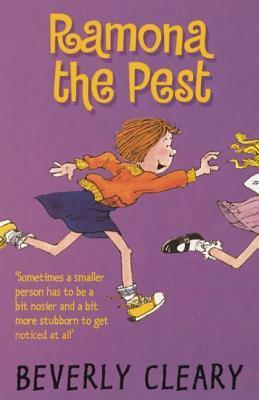
Ramona doesn’t think she’s a pest – she knows that she isn’t a pest on purpose. So how in the world does Ramona get in trouble? Why does her crush Davy run away whenever Ramona comes near him? And how does she manage to disrupt the whole kindergarten class during their rest time?
The 40th anniversary edition of the classic Newbery Medal-winning title by beloved author Katherine Paterson, with brand-new bonus materials including an author's note by Katherine herself and a foreword by New York Times bestselling author Kate DiCamillo.
Jess Aarons has been practicing all summer so he can be the fastest runner in the fifth grade. And he almost is, until the new girl in school, Leslie Burke, outpaces him. The two become fast friends and spend most days in the woods behind Leslie's house, where they invent an enchanted land called Terabithia. One morning, Leslie goes to Terabithia without Jess and a tragedy occurs. It will take the love of his family and the strength that Leslie has given him for Jess to be able to deal with his grief.
Bridge to Terabithia was also named an ALA Notable Children’s Book and has become a touchstone of children’s literature, as have many of Katherine Paterson’s other novels, including The Great Gilly Hopkins and Jacob Have I Loved.
The summer Opal and her father, the preacher, move to Naomi, Florida, Opal goes into the Winn-Dixie supermarket—and comes out with a dog. A big, ugly, suffering dog with a sterling sense of humor. A dog she dubs Winn-Dixie. Because of Winn-Dixie, the preacher tells Opal ten things about her absent mother, one for each year Opal has been alive. Winn-Dixie is better at making friends than anyone Opal has ever known, and together they meet the local librarian, Miss Franny Block, who once fought off a bear with a copy of WAR AND PEACE. They meet Gloria Dump, who is nearly blind but sees with her heart, and Otis, an ex-con who sets the animals in his pet shop loose after hours, then lulls them with his guitar.
Opal spends all that sweet summer collecting stories about her new friends and thinking about her mother. But because of Winn-Dixie or perhaps because she has grown, Opal learns to let go, just a little, and that friendship—and forgiveness—can sneak up on you like a sudden summer storm.
Kate DiCamillo's beloved, best-selling debut novel is now available in a paperback digest edition.
Kate DiCamillo's first published novel, like Winn-Dixie himself, immediately proved to be a keeper—a New York Times bestseller, a Newbery Honor winner, the inspiration for a popular film, and most especially, a cherished classic that touches the hearts of readers of all ages. It's now available in a paperback digest format certain to bring this tale's magic to an even wider circle of fans.
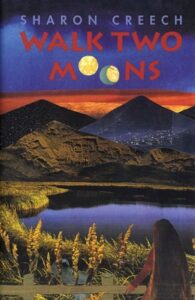
"How about a story? Spin us a yarn." Instantly, Phoebe Winterbottom came to mind. "I could tell you an extensively strange story," I warned. "Oh, good!" Gram said. "Delicious!" And that is how I happened to tell them about Phoebe, her disappearing mother, and the lunatic.
As Sal entertains her grandparents with Phoebe's outrageous story, her own story begins to unfold — the story of a thirteen-year-old girl whose only wish is to be reunited with her missing mother.
In her own award-winning style, Sharon Creech intricately weaves together two tales, one funny, one bittersweet, to create a heartwarming, compelling, and utterly moving story of love, loss, and the complexity of human emotion.
Being a kid can really stink. And no one knows this better than Greg. He finds himself thrust into middle school, where undersized weaklings share the hallways with kids who are taller, meaner, and already shaving. Greg is happy to have Rowley Jefferson, his sidekick, along for the ride. But when Rowley's star starts to rise, Greg tries to use his best friend's newfound popularity to his own advantage, kicking off a chain of events that will test their friendship in hilarious fashion.
The hazards of growing up before you're ready are uniquely revealed through words and drawings as Greg records them in his diary. But as Greg says: “Just don’t expect me to be all “Dear Diary” this and “Dear Diary” that.”
Luckily for us, what Greg Heffley says he won’t do and what he actually does are two very different things.
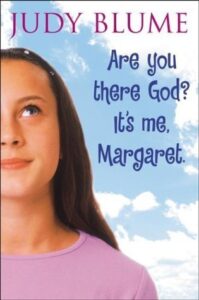
Margaret Simon, almost twelve, likes long hair, tuna fish, the smell of rain, and things that are pink. She’s just moved from New York City to Farbrook, New Jersey, and is anxious to fit in with her new friends—Nancy, Gretchen, and Janie. When they form a secret club to talk about private subjects like boys, bras, and getting their first periods, Margaret is happy to belong.
But none of them can believe Margaret doesn’t have religion, and that she isn’t going to the Y or the Jewish Community Center. What they don’t know is Margaret has her own very special relationship with God. She can talk to God about everything—family, friends, even Moose Freed, her secret crush.
Margaret is funny and real, and her thoughts and feelings are oh-so-relatable—you’ll feel like she’s talking right to you, sharing her secrets with a friend.
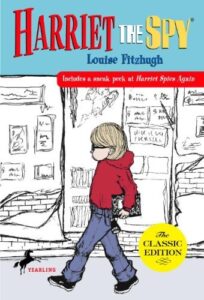
Harriet the Spy has a secret notebook that she fills with utterly honest jottings about her parents, her classmates, and her neighbors. Every day on her spy route she "observes" and notes down anything of interest to her:
I BET THAT LADY WITH THE CROSS-EYE LOOKS IN THE MIRROR AND JUST FEELS TERRIBLE.
PINKY WHITEHEAD WILL NEVER CHANGE. DOES HIS MOTHER HATE HIM? IF I HAD HIM I'D HATE HIM.
IF MARION HAWTHORNE DOESN'T WATCH OUT SHE'S GOING TO GROW UP INTO A LADY HITLER.
But when Harriet's notebook is found by her schoolmates, their anger and retaliation and Harriet's unexpected responses explode in a hilarious way.
I won’t describe what I look like. Whatever you’re thinking, it’s probably worse.
August Pullman was born with a facial difference that, up until now, has prevented him from going to a mainstream school. Starting 5th grade at Beecher Prep, he wants nothing more than to be treated as an ordinary kid—but his new classmates can’t get past Auggie’s extraordinary face. Wonder, begins from Auggie’s point of view, but soon switches to include his classmates, his sister, her boyfriend, and others.
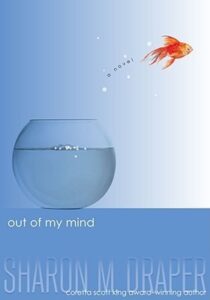
Melody is not like most people. She cannot walk or talk, but she has a photographic memory; she can remember every detail of everything she has ever experienced. She is smarter than most of the adults who try to diagnose her and smarter than her classmates in her integrated classroom—the very same classmates who dismiss her as mentally challenged because she cannot tell them otherwise. But Melody refuses to be defined by cerebral palsy. And she's determined to let everyone know it—somehow.
Welcome Back!
Track your reading progress and sync your library.