The year is 1928. On the outskirts of a large German city, three young men are earning a thin and precarious living. Fully armed young storm troopers swagger in the streets. Restlessness, poverty, and violence are everywhere. For these three, friendship is the only refuge from the chaos around them. Then the youngest of them falls in love, and brings into the group a young woman who will become a comrade as well, as they are all tested in ways they can never have imagined. . . .
Written with the same overwhelming simplicity and directness that made All Quiet on the Western Front a classic, Three Comrades portrays the greatness of the human spirit, manifested through characters who must find the inner resources to live in a world they did not make, but must endure.
More in All Quiet on the Western Front/The Road Back Series
It is 1939. Despite a law banning him from performing surgery, Ravic – a German doctor and refugee living in Paris – has been treating some of the city’s most elite citizens for two years on the behalf of two less-than-skillful French physicians. Forbidden to return to his own country, and dodging the everyday dangers of jail and deportation, Ravic manages to hang on – all the while searching for the Nazi who tortured him back in Germany. And though he’s given up on the possibility of love, life has a curious way of taking a turn for the romantic, even during the worst of times….
A classic of modern literature: Buddenbrooks is the story of four generations of a wealthy bourgeois family in northern Germany facing the advent of modernity; in an uncertain new world, the family’s bonds and traditions begin to disintegrate. With an introduction by T. J. Reed, and translated by John E. Woods.
As Mann charts the Buddenbrooks’ decline from prosperity to bankruptcy, from moral and psychic soundness to sickly piety, artistic decadence, and madness, he ushers the reader into a world of stunning vitality, pieced together from births and funerals, weddings and divorces, recipes, gossip, and earthy humor.
First published in Germany in 1901, when Mann was only twenty-six, Buddenbrooks surpasses all other modern family chronicles in its immensity of scope, richness of detail, and fullness of humanity. With remarkable fidelity to the original German text, this superb translation emphasizes the magnificent scale of Mann’s achievement in this riveting, tragic novel.
Nevil Shute's most beloved novel, a tale of love and war, follows its enterprising heroine from the Malayan jungle during World War II to the rugged Australian outback.
Jean Paget, a young Englishwoman living in Malaya, is captured by the invading Japanese and forced on a brutal seven-month death march with dozens of other women and children. A few years after the war, Jean is back in England, the nightmare behind her. However, an unexpected inheritance inspires her to return to Malaya to give something back to the villagers who saved her life. Jean's travels leads her to a desolate Australian outpost called Willstown, where she finds a challenge that will draw on all the resourcefulness and spirit that carried her through her war-time ordeals.
Published to international critical and popular acclaim, this intensely romantic yet stunningly realistic novel spans three generations and the unimaginable gulf between the First World War and the present. As the young Englishman Stephen Wraysford passes through a tempestuous love affair with Isabelle Azaire in France and enters the dark, surreal world beneath the trenches of No Man's Land, Sebastian Faulks creates a world of fiction that is as tragic as A Farewell to Arms and as sensuous as The English Patient. Crafted from the ruins of war and the indestructibility of love, Birdsong is a novel that will be read and marveled at for years to come.
Captain Corelli’s Mandolin is set in the early days of the second world war, before Benito Mussolini invaded Greece. Dr Iannis practices medicine on the island of Cephalonia, accompanied by his daughter, Pelagia, to whom he imparts much of his healing art. Even when the Italians do invade, life isn’t so bad—at first anyway. The officer in command of the Italian garrison is the cultured Captain Antonio Corelli, who responds to a Nazi greeting of “Heil Hitler” with his own “Heil Puccini”, and whose most precious possession is his mandolin. It isn't long before Corelli and Pelagia are involved in a heated affair--despite her engagement to a young fisherman, Mandras, who has gone off to join Greek partisans. Love is complicated enough in wartime, even when the lovers are on the same side. And for Corelli and Pelagia, it becomes increasingly difficult to negotiate the minefield of allegiances, both personal and political, as all around them atrocities mount, former friends become enemies and the ugliness of war infects everyone it touches.
British author Louis de Bernières is well known for his forays into magical realism in such novels as The War of Don Emmanuel's Nether Parts, Señor Vivo and the Coca Lord and The Troublesome Offspring of Cardinal Guzman. Here he keeps it to a minimum, though certainly the secondary characters with whom he populates his island—the drunken priest, the strongman, the fisherman who swims with dolphins—would be at home in any of his wildly imaginative Latin American fictions. Instead, de Bernières seems interested in dissecting the nature of history as he tells his ever-darkening tale from many different perspectives. Captain Corelli’s Mandolin works on many levels, as a love story, a war story and a deconstruction of just what determines the facts that make it into the history books.
This is Goethe's first novel, published in 1774. Written in diary form, it tells the tale of an unhappy, passionate young man hopelessly in love with Charlotte, the wife of a friend - a man who he alternately admires and detests. 'The Sorrows of Young Werther' became an important part of the 'Sturm und Drang movement, and greatly influenced later 'Romanticism'. The work is semi-autobiographical - in 1772, two years before the novel was published, Goethe had passed through a similar tempestuous period, when he lost his heart to Charlotte Buff, who was at that time engaged to his friend Johann Christian Kestner.
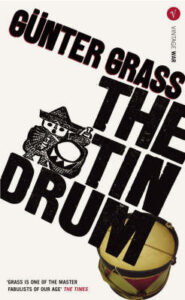
On his third birthday Oskar decides to stop growing. Haunted by the deaths of his parents and wielding his tin drum Oskar recounts the events of his extraordinary life; from the long nightmare of the Nazi era to his anarchic adventures in post-war Germany.
Hailed for its coiled eroticism and the moral claims it makes upon the reader, this mesmerizing novel is a story of love and secrets, horror and compassion, unfolding against the haunted landscape of postwar Germany.
When he falls ill on his way home from school, fifteen-year-old Michael Berg is rescued by Hanna, a woman twice his age. In time she becomes his lover—then she inexplicably disappears. When Michael next sees her, he is a young law student, and she is on trial for a hideous crime. As he watches her refuse to defend her innocence, Michael gradually realizes that Hanna may be guarding a secret she considers more shameful than murder.
Welcome Back!
Track your reading progress and sync your library.