Flannery O’Connor was working on Everything That Rises Must Converge at the time of her death. This collection is an exquisite legacy from a genius of the American short story, in which she scrutinizes territory familiar to her readers: race, faith, and morality. The stories encompass the comic and the tragic, the beautiful and the grotesque; each carries her highly individual stamp and could have been written by no one else.
This is the original cover edition of ISBN: 0374515360 (ISBN13: 9780374515362
Winner of the National Book Award
The publication of this extraordinary volume firmly established Flannery O'Connor's monumental contribution to American fiction. There are thirty-one stories here in all, including twelve that do not appear in the only two story collections O'Connor put together in her short lifetime - Everything That Rises Must Converge and A Good Man Is Hard to Find.
O'Connor published her first story, "The Geranium," in 1946, while she was working on her master's degree at the University of Iowa. Arranged chronologically, this collection shows that her last story, "Judgement Day" - sent to her publisher shortly before her death - is a brilliantly rewritten and transfigured version of "The Geranium." Taken together, these stories reveal a lively, penetrating talent that has given us some of the most powerful and disturbing fiction of the twentieth century. Also included is an introduction by O'Connor's longtime editor and friend, Robert Giroux.
Contents: The geranium -- The barber -- Wildcat -- The crop -- The turkey -- The train -- The peeler -- The heart of the park -- A stoke of good fortune -- Enoch and the gorilla -- A good man is hard to find -- A late encounter with the enemy -- The life you save may be your own -- The river -- A circle in the fire -- The displaced person -- A temple of the Holy Ghost -- The artificial nigger -- Good country people -- You can't be any poorer than dead -- Greenleaf -- A view of the woods -- The enduring chill -- The comforts of home -- Everything that rises must converge -- The partridge festival -- The lame shall enter first -- Why do the heathen rage? -- Revelation -- Parker's back -- Judgement Day.
This now classic book revealed Flannery O'Connor as one of the most original and provocative writers to emerge from the South. Her apocalyptic vision of life is expressed through grotesque, often comic situations in which the principal character faces a problem of salvation: the grandmother, in the title story, confronting the murderous Misfit; a neglected four-year-old boy looking for the Kingdom of Christ in the fast-flowing waters of the river; General Sash, about to meet the final enemy. Stories include:
(This is an alternate-cover edition for ISBN 9780374530631)
The American short story master Flannery O'Connor's haunting first novel of faith, false prophets, and redemptive wisdom.
Wise Blood, Flannery O'Connor's astonishing and haunting first novel, is a classic of twentieth-century literature. It is the story of Hazel Motes, a twenty-two-year-old caught in an unending struggle against his inborn, desperate fate. He falls under the spell of a "blind" street preacher named Asa Hawks and his degenerate fifteen-year-old daughter, Sabbath Lily. In an ironic, malicious gesture of his own non-faith, and to prove himself a greater cynic than Hawks, Motes founds the Church Without Christ, but is still thwarted in his efforts to lose God. He meets Enoch Emery, a young man with "wise blood," who leads him to a mummified holy child and whose crazy maneuvers are a manifestation of Motes's existential struggles.
This tale of redemption, retribution, false prophets, blindness, blindings, and wisdom gives us one of the most riveting characters in American fiction.
Pat Conroy has created a huge, brash thunderstorm of a novel, stinging with honesty and resounding with drama. ' Spanning forty years, this is the story of turbulent Tom Wingo, his gifted and troubled twin sister Savannah, and the dark and violent past of the extraordinary family into which they were born.
This compelling novel has as its protagonist Cornelius Suttree, living alone and in exile in a disintegrating houseboat on the wrong side of the Tennessee River close by Knoxville. He stays at the edge of an outcast community inhabited by eccentrics, criminals and the poverty-stricken. Rising above the physical and human squalor around him, his detachment and wry humour enable him to survive dereliction and destitution with dignity.
The one thing you can depend on in Cold Sassy, Georgia, is that word gets around--fast. When Grandpa E. Rucker Blakeslee announces one July morning in 1906 that he's aiming to marry the young and freckledy milliner, Miss Love Simpson--a bare three weeks after Granny Blakeslee has gone to her reward--the news is served up all over town with that afternoon's dinner. And young Will Tweedy suddenly finds himself eyewitness to a major scandal. Boggled by the sheer audacity of it all, and not a little jealous of his grandpa's new wife, Will nevertheless approves of this May-December match and follows its progress with just a smidgen of youthful prurience. As the newlyweds' chaperone, conspirator, and confidant, Will is privy to his one-armed, renegade grandfather's second adolescence; meanwhile, he does some growing up of his own. He gets run over by a train and lives to tell about it; he kisses his first girl, and survives that too. Olive Ann Burns has given us a timeless, funny, resplendent novel - about a romance that rocks an entire town, about a boy's passage through the momentous but elusive year when childhood melts into adolescence, and about just how people lived and died in a small Southern town at the turn of the century. Inhabited by characters who are wise and loony, unimpeachably pious and deliciously irreverent, Cold Sassy, Georgia, is the perfect setting for the debut of a storyteller of rare brio, exuberance, and style.
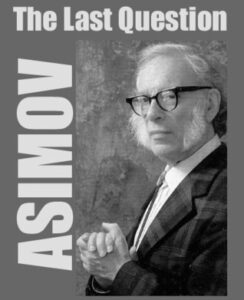
¿Es posible revertir el inevitable final del Universo, o el mundo debe acabar de todas formas? es la pregunta que desde un día del siglo XXI, hasta generaciones y generaciones posteriores en el tiempo, hacen los humanos a los ordenadores.
En un relato aparentemente sencillo sobre un asunto sobrecogedor, el fin de los días, Asimov demuestra, una vez más, una mente preclara y una mano maestra para sobrecoger al lector y dejarlo en vilo, incluso después de la lectura.
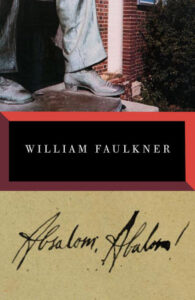
Published in 1936, Absalom, Absalom! is considered by many to be William Faulkner's masterpiece. Although the novel's complex and fragmented structure poses considerable difficulty to readers, the book's literary merits place it squarely in the ranks of America's finest novels. The story concerns Thomas Sutpen, a poor man who finds wealth and then marries into a respectable family. His ambition and extreme need for control bring about his ruin and the ruin of his family. Sutpen's story is told by several narrators, allowing the reader to observe variations in the saga as it is recounted by different speakers. This unusual technique spotlights one of the novel's central questions: To what extent can people know the truth about the past?
Welcome Back!
Track your reading progress and sync your library.