In these four plays, Jean-Paul Sartre, the great existentialist novelist and philosopher, displays his mastery of drama. NO EXIT is an unforgettable portrayal of hell. THE FLIES is a modern reworking of the Electra-Orestes story. DIRTY HANDS is about a young intellectual torn between theory and praxis. THE RESPECTFUL PROSTITUTE is an attack on American racism.
This is Edmond Rostand's immortal play in which chivalry and wit, bravery and love are forever captured in the timeless spirit of romance. Set in Louis XIII's reign, it is the moving and exciting drama of one of the finest swordsmen in France, gallant soldier, brilliant wit, tragic poet-lover with the face of a clown. Rostand's extraordinary lyric powers gave birth to a universal hero--Cyrano De Bergerac--and ensured his own reputation as author of one of the best-loved plays in the literature of the stage.
This translation, by the American poet Brian Hooker, is nearly as famous as the original play itself, and is generally considered to be one of the finest English verse translations ever written.
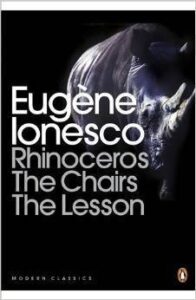
These three great plays by one of the founding fathers of the theatre of the absurd, are alive and kicking with tragedy and humour, bleakness and farce. In Rhinoceros we are shown the innate brutality of people as everyone, except for Berenger, turn into clumsy, unthinking rhinoceroses. The Chairs depicts the futile struggle of two old people to convey the meaning of life to the rest of humanity, while The Lesson is a chilling, but anarchically funny drama of verbal domination. In these three 'antiplays' dream, nonsense and fantasy combine to create an unsettling, bizarre view of society.
The story revolves around two seemingly homeless men simply waiting for someone—or something—named Godot. Vladimir and Estragon wait near a tree, inhabiting a drama spun of their own consciousness. The result is a comical wordplay of poetry, dreamscapes, and nonsense, which has been interpreted as mankind’s inexhaustible search for meaning. Beckett’s language pioneered an expressionistic minimalism that captured the existential post-World War II Europe. His play remains one of the most magical and beautiful allegories of our time.
Cat on a Hot Tin Roof first heated up Broadway in 1955 with its gothic American story of brothers vying for their dying father’s inheritance amid a whirlwind of sexuality, untethered in the person of Maggie the Cat. The play also daringly showcased the burden of sexuality repressed in the agony of her husband, Brick Pollitt. In spite of the public controversy Cat stirred up, it was awarded the Pulitzer Prize and the Drama Critics Circle Award for that year. Williams, as he so often did with his plays, rewrote Cat on a Hot Tin Roof for many years—the present version was originally produced at the American Shakespeare Festival in 1974 with all the changes that made Williams finally declare the text to be definitive, and was most recently produced on Broadway in the 2003–2004 season. This definitive edition also includes Williams&rsquoi; essay “Person-to-Person,” Williams’ notes on the various endings, and a short chronology of the author’s life. One of America’s greatest living playwrights, as well as a friend and colleague of Williams, Edward Albee has written a concise introduction to the play from a playwright’s perspective, examining the candor, sensuality, power, and impact of Cat on a Hot Tin Roof then and now.
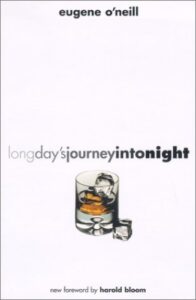
Long Day's Journey Into Night is the story of one devastating day in the Tyrone family.
The play is autobiographical, and O'Neill draws his drug-addicted mother, his close-fisted father, his drunken and degenerate elder brother, and his tormented self, with terrifying veracity.
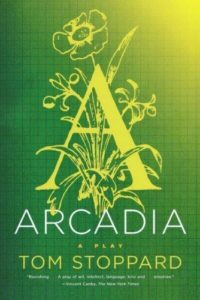
Arcadia takes us back and forth between the nineteenth and twentieth centuries, ranging over the nature of truth and time, the difference between the Classical and the Romantic temperament, and the disruptive influence of sex on our orbits in life. Focusing on the mysteries--romantic, scientific, literary--that engage the minds and hearts of characters whose passions and lives intersect across scientific planes and centuries, it is "Stoppard's richest, most ravishing comedy to date, a play of wit, intellect, language, brio and... emotion. It's like a dream of levitation: you're instantaneously aloft, soaring, banking, doing loop-the-loops and then, when you think you're about to plummet to earth, swooping to a gentle touchdown of not easily described sweetness and sorrow... Exhilarating" (Vincent Canby, The New York Times).
Angels in America: A Gay Fantasia on National Themes.
Angels in America is a play in two parts by American playwright Tony Kushner.
The play is a complex, often metaphorical, and at times symbolic examination of AIDS and homosexuality in America in the 1980s. Certain major and minor characters are supernatural beings (angels) or deceased persons (ghosts). The play contains multiple roles for several of the actors. In the first half, Millennium Approaches, initially and primarily focusing on a gay couple in Manhattan, the play also has several other storylines, some of which occasionally intersect.
The second half of Tony Kushner's Pulitzer Prize-winning epic Angels in America, Perestroika steers the characters introduced in Millennium Approaches from the opportunistic eighties to a new sense of community in the nineties.
Welcome Back!
Track your reading progress and sync your library.