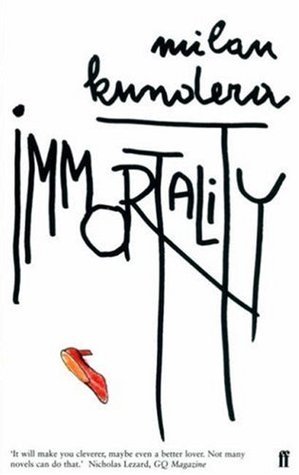
This breathtaking, reverberating survey of human nature finds Kundera still attempting to work out the meaning of life, without losing his acute sense of humour. It is one of those great unclassifiable masterpieces that appear once every twenty years or so.
‘It will make you cleverer, maybe even a better lover. Not many novels can do that.’ Nicholas Lezard, GQ
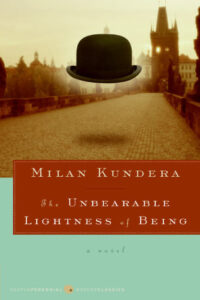
In The Unbearable Lightness of Being, Milan Kundera tells the story of a young woman in love with a man torn between his love for her and his incorrigible womanizing and one of his mistresses and her humbly faithful lover. This magnificent novel juxtaposes geographically distant places, brilliant and playful reflections, and a variety of styles, to take its place as perhaps the major achievement of one of the world’s truly great writers.
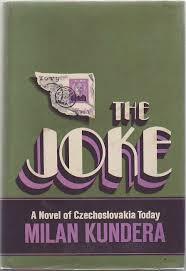
All too often, this brilliant novel of thwarted love and revenge miscarried has been read for its political implications. Now though, a quarter century after The Joke was first published, and several years after the collapse of the Soviet-imposed Czechoslovak regime, it becomes easier to put such implications into perspective in favor of valuing the book (and all Kundera 's work) as what it truly is: great, stirring literature, that sheds new light on the eternal themes of human existence.
The present edition provides English-language readers an important further means toward revaluation of The Joke. For reasons he describes in his Author's Note, Milan Kundera devoted much time to creating (with the assistance of his American publisher-editor) a completely revised translation that reflects his original as closely as any translation possibly can: reflects it in its fidelity not only to the words and syntax but also to the characteristic dictions and tonalities of the novel's narrators. The result is nothing less than the restoration of a classic.
Rich in its stories, characters, and imaginative range, The Book of Laughter and Forgetting is the novel that brought Milan Kundera his first big international success in the late 1970's. Like all his work, it is valuable for far more than just its historical implications. In seven wonderfully integrated parts, different aspects of human existence are magnified and reduced, reordered and emphasized, newly examined, analyzed and experienced.
Left unfinished by Kafka in 1922 and not published until 1926, two years after his death, The Castle is the haunting tale of K.’s relentless, unavailing struggle with an inscrutable authority in order to gain access to the Castle. Scrupulously following the fluidity and breathlessness of the sparsely punctuated original manuscript, Mark Harman’s new translation reveals levels of comedy, energy, and visual power, previously unknown to English language readers.
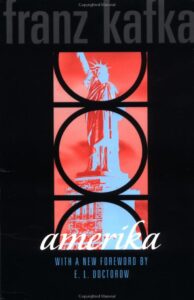
Kafka's first and funniest novel, Amerika tells the story of the young immigrant Karl Rossmann who, after an embarrassing sexual misadventure, finds himself "packed off to America" by his parents. Expected to redeem himself in this magical land of opportunity, young Karl is swept up instead in a whirlwind of dizzying reversals, strange escapades, and picaresque adventures.
Although Kafka never visited America, images of its vast landscape, dangers, and opportunities inspired this saga of the "golden land." Here is a startlingly modern, fantastic and visionary tale of America "as a place no one has yet seen, in a historical period that can't be identified," writes E. L. Doctorow in his new foreword. "Kafka made his novel from his own mind's mythic elements," Doctorow explains, "and the research data that caught his eye were bent like rays in a field of gravity."
A gargantuan, mind-altering tragi-comedy about the Pursuit of Happiness in America.
Set in an addicts' halfway house and a tennis academy, and featuring the most endearingly screwed-up family to come along in recent fiction, Infinite Jest explores essential questions about what entertainment is and why it has come to so dominate our lives; about how our desire for entertainment affects our need to connect with other people; and about what the pleasures we choose say about who we are.
Equal parts philosophical quest and screwball comedy, Infinite Jest bends every rule of fiction without sacrificing for a moment its own entertainment value. It is an exuberant, uniquely American exploration of the passions that make us human—and one of those rare books that renew the idea of what a novel can do.
Steppenwolf is a poetical self-portrait of a man who felt himself to be half-human and half-wolf. This Faust-like and magical story is evidence of Hesse's searching philosophy and extraordinary sense of humanity as he tells of the humanization of a middle-aged misanthrope. Yet his novel can also be seen as a plea for rigorous self-examination and an indictment of the intellectual hypocrisy of the period. As Hesse himself remarked, "Of all my books Steppenwolf is the one that was more often and more violently misunderstood than any of the others".
Published in 1942 by French author Albert Camus, The Stranger has long been considered a classic of twentieth-century literature. Le Monde ranks it as number one on its "100 Books of the Century" list. Through this story of an ordinary man unwittingly drawn into a senseless murder on a sundrenched Algerian beach, Camus explores what he termed "the nakedness of man faced with the absurd."
Welcome Back!
Track your reading progress and sync your library.