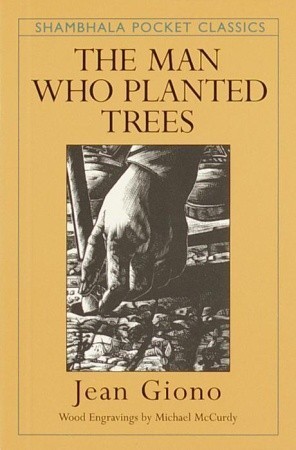
Simply written, but powerful and unforgettable, The Man Who Planted Trees is a parable for modern times. In the foothills of the French Alps the narrator meets a shepherd who has quietly taken on the task of planting one hundred acorns a day in an effort to reforest his desolate region. Not even two world wars can keep the shepherd from continuing his solitary work. Gradually, this gentle, persistent man’s work comes to the region is transformed; life and hope return; the world is renewed.
Jean-Baptiste Clamence is a soul in turmoil. Over several drunken nights in an Amsterdam bar, he regales a chance acquaintance with his story. From this successful former lawyer and seemingly model citizen a compelling, self-loathing catalogue of guilt, hypocrisy and alienation pours forth.
The Fall (French: La Chute) is a philosophical novel by Albert Camus. First published in 1956, it is his last complete work of fiction. The Fall explores themes of innocence, imprisonment, non-existence, and truth. In a eulogy to Albert Camus, existentialist philosopher Jean-Paul Sartre described the novel as "perhaps the most beautiful and the least understood" of Camus' books.
Marcel Proust’s In Search of Lost Time is one of the most entertaining reading experiences in any language and arguably the finest novel of the twentieth century. But since its original prewar translation there has been no completely new version in English. Now, Penguin Classics brings Proust’s masterpiece to new audiences throughout the world, beginning with Lydia Davis’s internationally acclaimed translation of the first volume, Swann’s Way.
Both an exploration of character and a reflection on the meaning of history, Memoirs of Hadrian has received international acclaim since its first publication in France in 1951. In it, Marguerite Yourcenar reimagines the Emperor Hadrian's arduous boyhood, his triumphs and reversals, and finally, as emperor, his gradual reordering of a war-torn world, writing with the imaginative insight of a great writer of the twentieth century while crafting a prose style as elegant and precise as those of the Latin stylists of Hadrian's own era.
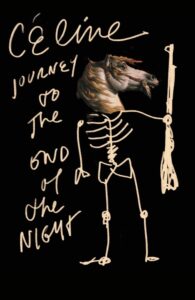
Louis-Ferdinand Celine's revulsion and anger at what he considered the idiocy and hypocrisy of society explodes from nearly every page of this novel. Filled with slang and obscenities and written in raw, colloquial language, Journey to the End of the Night is a literary symphony of violence, cruelty and obscene nihilism. This book shocked most critics when it was first published in France in 1932, but quickly became a success with the reading public in Europe, and later in America where it was first published by New Directions in 1952. The story of the improbable yet convincingly described travels of the petit-bourgeois (and largely autobiographical) antihero, Bardamu, from the trenches of World War I, to the African jungle, to New York and Detroit, and finally to life as a failed doctor in Paris, takes the readers by the scruff and hurtles them toward the novel's inevitable, sad conclusion.
On the surface a traditional "Bildungsroman" describing the narrator’s journey of self-discovery, this huge and complex book is also a panoramic and richly comic portrait of France in the author’s lifetime, and a profound meditation on the nature of art, love, time, memory and death. But for most readers it is the characters of the novel who loom the largest: Swann and Odette, Monsieur de Charlus, Morel, the Duchesse de Guermantes, Françoise, Saint-Loup and so many others — Giants, as the author calls them, immersed in Time. "In Search of Lost Time" is a novel in seven volumes. The novel began to take shape in 1909. Proust continued to work on it until his final illness in the autumn of 1922 forced him to break off. Proust established the structure early on, but even after volumes were initially finished he kept adding new material, and edited one volume after another for publication. The last three of the seven volumes contain oversights and fragmentary or unpolished passages as they existed in draft form at the death of the author; the publication of these parts was overseen by his brother Robert.
For this authoritative English-language edition, D. J. Enright has revised the late Terence Kilmartin’s acclaimed reworking of C. K. Scott Moncrieff’s translation to take into account the new definitive French editions of À la recherche du temps perdu (the final volume of these new editions was published by the Bibliothèque de la Pléiade in 1989).
¿Es posible revertir el inevitable final del Universo, o el mundo debe acabar de todas formas? es la pregunta que desde un día del siglo XXI, hasta generaciones y generaciones posteriores en el tiempo, hacen los humanos a los ordenadores.
En un relato aparentemente sencillo sobre un asunto sobrecogedor, el fin de los días, Asimov demuestra, una vez más, una mente preclara y una mano maestra para sobrecoger al lector y dejarlo en vilo, incluso después de la lectura.
Alternate cover edition of ISBN-13: 978-0140286809, ISBN-10/ASIN: 0140286802
For the first time in English, all the fiction by the writer who has been called “the greatest Spanish-language writer of our century” collected in a single volume
A Penguin Classics Deluxe Edition with flaps and deckle-edged paper
For some fifty years, in intriguing and ingenious fictions that reimagined the very form of the short story—from his 1935 debut with A Universal History of Iniquity through his immensely influential collections Ficciones and The Aleph, the enigmatic prose poems of The Maker, up to his final work in the 1980s, Shakespeare’s Memory—Jorge Luis Borges returned again and again to his celebrated themes: dreams, duels, labyrinths, mirrors, infinite libraries, the manipulations of chance, gauchos, knife fighters, tigers, and the elusive nature of identity itself. Playfully experimenting with ostensibly subliterary genres, he took the detective story and turned it into metaphysics; he took fantasy writing and made it, with its questioning and reinventing of everyday reality, central to the craft of fiction; he took the literary essay and put it to use reviewing wholly imaginary books.
Bringing together for the first time in English all of Borges’s magical stories, and all of them newly rendered into English in brilliant translations by Andrew Hurley, Collected Fictions is the perfect one-volume compendium for all who have long loved Borges, and a superb introduction to the master’s work for all who have yet to discover this singular genius.
The Age of Reason is set in 1938 and tells of Mathieu, a French professor of philosophy who is obsessed with the idea of freedom. As the shadows of the Second World War draw closer -- even as his personal life is complicated by his mistress's pregnancy -- his search for a way to remain free becomes more and more intense.
Welcome Back!
Track your reading progress and sync your library.