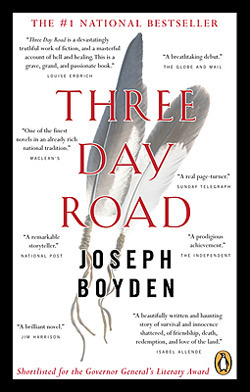
It is 1919, and Niska, the last Oji-Cree woman to live off the land, has received word that one of the two boys she saw off to the Great War has returned. Xavier Bird, her sole living relation, is gravely wounded and addicted to morphine. As Niska slowly paddles her canoe on the three-day journey to bring Xavier home, travelling through the stark but stunning landscape of Northern Ontario, their respective stories emerge—stories of Niska’s life among her kin and of Xavier’s horrifying experiences in the killing fields of Ypres and the Somme.
This brilliant novel with universal resonance, set during the 1990s Siege of Sarajevo, tells the story of three people trying to survive in a city rife with the extreme fear of desperate times, and of the sorrowing cellist who plays undaunted in their midst.
One day a shell lands in a bread line and kills twenty-two people as the cellist watches from a window in his flat. He vows to sit in the hollow where the mortar fell and play Albinoni’s Adagio once a day for each of the twenty-two victims. The Adagio had been re-created from a fragment after the only extant score was firebombed in the Dresden Music Library, but the fact that it had been rebuilt by a different composer into something new and worthwhile gives the cellist hope.
Meanwhile, Kenan steels himself for his weekly walk through the dangerous streets to collect water for his family on the other side of town, and Dragan, a man Kenan doesn’t know, tries to make his way towards the source of the free meal he knows is waiting. Both men are almost paralyzed with fear, uncertain when the next shot will land on the bridges or streets they must cross, unwilling to talk to their old friends of what life was once like before divisions were unleashed on their city. Then there is “Arrow,” the pseudonymous name of a gifted female sniper, who is asked to protect the cellist from a hidden shooter who is out to kill him as he plays his memorial to the victims.
In this beautiful and unforgettable novel, Steven Galloway has taken an extraordinary, imaginative leap to create a story that speaks powerfully to the dignity and generosity of the human spirit under extraordinary duress.
With more than a million copies sold worldwide, a modern classic of Palestinian literature from “a major writer of our time” (Alice Walker).
“Timeless in its truth.” —Fattima Bhutto “Powerful and passionate.” —Michael Palin “A novel to savor.” —Maureen Corrigan “Relevant, powerful, emotional and vivid.” —Bidisha Mamat
Mornings in Jenin is a heart-wrenching multi-generational account of one family's struggle and survival through the decades before and after Zionist colonization and theft of Palestine. Carrying us from Ein Hod to Jenin to Jerusalem, to Lebanon, then to the anonymity of America and finally back to Occupied Palestine, it is a novel of vital importance, “affirming all that is enduring and valuable in the undefeated human spirit” (Hanan Ashrawi).
“Affects me emotionally in a way only great novels can.” —Henning Mankell “Achingly beautiful.” —Saleem Haddad “When we grow numb to horror, when our minds slam shut in shock and denial, sometimes a story can slip to reawaken our humanity. This is that story, never more relevant.” —Laline Paull
Cristabel Seagrave has always wanted her life to be a story, but there are no girls in the books in her dusty family library. For an unwanted orphan who grows into an unmarriageable young woman, there is no place at all for her in a traditional English manor. But from the day that a whale washes up on the beach at the Chilcombe estate in Dorset, and twelve-year-old Cristabel plants her flag and claims it as her own, she is determined to do things differently.
With her step-parents blithely distracted by their endless party guests, Cristabel and her siblings, Flossie and Digby, scratch together an education from the plays they read in their freezing attic, drunken conversations eavesdropped through oak-panelled doors, and the esoteric lessons of Maudie their maid.
But as the children grow to adulthood and war approaches, jolting their lives on to very different tracks, it becomes clear that the roles they are expected to play are no longer those they want. As they find themselves drawn into the conflict, they must each find a way to write their own story...
This is the story of an old English manor house by the sea, with crumbling chimneys, draping ivy and a library full of dusty hardbacks. It's the story of the three children who grow up there, and the adventures they create for themselves while the grown-ups entertain endless party guests: the worlds they imagine from books they aren't supposed to read, and the lessons they learn from eavesdropping through oak-panelled doors.
This is the story of a whale that washes up on a beach, whose bones are claimed by a twelve-year-old girl with big ambitions and an even bigger imagination. An unwanted orphan who grows into an unmarriageable young woman, chafing under the confines of her traditional upbringing and fiercely determined to do things differently.
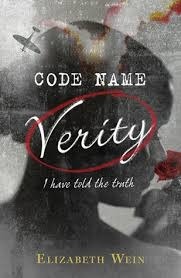
Oct. 11th, 1943 - A British spy plane crashes in Nazi-occupied France. Its pilot and passenger are best friends. One of the girls has a chance at survival. The other has lost the game before it's barely begun.
When "Verity" is arrested by the Gestapo, she's sure she doesn't stand a chance. As a secret agent captured in enemy territory, she's living a spy's worst nightmare. Her Nazi interrogators give her a simple choice: reveal her mission or face a grisly execution.
As she intricately weaves her confession, Verity uncovers her past, how she became friends with the pilot Maddie, and why she left Maddie in the wrecked fuselage of their plane. On each new scrap of paper, Verity battles for her life, confronting her views on courage and failure and her desperate hope to make it home. But will trading her secrets be enough to save her from the enemy?
Harrowing and beautifully written, Elizabeth Wein creates a visceral read of danger, resolve, and survival that shows just how far true friends will go to save each other. Code Name Verity is an outstanding novel that will stick with you long after the last page.
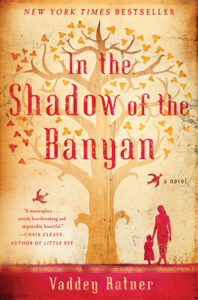
Displaying the author's extraordinary gift for language, In the Shadow of the Banyan is testament to the transcendent power of narrative and a brilliantly wrought tale of human resilience.
For seven-year-old Raami, the shattering end of childhood begins with the footsteps of her father returning home in the early dawn hours bringing details of the civil war that has overwhelmed the streets of Phnom Penh, Cambodia's capital. Soon the family's world of carefully guarded royal privilege is swept up in the chaos of revolution and forced exodus.
Over the next four years, as she endures the deaths of family members, starvation, and brutal forced labor, Raami clings to the only remaining vestige of childhood - the mythical legends and poems told to her by her father. In a climate of systematic violence where memory is sickness and justification for execution, Raami fights for her improbable survival. Displaying the author's extraordinary gift for language, In the Shadow of the Banyan is testament to the transcendent power of narrative and a brilliantly wrought tale of human resilience.
This is an epic of love, hatred, war and revolution. This is a huge novel that follows five families through the world-shaking dramas of the First World War, the Russian Revolution, and the struggle for votes for women.
It is 1911. The Coronation Day of King George V. The Williams, a Welsh coal-mining family is linked by romance and enmity to the Fitzherberts, aristocratic coal-mine owners. Lady Maud Fitzherbert falls in love with Walter von Ulrich, a spy at the German Embassy in London. Their destiny is entangled with that of an ambitious young aide to U.S. President Woodrow Wilson and to two orphaned Russian brothers, whose plans to emigrate to America fall foul of war, conscription and revolution. In a plot of unfolding drama and intriguing complexity, "Fall Of Giants" moves seamlessly from Washington to St Petersburg, from the dirt and danger of a coal mine to the glittering chandeliers of a palace, from the corridors of power to the bedrooms of the mighty.
It is April 1975, and Saigon is in chaos. At his villa, a general of the South Vietnamese army is drinking whiskey and, with the help of his trusted captain, drawing up a list of those who will be given passage aboard the last flights out of the country. The general and his compatriots start a new life in Los Angeles, unaware that one among their number, the captain, is secretly observing and reporting on the group to a higher-up in the Viet Cong.
The Sympathizer is the story of this captain: a man brought up by an absent French father and a poor Vietnamese mother, a man who went to university in America, but returned to Vietnam to fight for the Communist cause. A gripping spy novel, an astute exploration of extreme politics, and a moving love story, The Sympathizer explores a life between two worlds and examines the legacy of the Vietnam War in literature, film, and the wars we fight today.
During the Nazis’ brutal siege of Leningrad, Lev Beniov is arrested for looting and thrown into the same cell as a handsome deserter named Kolya. Instead of being executed, Lev and Kolya are given a shot at saving their own lives by complying with an outrageous directive: secure a dozen eggs for a powerful Soviet colonel to use in his daughter’s wedding cake. In a city cut off from all supplies and suffering unbelievable deprivation, Lev and Kolya embark on a hunt through the dire lawlessness of Leningrad and behind enemy lines to find the impossible.
By turns insightful and funny, thrilling and terrifying, City of Thieves is a gripping, cinematic World War II adventure and an intimate coming-of-age story with an utterly contemporary feel for how boys become men.
Welcome Back!
Track your reading progress and sync your library.