When God was a Rabbit is an incredibly exciting debut from an extraordinary new voice in fiction.
Spanning four decades, from 1968 onwards, this is the story of a fabulous but flawed family and the slew of ordinary and extraordinary incidents that shape their everyday lives. It is a story about childhood and growing up, loss of innocence, eccentricity, familial ties and friendships, love and life. Stripped down to its bare bones, it’s about the unbreakable bond between a brother and sister.
A gritty, heart-wrenching novel about bruised innocence on the city's feral streets—the remarkable debut of a stunning literary talent
Heather O'Neill dazzles with a first novel of extraordinary prescience and power, a subtly understated yet searingly effective story of a young life on the streets—and the strength, wits, and luck necessary for survival.
At thirteen, Baby vacillates between childhood comforts and adult temptation: still young enough to drag her dolls around in a vinyl suitcase yet old enough to know more than she should about urban cruelties. Motherless, she lives with her father, Jules, who takes better care of his heroin habit than he does of his daughter. Baby's gift is a genius for spinning stories and for cherishing the small crumbs of happiness that fall into her lap. But her blossoming beauty has captured the attention of a charismatic and dangerous local pimp who runs an army of sad, slavishly devoted girls—a volatile situation even the normally oblivious Jules cannot ignore. And when an escape disguised as betrayal threatens to crush Baby's spirit, she will ultimately realize that the power of salvation rests in her hands alone.
Tim Winton is Australia’s best-loved novelist. Breath is an extraordinary evocation of an adolescence spent resisting complacency, testing one’s limits against nature, finding like-minded souls, and discovering just how far one breath will take you. It’s a story of extremes—extreme sports and extreme emotions.
On the wild, lonely coast of Western Australia, two thrillseeking and barely adolescent boys fall into the enigmatic thrall of veteran big-wave surfer Sando. Together they form an odd but elite trio. The grown man initiates the boys into a kind of Spartan ethos, a regimen of risk and challenge, where they test themselves in storm swells on remote and shark-infested reefs, pushing each other to the edges of endurance, courage, and sanity. But where is all this heading? Why is their mentor’s past such forbidden territory? And what can explain his American wife’s peculiar behavior? Venturing beyond all limits—in relationships, in physical challenge, and in sexual behavior—there is a point where oblivion is the only outcome. Full of Winton’s lyrical genius for conveying physical sensation, Breath is a rich and atmospheric coming-of-age tale from one of world literature’s finest storytellers.
From award-winning writer David Mitchell comes a sinewy, meditative novel of boyhood on the cusp of adulthood and the old on the cusp of the new.
Black Swan Green tracks a single year in what is, for thirteen-year-old Jason Taylor, the sleepiest village in muddiest Worcestershire in a dying Cold War England, 1982. But the thirteen chapters, each a short story in its own right, create an exquisitely observed world that is anything but sleepy. A world of Kissingeresque realpolitik enacted in boys’ games on a frozen lake; of “nightcreeping” through the summer backyards of strangers; of the tabloid-fueled thrills of the Falklands War and its human toll; of the cruel, luscious Dawn Madden and her power-hungry boyfriend, Ross Wilcox; of a certain Madame Eva van Outryve de Crommelynck, an elderly bohemian emigré who is both more and less than she appears; of Jason’s search to replace his dead grandfather’s irreplaceable smashed watch before the crime is discovered; of first cigarettes, first kisses, first Duran Duran LPs, and first deaths; of Margaret Thatcher’s recession; of Gypsies camping in the woods and the hysteria they inspire; and, even closer to home, of a slow-motion divorce in four seasons.
Pointed, funny, profound, left-field, elegiac, and painted with the stuff of life, Black Swan Green is David Mitchell’s most subtlest and effective achievement to date.
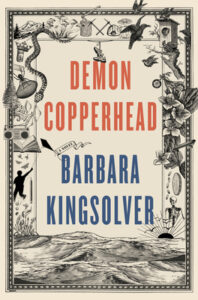
"Anyone will tell you the born of this world are marked from the get-out, win or lose."
Set in the mountains of southern Appalachia, this is the story of a boy born to a teenaged single mother in a single-wide trailer, with no assets beyond his dead father's good looks and copper-colored hair, a caustic wit, and a fierce talent for survival. In a plot that never pauses for breath, relayed in his own unsparing voice, he braves the modern perils of foster care, child labor, derelict schools, athletic success, addiction, disastrous loves, and crushing losses. Through all of it, he reckons with his own invisibility in a popular culture where even the superheroes have abandoned rural people in favor of cities.
Many generations ago, Charles Dickens wrote David Copperfield from his experience as a survivor of institutional poverty and its damages to children in his society. Those problems have yet to be solved in ours. Dickens is not a prerequisite for readers of this novel, but he provided its inspiration. In transposing a Victorian epic novel to the contemporary American South, Barbara Kingsolver enlists Dickens' anger and compassion, and above all, his faith in the transformative powers of a good story. Demon Copperhead speaks for a new generation of lost boys, and all those born into beautiful, cursed places they can't imagine leaving behind.
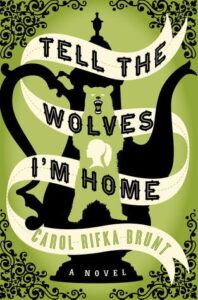
In this striking literary debut, Carol Rifka Brunt unfolds a moving story of love, grief, and renewal as two lonely people become the unlikeliest of friends and find that sometimes you don't know you've lost someone until you've found them.
1987. There's only one person who has ever truly understood fourteen-year-old June Elbus, and that's her uncle, the renowned painter Finn Weiss. Shy at school and distant from her older sister, June can only be herself in Finn's company; he is her godfather, confidant, and best friend. So when he dies, far too young, of a mysterious illness her mother can barely speak about, June's world is turned upside down. But Finn's death brings a surprise acquaintance into June's life—someone who will help her to heal, and to question what she thinks she knows about Finn, her family, and even her own heart.
At Finn's funeral, June notices a strange man lingering just beyond the crowd. A few days later, she receives a package in the mail. Inside is a beautiful teapot she recognizes from Finn's apartment, and a note from Toby, the stranger, asking for an opportunity to meet. As the two begin to spend time together, June realizes she's not the only one who misses Finn, and if she can bring herself to trust this unexpected friend, he just might be the one she needs the most.
An emotionally charged coming-of-age novel, Tell the Wolves I'm Home is a tender story of love lost and found, an unforgettable portrait of the way compassion can make us whole again.
Introducing a fresh, exciting Chinese-American voice, an inspiring debut about an immigrant girl forced to choose between two worlds and two futures.
When Kimberly Chang and her mother emigrate from Hong Kong to Brooklyn squalor, she quickly begins a secret double life: exceptional schoolgirl during the day, Chinatown sweatshop worker in the evenings. Disguising the more difficult truths of her life like the staggering degree of her poverty, the weight of her family’s future resting on her shoulders, or her secret love for a factory boy who shares none of her talent or ambition. Kimberly learns to constantly translate not just her language but herself back and forth between the worlds she straddles.
Through Kimberly’s story, author Jean Kwok, who also emigrated from Hong Kong as a young girl, brings to the page the lives of countless immigrants who are caught between the pressure to succeed in America, their duty to their family, and their own personal desires, exposing a world that we rarely hear about.
Written in an indelible voice that dramatizes the tensions of an immigrant girl growing up between two cultures, surrounded by a language and world only half understood, Girl in Translation is an unforgettable and classic novel of an American immigrant--a moving tale of hardship and triumph, heartbreak and love, and all that gets lost in translation.
Chris Bohjalian, bestselling author of Midwives, presents his most ambitious and multi-layered novel to date--examining wildly divisive issues in today’s America with his trademark emotional heft and spellbinding storytelling skill. On a balmy July night in New Hampshire a shot rings out in a garden, and a man falls to the ground, terribly wounded. The wounded man is Spencer McCullough, the shot that hit him was fired–accidentally?–by his adolescent daughter Charlotte. With this shattering moment of violence, Chris Bohjalian launches the best kind of literate page-turner: suspenseful, wryly funny, and humane.
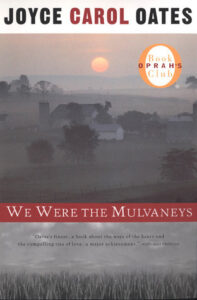
The Mulvaneys of High Point Farm in Mt. Ephraim, New York, are a large and fortunate clan, blessed with good looks, abundant charisma, and boundless promise. But over the twenty-five year span of this ambitious novel, the Mulvaneys will slide, almost imperceptibly at first, from the pinnacle of happiness, transformed by the vagaries of fate into a scattered collection of lost and lonely souls.It is the youngest son, Judd, now an adult, who attempts to piece together the fragments of the Mulvaneys' former glory, seeking to uncover and understand the secret violation that occasioned the family's tragic downfall. Each of the Mulvaneys endures some form of exile- physical or spiritual - but in the end they find a way to bridge the chasms that have opened up among them, reuniting in the spirit of love and healing.
Welcome Back!
Track your reading progress and sync your library.