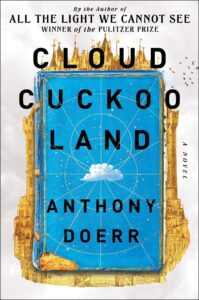
When an enigmatic woman cloaked in black wanders into a Chinese labor camp in the Pacific Northwest of 1873, one man is chosen to lead her out into the woods. But soon, he becomes the enchanted follower. Thus begins a magical journey. . . .
In the year 1689, a cabal of Barbary galley slaves -- including one Jack Shaftoe, aka King of the Vagabonds, aka Half-Cocked Jack -- devises a daring plan to win freedom and fortune. A great adventure ensues -- a perilous race for an enormous prize of silver ... nay, gold ... nay, legendary gold. In Europe, the exquisite and resourceful Eliza, Countess de la Zeur, is stripped of her immense personal fortune by France's most dashing privateer. Penniless and at risk from those who desire either her or her head (or both), she is caught up in a web of international intrigue, even as she desperately seeks the return of her most precious possession. Meanwhile, Newton and Leibniz continue to propound their grand theories as their infamous rivalry intensifies, stubborn alchemy does battle with the natural sciences, dastardly plots are set in motion ... and Daniel Waterhouse seeks passage to the Massachusetts colony in hopes of escaping the madness into which his world has descended. This P.S. edition features an extra 16 pages of insights into the book, including author interviews, recommended reading, and more.
Chava is a golem, a creature made of clay, brought to life by a disgraced rabbi who dabbles in dark Kabbalistic magic, created to be the wife of a man who dies at sea on the voyage from Poland. Chava is unmoored and adrift as the ship arrives in New York harbor in 1899.
Ahmad is a jinni, a being of fire born in the ancient Syrian desert, trapped in an old copper flask, and released in New York City, though still not entirely free.
Ahmad and Chava become unlikely friends and soul mates with a mystical connection. Marvelous and compulsively readable, Helene Wecker's debut novel The Golem and the Jinni weaves strands of Yiddish and Middle Eastern literature, historical fiction and magical fable, into a wondrously inventive and unforgettable tale.
Giants in the Earth (Norwegian: Verdens Grøde) is a novel by Norwegian-American author Ole Edvart Rølvaag. First published in Norway as two books in 1924 and 1925, the author collaborated with Minnesotan Lincoln Colcord on the English translation.
The novel follows a Norwegian family's struggles as they try to make a new life as pioneers in the Dakota territory. Rølvaag is interested in psychology and the human cost of empire building, at a time when other writers focused on the glamor and romance of the West. The book reflects his personal experiences as a settler as well as the immigrant homesteader experience of his wife’s family. Both the grim realities of pioneering and the gloomy fatalism of the Norse mind are captured in depictions of snow storms, locusts, poverty, hunger, loneliness, homesickness, the difficulty of fitting into a new culture, and the estrangement of immigrant children who grow up in a new land. It is a novel at once palpably European and distinctly American.
Giants in the Earth was turned into an opera by Douglas Moore and Arnold Sundgaard; it won the Pulitzer Prize for Music in 1951.
A poignant coming-of-age novel set in a Welsh mining town, Richard Llewellyn's How Green Was My Valley is a paean to a more innocent age.
Growing up in a mining community in rural South Wales, Huw Morgan is taught many harsh lessons - at the kitchen table, at Chapel and around the pit-head. Looking back on the hardships of his early life, where difficult days are faced with courage but the valleys swell with the sound of Welsh voices, it becomes clear that there is nowhere so green as the landscape of his own memory.
An immediate bestseller on publication in 1939, How Green Was My Valley quickly became one of the best-loved novels of the twentieth century. Poetic and nostalgic, it is an elegy to a lost world.
In Blackout, award-winning author Connie Willis returned to the time-traveling future of 2060—the setting for several of her most celebrated works—and sent three Oxford historians to World War II Eng;and: Michael Davies, intent on observing heroism during the Miracle of Dunkirk; Merope Ward, studying children evacuated from London; and Polly Churchill, posing as a shopgirl in the middle of the Blitz. But when the three become unexpectedly trapped in 1940, they struggle not only to find their way home but to survive as Hitler’s bombers attempt to pummel London into submission.
Now the situation has grown even more dire. Small discrepancies in the historical record seem to indicate that one or all of them have somehow affected the past, changing the outcome of the war. The belief that the past can be observed but never altered has always been a core belief of time-travel theory—but suddenly it seems that the theory is horribly, tragically wrong.
Meanwhile, in 2060 Oxford, the historians’ supervisor, Mr. Dunworthy, and seventeen-year-old Colin Templer, who nurses a powerful crush on Polly, are engaged in a frantic and seemingly impossible struggle of their own—to find three missing needles in the haystack of history.
Told with compassion, humor, and an artistry both uplifting and devastating, All Clear is more than just the triumphant culmination of the adventure that began with Blackout. It’s Connie Willis’s most humane, heartfelt novel yet—a clear-eyed celebration of faith, love, and the quiet, ordinary acts of heroism and sacrifice too often overlooked by history.
The visionary author’s masterpiece pulls us—along with her Black female hero—through time to face the horrors of slavery and explore the impacts of racism, sexism, and white supremacy then and now.
Dana, a modern Black woman, is celebrating her 26th birthday with her new husband when she is snatched abruptly from her home in California and transported to the antebellum South. Rufus, the white son of a plantation owner, is drowning, and Dana has been summoned to save him. Dana is drawn back repeatedly through time to the slave quarters, and each time the stay grows longer, more arduous, and more dangerous until it is uncertain whether or not Dana’s life will end, long before it has a chance to begin.
Charles Carter—a.k.a. Carter the Great—is a young master performer whose skill as an illusionist exceeds even that of the great Houdini. But nothing in his career has prepared Carter for the greatest stunt of all, which stars none other than President Warren G. Harding and which could end up costing Carter the reputation he has worked so hard to create. Filled with historical references that evoke the excesses and exuberance of Roaring Twenties, pre-Depression America, Carter Beats the Devil is a complex and illuminating story of one man's journey through a magical—and sometimes dangerous—world, where illusion is everything.
Some stories cannot be told in just one lifetime. Harry August is on his deathbed. Again. No matter what he does or the decisions he makes, when death comes, Harry always returns to where he began, a child with all the knowledge of a life he has already lived a dozen times before. Nothing ever changes. Until now. As Harry nears the end of his eleventh life, a little girl appears at his bedside. "I nearly missed you, Doctor August," she says. "I need to send a message." This is the story of what Harry does next, and what he did before, and how he tries to save a past he cannot change and a future he cannot allow.
Welcome Back!
Track your reading progress and sync your library.