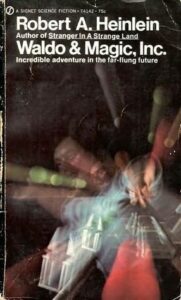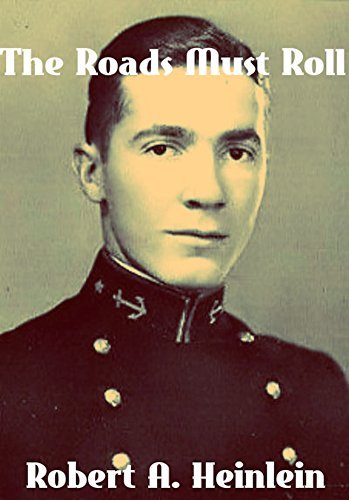
The Roads Must Roll
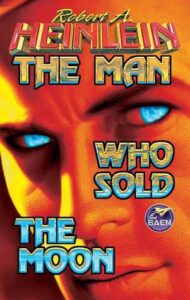
Robert Anson Heinlein was an American novelist and science fiction writer. Often called “the dean of science fiction writers”, he is one of the most popular, influential, and controversial authors of “hard science fiction”.
Isaac Asimov's I, Robot launches readers on an adventure into a not-so-distant future where man and machine , struggle to redefinelife, love, and consciousness—and where the stakes are nothing less than survival. Filled with unforgettable characters, mind-bending speculation, and nonstop action, I, Robot is a powerful reading experience from one of the master storytellers of our time.
I, ROBOT
They mustn't harm a human being, they must obey human orders, and they must protect their own existence...but only so long as that doesn't violate rules one and two. With these Three Laws of Robotics, humanity embarked on perhaps its greatest adventure: the invention of the first positronic man. It was a bold new era of evolution that would open up enormous possibilities—and unforeseen risks. For the scientists who invented the earliest robots weren't content that their creations should ' remain programmed helpers, companions, and semisentient worker-machines. And soon the robots themselves; aware of their own intelligence, power, and humanity, aren't either.
As humans and robots struggle to survive together—and sometimes against each other—on earth and in space, the future of both hangs in the balance. Human men and women confront robots gone mad, telepathic robots, robot politicians, and vast robotic intelligences that may already secretly control the world. And both are asking the same questions: What is human? And is humanity obsolete?
In l, Robot Isaac Asimov changes forever our perception of robots, and human beings and updates the timeless myth of man's dream to play god. with all its rewards—and terrors.
--front flap
From Isaac Asimov, the Hugo Award-winning Grand Master of Science Fiction whose name is synonymous with the science of robotics, comes five decades of robot visions: thirty-four landmark stories and essays—including three rare tales—gathered together in one volume.
Meet all of Asimov’s most famous creations including: Robbie, the very first robot that his imagination brought to life; Susan Calvin, the original robot psychologist; Stephen Byerley, the humanoid robot; and the famous human/robot detective team of Lije Bailey and R. Daneel Olivaw, who have appeared in such bestselling novels as The Robots of Dawn and Robots and Empire.
Let the master himself guide you through the key moments in the fictional history of robot-human relations—from the most primitive computers and mobile machines to the first robot to become a man.
(back cover)
Contents:
Robot Visions • cover and interior artwork by Ralph McQuarrie
Introduction: The Robot Chronicles • essay by Isaac Asimov
Robot Visions / short story by Isaac Asimov
Too Bad! (1989) / short story by Isaac Asimov
Robbie (1940) / short story by Isaac Asimov (variant of Strange Playfellow)
Reason [Mike Donovan] (1941) / short story by Isaac Asimov
Liar! [Susan Calvin] (1941) / short story by Isaac Asimov
Runaround [Mike Donovan] (1942) / novelette by Isaac Asimov
Evidence [Susan Calvin] (1946) / novelette by Isaac Asimov
Little Lost Robot [Susan Calvin] (1947) / novelette by Isaac Asimov
The Evitable Conflict [Susan Calvin] (1950) / novelette by Isaac Asimov
Feminine Intuition [Susan Calvin] (1969) / novelette by Isaac Asimov
The Bicentennial Man (1976) / novelette by Isaac Asimov
Someday (1956) / short story by Isaac Asimov
Think! (1977) / short story by Isaac Asimov
Segregationist (1967) / short story by Isaac Asimov
Mirror Image [Elijah Bailey/R. Daneel Olivaw] (1972) / short story by Isaac Asimov
Lenny [Susan Calvin] (1958) / short story by Isaac Asimov
Galley Slave [Susan Calvin] (1957) / novelette by Isaac Asimov
Christmas Without Rodney (1988) / short story by Isaac Asimov
Essays by Isaac Asimov: Robots I Have Known (1954); The New Teachers (1976); Whatever You Wish (1977); The Friends We Make (1977); Our Intelligent Tools (1977); The Laws of Robotics (1979); Future Fantastic (1989); The Machine and the Robot (1978); The New Profession (1979); The Robot As Enemy? (1979); Intelligences Together (1979); My Robots (1987); The Laws of Humanics (1987); Cybernetic Organism (1987); The Sense of Humor (1988); Robots in Combination (1988).
The volume features many black-and-white illustrations by Ralph McQuarrie.
Andrew was one of Earth's first house robot domestic servants—smoothly designed and functional. But when Andrew started to develop special talents which exceeded the confines of his allotted positronic pathways, he abandoned his domestic duties in favour of more intellectual pursuits. As time passed, Andrew acquired knowledge, feelings and ambitions way beyond anything ever experienced by any other mechanical men. And he found himself launched on to a career which would bring him fame fortune — and danger. For a robot who wants to be human must also be prepared to die...
In the Bicentennial Man, Isaac Asimov returns to his first and most enduring love — robotics. The result is a brilliant book of first-class entertainment and mind-spinning ideas which confirm Asimov's supreme status as Grand Master of science fiction.
Content
"Feminine Intuition" (1969)
"Waterclap" (1970)
"That Thou Art Mindful of Him" (1974)
"Stranger in Paradise" (1974)
"The Life and Times of Multivac" (1975)
"The Winnowing" (1976)
"The Bicentennial Man" (1976)
"Marching In" (1976)
"Old-Fashioned" (1976)
"The Tercentenary Incident" (1976)
"Birth of a Notion" (1976)
Cover Illustration: Don Dixon
Severian is in possession of a gem considered to be "The Claw of the Conciliator", a powerful relic of the Master of Power, a legendary figure of mythic proportions. Armed with his sword, Terminus Est, and the Claw, Severian continues his journey to Thrax, the city of his exile. Bizarre apes, strange cannibalistic rituals, and the foreigner named Jonas all lie in his future.
In 1941, Astounding Science Fiction magazine published a short story by a little-known writer named Isaac Asimov. The story was called "Nightfall", and many years later it has long been recognized as a classic, its author a legend. Now, the Grand Master of Science Fiction teams with Robert Silverberg, one of the field's top award-winning authors, to explore and expand an apocalyptic tale that is more spellbinding today than ever before -- Nightfall: The Novel.
Imagine living on a planet with six suns that never experiences darkness. Imagine never having seen the stars. Then, one by one the suns start to set, gradually leading into darkness for the first time ever. Kalgash is a world on the edge of chaos, torn between the madness of religious fanaticism and the unyielding rationalism of scientists. Lurking beneath it all is a collective, instinctual fear of the Darkness. For Kalgash knows only the perpetual light of day; to its inhabitants, a gathering twilight portends unspeakable horror. And only a handful of people on the planet are prepared to face the truth, their six suns are setting all at once for the first time in over two thousand years, signaling the end of civilization as it explodes in the awesome splendor of Nightfall.
Encompassing the psychology of disaster, the tenacity of the human spirit, and, ultimately, the regenerative power of hope, Nightfall is a tale rich in character and suspense that only the unique collaboration of Isaac Asimov and Robert Silverberg could create.
This volume is the definitive collection of the best science fiction novellas between 1929 to 1964 and contains eleven great classics. There is no better anthology that captures the birth of science fiction as a literary field.
Published in 1973 to honor stories that had come before the institution of the Nebula Awards, The Science Fiction Hall of Fame introduced tens of thousands of young readers to the wonders of science fiction and was a favorite of libraries across the country.
Eleven more classic novellas by the most honored authors of science fiction. Companion to Volume IIA.
Introduction · Ben Bova
The Martian Way · Isaac Asimov · na Galaxy Nov ’52
Earthman, Come Home [Okie] · James Blish · nv Astounding Nov ’53
Rogue Moon · Algis Budrys · na F&SF Dec ’60
The Specter General · Theodore R. Cogswell · na Astounding Jun ’52
The Machine Stops · E. M. Forster · nv Oxford and Cambridge Review Nov ’09
The Midas Plague · Frederik Pohl · na Galaxy Apr ’54
The Witches of Karres · James H. Schmitz · nv Astounding Dec ’49
E for Effort · T. L. Sherred · nv Astounding May ’47
In Hiding · Wilmar H. Shiras · nv Astounding Nov ’48
The Big Front Yard · Clifford D. Simak · na Astounding Oct ’58
The Moon Moth · Jack Vance · na Galaxy Aug ’61
Librarian's Note: Alternate cover edition available here.
Simak's City is a series of connected stories, a series of legends, myths, and campfire stories told by Dogs about the end of human civilization, centering on the Webster family, who, among their other accomplishments, designed the ships that took Men to the stars and gave Dogs the gift of speech and robots to be their hands.
Philip K. Dick was a master of science fiction, but he was also a writer whose work transcended genre to examine the nature of reality and what it means to be human. A writer of great complexity and subtle humor, his work belongs on the shelf of great twentieth-century literature, next to Kafka and Vonnegut. Collected here are twenty-one of Dick's most dazzling and resonant stories, which span his entire career and show a world-class writer working at the peak of his powers.
In "The Days of Perky Pat," people spend their time playing with dolls who manage to live an idyllic life no longer available to the Earth's real inhabitants. "Adjustment Team" looks at the fate of a man who by mistake has stepped out of his own time. In "Autofac," one community must battle benign machines to take back control of their lives. And in "I Hope I Shall Arrive Soon," we follow the story of one man whose very reality may be nothing more than a nightmare. The collection also includes such classic stories as "The Minority Report," the basis for the Steven Spielberg movie, and "We Can Remember It for You Wholesale," the basis for the film Total Recall. Selected Stories of Philip K. Dick is a magnificent distillation of one of American literature's most searching imaginations.
» Introduction by Jonathan Lethem
1. Beyond Lies the Wub (wikipedia)
2. Roog (wikipedia)
3. Paycheck (wikipedia, imdb)
4. Second Variety (wikipedia, imdb)
5. Imposter (wikipedia)
6. The King of the Elves (wikipedia, imdb)
7. Adjustment Team (wikipedia, imdb)
8. Foster, You're Dead! (wikipedia)
9. Upon the Dull Earth (wikipedia)
10. Autofac (wikipedia)
11. The Minority Report (wikipedia, imdb)
12. The Days of Perky Pat (wikipedia)
13. Precious Artifact
14. A Game of Unchance
15. We Can Remember It for You Wholesale (wikipedia, imdb)
16. Faith of Our Fathers (wikipedia)
17. The Electric Ant (wikipedia)
18. A Little Something for Us Tempunauts (wikipedia)
19. The Exit Door Leads In (wikipedia)
20. Rautavaara's Case (wikipedia)
21. I Hope I Shall Arrive Soon (wikipedia)