
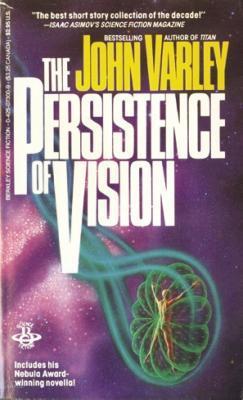
Introduction · Algis Budrys · in The Phantom of Kansas · nv Galaxy Feb ’76 Air Raid [as by Herb Boehm] · ss IASFM Spr ’77 Retrograde Summer · nv F&SF Feb ’75 The Black Hole Passes · nv F&SF Jun ’75 In the Hall of the Martian Kings · na F&SF Feb ’77 In the Bowl · nv F&SF Dec ’75 Gotta Sing, Gotta Dance · nv Galaxy Jul ’76 Overdrawn at the Memory Bank · nv Galaxy May ’76 The Persistence of Vision · na F&SF Mar ’78
The recipient of numerous literary prizes, including the National Book Award, the Kafka Award, and the Pushcart Prize, Ursula K. Le Guin is renowned for her lyrical writing, rich characters, and diverse worlds. The Wind's Twelve Quarters collects seventeen powerful stories, each with an introduction by the author, ranging from fantasy to intriguing scientific concepts, from medieval settings to the future.
Including an insightful foreword by Le Guin, describing her experience, her inspirations, and her approach to writing, this stunning collection explores human values, relationships, and survival, and showcases the myriad talents of one of the most provocative writers of our time.
Wizardry, transforming its master into a cloud of fine mist...cloning, duplicating the ideal man ten times over...Utopia, in a city where almost everyone is perfectly happy...
Ursula Le Guin, author of The Earthsea Trilogy, has a special way of blending stirring adventure with fantasy that has made comparison with such masters as C.S. Lewis and J.R.R. Tolkien inevitable.
Now, in The Wind's Twelve Quarters, seventeen of her favorite stories reaffirm Ursula Le Guin as one of America's outstanding writers.
CONTENTS:
Foreword Semley's Necklace April in Paris The Masters Darkness Box The Word of Unbinding The Rule of Names Winter's King The Good Trip Nine Lives Things A Trip to the Head Vaster than Empires and More Slow The Stars Below The Field of Vision Direction of the Road The Ones Who Walk Away from Omelas The Day Before the Revolution
A collection of stories highlight such objects of the imagination as a starship that sails on the wings of song, musical instruments that are played at funerals only, and orbiting arks designed to save a doomed humanity.
A novel expanded from a short story (different from book 1 Pilgrimage which was a push of short stories connected by new material) of the alien PEOPLE and earthlings with gifts similar to those of the People -- who might be lost PEOPLE!The "People" stories inclulded in this No Different Flesh (1965)Deluge (1963)Angels Unawares (1966)Troubling of the Waters (1966)Return (1961)Shadow on the Moon (1962)
The recipient of numerous literary prizes, including the National Book Award, the Kafka Award, five Hugo Awards and five Nebula Awards, the renowned writer Ursula K. Le Guin has, in each story and novel, created a provocative, ever-evolving universe filled with diverse worlds and rich characters reminiscent of our earthly selves. Now, in The Birthday of the World, this gifted artist returns to these worlds in eight brilliant short works, including a never-before-published novella, each of which probes the essence of humanity.
Harlan Ellison is probably best known as a script writer for sci-fi and fantasy movies and TV series such as the original Outer Limits, The Hunger, Logan's Run, and Babylon Five. But his range is much broader than that, encompassing stories, novels, essays, reviews, reminiscences, plays, even fake autobiographies. The Essential Ellison, a special limited edition personally signed and numbered by Ellison, contains 74 unabridged works, including such classics as "A Boy and His Dog," "Xenogenesis," and "Mefisto in Onyx."
The Worlds of Robert A. Heinlein is a collection of science fiction short stories by Robert A. Heinlein published in 1966. It includes an introduction entitled "Pandora's Box" that describes some of the difficulties in making predictions about the near future. Heinlein outlines some of his predictions that he made in 1949 (published 1952) and examines how well they stood up to some 15 years of progress in 1965. The prediction was originally published in Galaxy magazine, Feb 1952, Vol. 3, No. 5, under the title "Where to?" (pp. 13-22). Following the introduction are five short * "Free Men" (written c. 1947, but first published in this collection, 1966) * "Blowups Happen" (1940) * "Searchlight" (1962) * "Life-Line" (1939) * "Solution Unsatisfactory" (1940) In 1980, the entire contents of this collection, including "Pandora's Box" (further updated), were engulfed in Heinlein's collection, Expanded Universe.
In 1941, Astounding Science Fiction magazine published a short story by a little-known writer named Isaac Asimov. The story was called "Nightfall", and many years later it has long been recognized as a classic, its author a legend. Now, the Grand Master of Science Fiction teams with Robert Silverberg, one of the field's top award-winning authors, to explore and expand an apocalyptic tale that is more spellbinding today than ever before -- Nightfall: The Novel.
Imagine living on a planet with six suns that never experiences darkness. Imagine never having seen the stars. Then, one by one the suns start to set, gradually leading into darkness for the first time ever. Kalgash is a world on the edge of chaos, torn between the madness of religious fanaticism and the unyielding rationalism of scientists. Lurking beneath it all is a collective, instinctual fear of the Darkness. For Kalgash knows only the perpetual light of day; to its inhabitants, a gathering twilight portends unspeakable horror. And only a handful of people on the planet are prepared to face the truth, their six suns are setting all at once for the first time in over two thousand years, signaling the end of civilization as it explodes in the awesome splendor of Nightfall.
Encompassing the psychology of disaster, the tenacity of the human spirit, and, ultimately, the regenerative power of hope, Nightfall is a tale rich in character and suspense that only the unique collaboration of Isaac Asimov and Robert Silverberg could create.
Welcome Back!
Track your reading progress and sync your library.