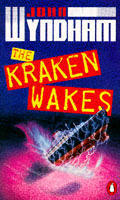
Ships are sinking for no apparent reason, carrying hundreds to a dark underwater grave. Strange fireballs race through the sky above the deepest trenches of the oceans. Something is about to show itself, something terrible and alien, a force capable of causing global catastrophe.
Clarke's masterful evocation of the far future of humanity, considered his finest novel.
Men had built cities before, but never such a city as Diaspar. For millennia its protective dome shut out the creeping decay and danger of the world outside. Once, it held powers that rule the stars.
But then, as legend has it, the invaders came, driving humanity into this last refuge. It takes one man, a Unique, to break through Diaspar's stifling inertia, to smash the legend and discover the true nature of the Invaders.
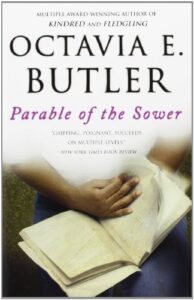
In 2024, with the world descending into madness and anarchy, one woman begins a fateful journey toward a better future.
Lauren Olamina and her family live in one of the only safe neighborhoods remaining on the outskirts of Los Angeles. Behind the walls of their defended enclave, Lauren’s father, a preacher, and a handful of other citizens try to salvage what remains of a culture that has been destroyed by drugs, disease, war, and chronic water shortages. While her father tries to lead people on the righteous path, Lauren struggles with hyperempathy, a condition that makes her extraordinarily sensitive to the pain of others.
When fire destroys their compound, Lauren’s family is killed and she is forced out into a world that is fraught with danger. With a handful of other refugees, Lauren must make her way north to safety, along the way conceiving a revolutionary idea that may mean salvation for all mankind.
In a thirtieth anniversary edition of the classic, the Harlequin, a rebel, inhabits a world where conformity and punctuality are top priorities, and the Ticktockman cannot accept the Harlequin's presence in his perfectly ordered world. 25,000 first printing. IP.
This book is fantastic and frightening, but entirely plausible. It doesn't just seem scientifically possible, but its characters are living people shaken out of the civilization they know into the horror of a world dominated by triffids.
The triffids are grotesque and dangerous plants, over seven feet tall, originally cultivated for their yield of high-grade oil. So long as conditions give the mastery to their human directors, they are a valuable asset to mankind. But when a sudden universal disaster turns those conditions upside down, then the triffids, seizing their opportunity, become an active and dreadful menace.
The story of what happens is told here by one of the few people lucky enough to escape the disaster.
The Machine Stops is a science fiction short story (12,300 words) by E. M. Forster. After initial publication in The Oxford and Cambridge Review (November 1909), the story was republished in Forster's The Eternal Moment and Other Stories in 1928.
After being voted one of the best novellas up to 1965, it was included that same year in the populist anthology Modern Short Stories. In 1973 it was also included in The Science Fiction Hall of Fame, Volume Two.
The book is particularly notable for predicting new technologies such as instant messaging and the internet.
Against the wishes of his mother, sixteen-year-old Ray Garraty is about to compete in the annual grueling match of stamina and wits known as The Long Walk. One hundred boys must keep a steady pace of four miles per hour without ever stopping... with the winner being awarded "The Prize"—anything he wants for the rest of his life. But, as part of this national tournament that sweeps through a dystopian America year after year, there are some harsh rules that Garraty and ninety-nine others must adhere to in order to beat out the rest. There is no finish line—the winner is the last man standing. Contestants cannot receive any outside aid whatsoever. Slow down under the speed limit and you're given a warning. Three warnings and you're out of the game—permanently...
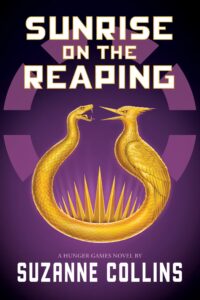
When you’ve been set up to lose everything you love, what is there left to fight for?
As the day dawns on the fiftieth annual Hunger Games, fear grips the districts of Panem. This year, in honor of the Quarter Quell, twice as many tributes will be taken from their homes.
Back in District 12, Haymitch Abernathy is trying not to think too hard about his chances. All he cares about is making it through the day and being with the girl he loves.
When Haymitch’s name is called, he can feel all his dreams break. He’s torn from his family and his love, shuttled to the Capitol with the three other District 12 tributes: a young friend who’s nearly a sister to him, a compulsive oddsmaker, and the most stuck-up girl in town. As the Games begin, Haymitch understands he’s been set up to fail. But there’s something in him that wants to fight . . . and have that fight reverberate far beyond the deadly arena.
An introverted teenage girl with an unconventional superpower, Taylor goes out in costume to find escape from a deeply unhappy and frustrated civilian life. Her first attempt at taking down a supervillain sees her mistaken for one, thrusting her into the midst of the local ‘cape’ scene’s politics, unwritten rules, and ambiguous morals. As she risks life and limb, Taylor faces the dilemma of having to do the wrong things for the right reasons.
The story, titled Worm, takes the form of a web serial, posted in bite-sized reads in much the same way that authors such as Mark Twain would release their works one chapter at a time in the days before full-fledged novels. Worm started in June 2011, updating twice a week, and finished in late November, 2013. It totals roughly 1,750,000 words; roughly 26 typical novels in length (or 10-11 very thick novels).
Welcome Back!
Track your reading progress and sync your library.