His Forefathers and Mick
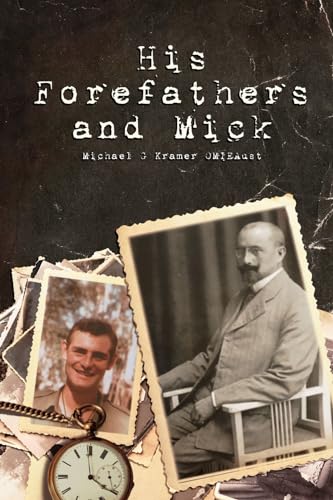
Extra information about Friedrich (Fritz) Kramer.
When Robert crossed the bridge, he wasn’t expecting anything out of the ordinary. He was on the way to meet his girlfriend, but when he reached the other side, she didn’t know who he was. Robert finds himself thrown back in time, further and further, reliving the history of Amsterdam through war, riots and the plague. Each time, his fate is bound up with the same woman, and with the work of the Netherlands' greatest painter, Rembrandt. Robert is caught in a race against time. Will he make it back to his normal life? Or will he be trapped in the past with his discovery as his insulin runs out?
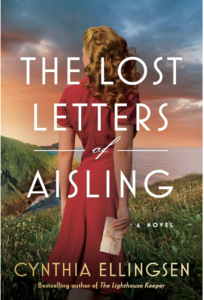
A woman faces the past she fled in a heart-stirring novel about unforgettable love and indomitable courage by the Amazon Charts bestselling author of The Lighthouse Keeper.
Rainey’s grandmother makes a startling request: Take me home. To Ireland, the country she fled post–World War II. Though they’re inseparably close, Rainey knows few of her grandmother’s secrets. Until they arrive at Aisling—the majestic estate on the southern coast of Ireland where her grandmother was raised—and Rainey discovers a collection of seventy-year-old letters in a trunk.
Dublin, 1945. The Germans surrender, celebrants crowd the streets, and fourteen-year-old Evie meets her best friend, the spirited Harding McGovern. Years on, they are more like sisters when rumors begin that Harding works in the black market trade—a source of wealth that could give her a dream life in America but could also cause great danger. Evie is uncertain of the truth but will stand by Harding, whatever the cost.
As Rainey uses the letters to reunite her grandmother with the past, what unfolds is a never-forgotten story of family, friendship, and love, and the healing that comes from letting go of secrets.
With more than a million copies sold worldwide, a modern classic of Palestinian literature from “a major writer of our time” (Alice Walker).
“Timeless in its truth.” —Fattima Bhutto
“Powerful and passionate.” —Michael Palin
“A novel to savor.” —Maureen Corrigan
“Relevant, powerful, emotional and vivid.” —Bidisha Mamat
Mornings in Jenin is a heart-wrenching multi-generational account of one family's struggle and survival through the decades before and after Zionist colonization and theft of Palestine. Carrying us from Ein Hod to Jenin to Jerusalem, to Lebanon, then to the anonymity of America and finally back to Occupied Palestine, it is a novel of vital importance, “affirming all that is enduring and valuable in the undefeated human spirit” (Hanan Ashrawi).
“Affects me emotionally in a way only great novels can.” —Henning Mankell
“Achingly beautiful.” —Saleem Haddad
“When we grow numb to horror, when our minds slam shut in shock and denial, sometimes a story can slip to reawaken our humanity. This is that story, never more relevant.” —Laline Paull
A gripping, inspiring novel based on the true story of Johanna Bonger, Vincent van Gogh's sister-in-law.
When Hollywood auctioneer Emsley Wilson finds her famous grandmother's diary while cleaning out her New York brownstone, the pages are full of surprises. The first surprise is, the diary isn't her grandmother's. It belongs to Johanna Bonger, Vincent van Gogh's sister-in-law.
Johanna inherited Vincent van Gogh's paintings. They were all she had, and they weren't worth anything. She was a 28 year old widow with a baby in the 1800s, without any means of supporting herself, living in Paris where she barely spoke the language. Yet she managed to introduce Vincent's legacy to the world.
The inspiration couldn't come at a better time for Emsley. With her business failing, an unexpected love turning up in her life, and family secrets unraveling, can she find answers in the past?
The Vignes twin sisters will always be identical. But after growing up together in a small, southern black community and running away at age sixteen, it's not just the shape of their daily lives that is different as adults, it's everything: their families, their communities, their racial identities. Many years later, one sister lives with her black daughter in the same southern town she once tried to escape. The other passes for white, and her white husband knows nothing of her past. Still, even separated by so many miles and just as many lies, the fates of the twins remain intertwined. What will happen to the next generation, when their own daughters' storylines intersect?
Weaving together multiple strands and generations of this family, from the Deep South to California, from the 1950s to the 1990s, Brit Bennett produces a story that is at once a riveting, emotional family story and a brilliant exploration of the American history of passing. Looking well beyond issues of race, The Vanishing Half considers the lasting influence of the past as it shapes a person's decisions, desires, and expectations, and explores some of the multiple reasons and realms in which people sometimes feel pulled to live as something other than their origins.
Giants in the Earth (Norwegian: Verdens Grøde) is a novel by Norwegian-American author Ole Edvart Rølvaag. First published in Norway as two books in 1924 and 1925, the author collaborated with Minnesotan Lincoln Colcord on the English translation.
The novel follows a Norwegian family's struggles as they try to make a new life as pioneers in the Dakota territory. Rølvaag is interested in psychology and the human cost of empire building, at a time when other writers focused on the glamor and romance of the West. The book reflects his personal experiences as a settler as well as the immigrant homesteader experience of his wife’s family. Both the grim realities of pioneering and the gloomy fatalism of the Norse mind are captured in depictions of snow storms, locusts, poverty, hunger, loneliness, homesickness, the difficulty of fitting into a new culture, and the estrangement of immigrant children who grow up in a new land. It is a novel at once palpably European and distinctly American.
Giants in the Earth was turned into an opera by Douglas Moore and Arnold Sundgaard; it won the Pulitzer Prize for Music in 1951.
So, then. You want a story and I will tell you one... Afghanistan, 1952. Abdullah and his sister Pari live with their father and stepmother in the small village of Shadbagh. Their father, Saboor, is constantly in search of work and they struggle together through poverty and brutal winters. To Abdullah, Pari—as beautiful and sweet-natured as the fairy for which she was named—is everything. More like a parent than a brother, Abdullah will do anything for her, even trading his only pair of shoes for a feather for her treasured collection. Each night they sleep together in their cot, their heads touching, their limbs tangled. One day the siblings journey across the desert to Kabul with their father. Pari and Abdullah have no sense of the fate that awaits them there, for the event which unfolds will tear their lives apart; sometimes a finger must be cut to save the hand. Crossing generations and continents, moving from Kabul, to Paris, to San Francisco, to the Greek island of Tinos, with profound wisdom, depth, insight and compassion, Khaled Hosseini writes about the bonds that define us and shape our lives, the ways in which we help our loved ones in need, how the choices we make resonate through history and how we are often surprised by the people closest to us.
This is an epic of love, hatred, war and revolution. This is a huge novel that follows five families through the world-shaking dramas of the First World War, the Russian Revolution, and the struggle for votes for women.
It is 1911. The Coronation Day of King George V. The Williams, a Welsh coal-mining family is linked by romance and enmity to the Fitzherberts, aristocratic coal-mine owners. Lady Maud Fitzherbert falls in love with Walter von Ulrich, a spy at the German Embassy in London. Their destiny is entangled with that of an ambitious young aide to U.S. President Woodrow Wilson and to two orphaned Russian brothers, whose plans to emigrate to America fall foul of war, conscription and revolution. In a plot of unfolding drama and intriguing complexity, "Fall Of Giants" moves seamlessly from Washington to St Petersburg, from the dirt and danger of a coal mine to the glittering chandeliers of a palace, from the corridors of power to the bedrooms of the mighty.