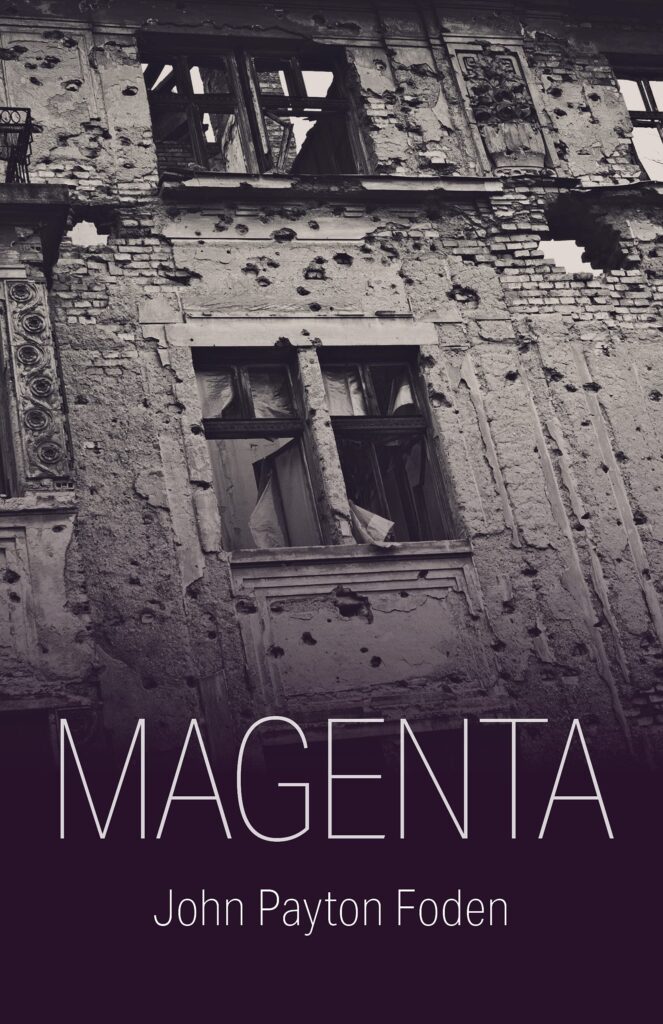
Magenta is a harrowing journey into war-torn Sarajevo, and into the blackest reaches of the human condition. The novel follows a journalist, Silva, as she and her team make their way deep into a city under siege, in order to recover the body of Thierry, an award-winning filmmaker who has been killed there. But the postmodern odyssey that follows is beyond anything Silva could have expected, as she must make her way through a world in which good and evil lose their meaning, where survival is the only remaining value, and where there is always greater terror lurking around the next corner of the dark and broken labyrinth that a once great city has become. Even if Silva herself survives the city, the abyss she has stared into will have stared back into her – and changed everything.
A big, powerful saga of men in combat, written over the course of thirty-five years by a highly decorated Vietnam veteran.
Intense, powerful, and compelling, Matterhorn is an epic war novel in the tradition of Norman Mailer's The Naked and the Dead and James Jones's The Thin Red Line. It is the timeless story of a young Marine lieutenant, Waino Mellas, and his comrades in Bravo Company, who are dropped into the mountain jungle of Vietnam as boys and forced to fight their way into manhood. Standing in their way are not merely the North Vietnamese but also monsoon rain and mud, leeches and tigers, disease and malnutrition. Almost as daunting, it turns out, are the obstacles they discover between each other: racial tension, competing ambitions, and duplicitous superior officers. But when the company finds itself surrounded and outnumbered by a massive enemy regiment, the Marines are thrust into the raw and all-consuming terror of combat. The experience will change them forever.
Written over the course of thirty years by a highly decorated Vietnam veteran, Matterhorn is a visceral and spellbinding novel about what it is like to be a young man at war. It is an unforgettable novel that transforms the tragedy of Vietnam into a powerful and universal story of courage, camaraderie, and sacrifice: a parable not only of the war in Vietnam but of all war, and a testament to the redemptive power of literature.
A graduate of Yale University and a Rhodes Scholar at Oxford University, Karl Marlantes served as a Marine in Vietnam, where he was awarded the Navy Cross, the Bronze Star, two Navy Commendation Medals for valor, two Purple Hearts, and ten air medals. This is his first novel. He lives in rural Washington State.
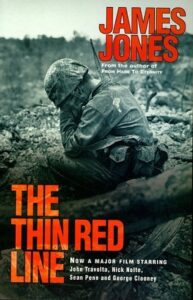
"When compared to the fact that he might very well be dead by this time tomorrow, whether he was courageous or not today was pointless, empty. When compared to the fact that he might be dead tomorrow, everything was pointless. Life was pointless. Whether he looked at a tree or not was pointless. It just didn't make any difference. It was pointless to the tree, it was pointless to every man in his outfit, pointless to everybody in the whole world. Who cared? It was not pointless only to him; and when he was dead, when he ceased to exist, it would be pointless to him too. More important: Not only would it be pointless, it would have been pointless, all along."
Such is the ultimate significance of war in The Thin Red Line (1962), James Jones's fictional account of the battle between American and Japanese troops on the island of Guadalcanal. The narrative shifts effortlessly among multiple viewpoints within C-for-Charlie Company, from commanding officer Capt. James Stein, his psychotic first sergeant Eddie Welsh, and the young privates they send into battle. The descriptions of combat conditions—and the mental states it induces—are unflinchingly realistic, including the dialog (in which a certain word Norman Mailer rendered as "fug" 15 years earlier in The Naked and the Dead appears properly spelled on numerous occasions). This is more than a classic of combat fiction; it is one of the most significant explorations of male identity in American literature, establishing Jones as a novelist of the caliber of Herman Melville and Stephen Crane.
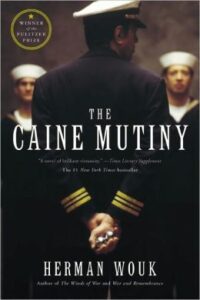
The novel that inspired the now-classic film The Caine Mutiny and the hit Broadway play The Caine Mutiny Court-Martial, Herman Wouk's boldly dramatic, brilliantly entertaining novel of life-and mutiny-on a Navy warship in the Pacific theater was immediately embraced, upon its original publication in 1951, as one of the first serious works of American fiction to grapple with the moral complexities and the human consequences of World War II. In the intervening half century, The Caine Mutiny has become a perennial favorite of readers young and old, has sold millions of copies throughout the world, and has achieved the status of a modern classic.
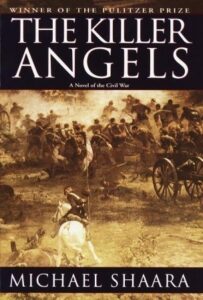
In the four most bloody and courageous days of our nation's history, two armies fought for two dreams. One dreamed of freedom, the other of a way of life. Far more than rifles and bullets were carried into battle. There were memories. There were promises. There was love. And far more than men fell on those Pennsylvania fields. Shattered futures, forgotten innocence, and crippled beauty were also the casualties of war. The Killer Angels is unique, sweeping, unforgettable—a dramatic re-creation of the battleground for America's destiny.
This is an alternate history novel of the mid-1980s that answers the question: What if the so-called "Cold War" had turned hot? What if militant Muslim fundamentalists blow up a vital oil complex in the USSR, turning an already critical fuel shortage into a catastrophe? Would the Russians then decide they have no choice but to seize Persian Gulf oil at any price? The result of a chain of events like this might well be that the United States and the Soviet Union engage in a conflict that takes on terrifying dimensions.
Scarlett O'Hara, the beautiful, spoiled daughter of a well-to-do Georgia plantation owner, must use every means at her disposal to claw her way out of the poverty she finds herself in after Sherman's March to the Sea.
In 1914 a room full of German schoolboys, fresh-faced and idealistic, are goaded by their schoolmaster to troop off to the ‘glorious war’. With the fire and patriotism of youth they sign up. What follows is the moving story of a young ‘unknown soldier’ experiencing the horror and disillusionment of life in the trenches.
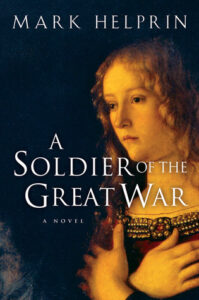
From acclaimed novelist Mark Helprin, a lush, literary epic about love, beauty, and the world at war. Alessandro Giuliani, the young son of a prosperous Roman lawyer, enjoys an idyllic life full of privilege: he races horses across the country to the sea, he climbs mountains in the Alps, and, while a student of painting at the ancient university in Bologna, he falls in love. Then the Great War intervenes. Half a century later, in August of 1964, Alessandro, a white-haired professor, tall and proud, meets an illiterate young factory worker on the road. As they walk toward Monte Prato, a village seventy kilometers away, the old man—a soldier and a hero who became a prisoner and then a deserter, wandering in the hell that claimed Europe—tells him how he tragically lost one family and gained another. The boy, envying the richness and drama of Alessandro's experiences, realizes that this magnificent tale is not merely a story: it's a recapitulation of his life, his reckoning with mortality, and above all, a love song for his family.
Welcome Back!
Track your reading progress and sync your library.