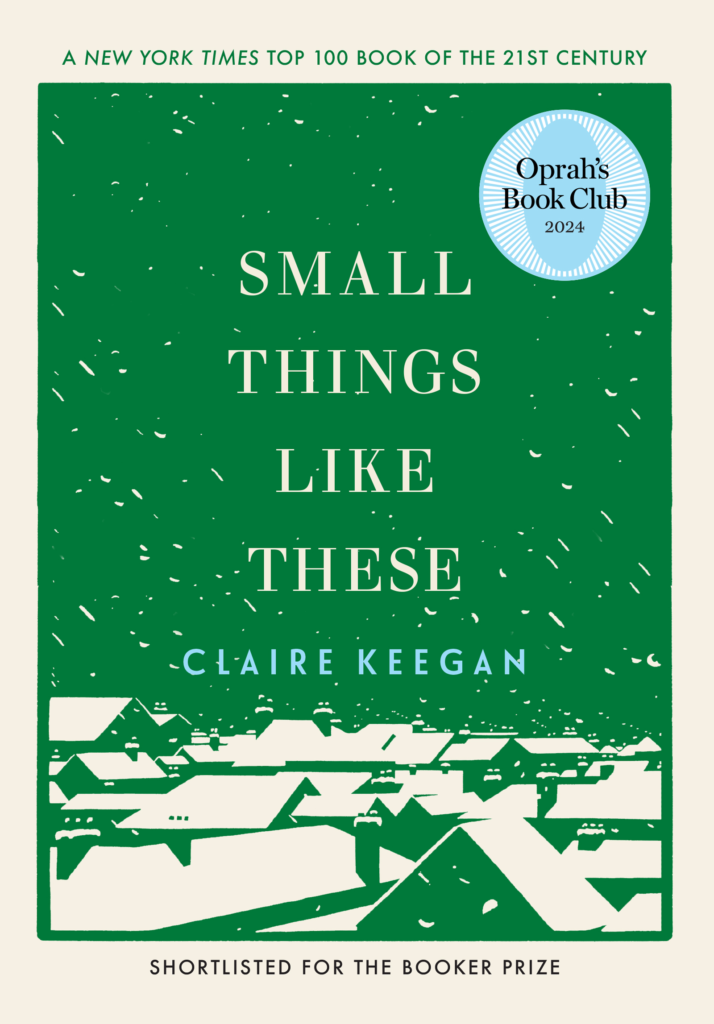
It is 1985 in a small Irish town. During the weeks leading up to Christmas, Bill Furlong, a coal merchant and family man faces into his busiest season. Early one morning, while delivering an order to the local convent, Bill makes a discovery which forces him to confront both his past and the complicit silences of a town controlled by the church.
Already an international bestseller, Small Things Like These is a deeply affecting story of hope, quiet heroism, and empathy from one of our most critically lauded and iconic writers.
A fearless portrait of a society on the brink as a mother faces a terrible choice, from an internationally award-winning author
On a dark, wet evening in Dublin, scientist and mother-of-four Eilish Stack answers her front door to find the GNSB on her step. Two officers from Ireland’s newly formed secret police are here to interrogate her husband, a trade unionist.
Ireland is falling apart. The country is in the grip of a government turning towards tyranny and Eilish can only watch helplessly as the world she knew disappears. When first her husband and then her eldest son vanish, Eilish finds herself caught within the nightmare logic of a collapsing society.
How far will she go to save her family? And what – or who – is she willing to leave behind?
Exhilarating, terrifying and propulsive, Prophet Song is a work of breathtaking originality, offering a devastating vision of a country at war and a deeply human portrait of a mother’s fight to hold her family together.
At school Connell and Marianne pretend not to know each other. He’s popular and well-adjusted, star of the school soccer team while she is lonely, proud, and intensely private. But when Connell comes to pick his mother up from her housekeeping job at Marianne’s house, a strange and indelible connection grows between the two teenagers - one they are determined to conceal.
A year later, they’re both studying at Trinity College in Dublin. Marianne has found her feet in a new social world while Connell hangs at the sidelines, shy and uncertain. Throughout their years in college, Marianne and Connell circle one another, straying toward other people and possibilities but always magnetically, irresistibly drawn back together. Then, as she veers into self-destruction and he begins to search for meaning elsewhere, each must confront how far they are willing to go to save the other.
Sally Rooney brings her brilliant psychological acuity and perfectly spare prose to a story that explores the subtleties of class, the electricity of first love, and the complex entanglements of family and friendship.
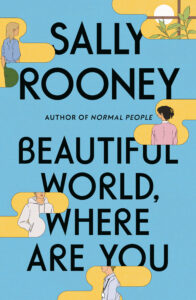
Trên nền thành phố Dublin nhỏ bé và một thị trấn cạnh đó khá yên bình, cuốn sách xoay quanh bốn người trẻ ở Ireland khi họ phải đối mặt với áp lực công việc và các mối quan hệ trong bối cảnh bất ổn chính trị và nỗi bất an vô định vào tương lai. Bốn nhân vật chính của truyện gồm một tiểu thuyết gia tên Alice và người bạn thân nhất của cô, Eileen - biên tập viên tạp chí văn chương, cùng hai người tình tương ứng của họ, Felix - một nhân viên nhà kho vốn không có nhiều thành tựu và Simon - cố vấn chính trị, đang trải qua những tháng năm tuổi trẻ không mấy yên bình. Trong khi mối quan hệ của Alice và Felix là sự đan xen giữa không ngừng giữa cảm xúc và những xung đột cá tính thì tình bạn mười lăm năm của Eileen và Simon cũng phần nào ngăn cản họ tiến tới mối quan hệ tình cảm nam nữ.
Xuyên suốt những trang sách còn là trạng thái giằng xé của những người trẻ tuổi vừa say đắm cuộc đời vừa đầy trăn trở đi tìm ý nghĩa cuộc sống trong một thế giới mà theo đánh giá của họ là đang ngày càng xấu đi. Trong các cuộc đối thoại và cả trong những email qua lại, hai cô gái chia sẻ tâm trạng bất an, hoang mang về cuộc sống, những thăng trầm, day dứt trong tình yêu của họ và cả mối băn khoăn, lo lắng về tương lai của hành tinh đầy bất ổn này.
In 1979, as violence erupts all over Ireland, two outsiders travel to a small island off the west coast in search of their own answers, despite what it may cost the islanders.
It is the summer of 1979. An English painter travels to a small island off the west coast of Ireland. Mr. Lloyd takes the last leg by currach, though boats with engines are available and he doesn't much like the sea. He wants the authentic experience, to be changed by this place, to let its quiet and light fill him, give him room to create. He doesn't know that a Frenchman follows close behind. Jean-Pierre Masson has visited the island for many years, studying the language of those who make it their home. He is fiercely protective of their isolation, deems it essential to exploring his theories of language preservation and identity.
But the people who live on this rock--three miles long and half a mile wide--have their own views on what is being recorded, what is being taken, and what ought to be given in return. Over the summer, each of them--from great-grandmother Bean Uí Fhloinn to widowed Mairéad to fifteen-year-old James, who is determined to avoid the life of a fisherman--will wrestle with their values and desires. Meanwhile, all over Ireland, violence is erupting. And there is blame enough to go around.
An expertly woven portrait of character and place, a stirring investigation into yearning to find one's way, and an unflinchingly political critique of the long, seething cost of imperialism, Audrey Magee's The Colony is a novel that transports, that celebrates beauty and connection, and that reckons with the inevitable ruptures of independence.
William Waters grew up in a house silenced by tragedy, where his parents could hardly bear to look at him, much less love him—so when he meets the spirited and ambitious Julia Padavano in his freshman year of college, it’s as if the world has lit up around him. With Julia comes her family, as she and her three sisters are inseparable: Sylvie, the family’s dreamer, is happiest with her nose in a book; Cecelia is a free-spirited artist; and Emeline patiently takes care of them all. With the Padavanos, William experiences a newfound contentment; every moment in their house is filled with loving chaos.
But then darkness from William’s past surfaces, jeopardizing not only Julia’s carefully orchestrated plans for their future, but the sisters’ unshakeable devotion to one another. The result is a catastrophic family rift that changes their lives for generations. Will the loyalty that once rooted them be strong enough to draw them back together when it matters most?
An alternative cover edition for this ISBN can be found here.
The author of award-winning Hamnet brings the world of Renaissance Italy to jewel-bright life in this unforgettable fictional portrait of the captivating young duchess Lucrezia de’ Medici as she makes her way in a troubled court.
Florence, the 1550s. Lucrezia, third daughter of the grand duke, is comfortable with her obscure place in the palazzo: free to wonder at its treasures, observe its clandestine workings, and devote herself to her own artistic pursuits. But when her older sister dies on the eve of her wedding to the ruler of Ferrara, Modena and Reggio, Lucrezia is thrust unwittingly into the limelight: the duke is quick to request her hand in marriage, and her father just as quick to accept on her behalf.
Having barely left girlhood behind, Lucrezia must now enter an unfamiliar court whose customs are opaque and where her arrival is not universally welcomed. Perhaps most mystifying of all is her new husband himself, Alfonso. Is he the playful sophisticate he appeared to be before their wedding, the aesthete happiest in the company of artists and musicians, or the ruthless politician before whom even his formidable sisters seem to tremble?
As Lucrezia sits in constricting finery for a painting intended to preserve her image for centuries to come, one thing becomes worryingly clear. In the court’s eyes, she has one duty: to provide the heir who will shore up the future of the Ferranese dynasty. Until then, for all of her rank and nobility, the new duchess’s future hangs entirely in the balance.
Full of the beauty and emotion with which she illuminated the Shakespearean canvas of Hamnet, Maggie O’Farrell turns her talents to Renaissance Italy in an extraordinary portrait of a resilient young woman’s battle for her very survival.
“That was it. That was all of it. A grace so ordinary there was no reason at all to remember it. Yet I have never across the forty years since it was spoken forgotten a single word.”
New Bremen, Minnesota, 1961. The Twins were playing their debut season, ice-cold root beers were selling out at the soda counter of Halderson’s Drugstore, and Hot Stuff comic books were a mainstay on every barbershop magazine rack. It was a time of innocence and hope for a country with a new, young president. But for thirteen-year-old Frank Drum it was a grim summer in which death visited frequently and assumed many forms. Accident. Nature. Suicide. Murder.
Frank begins the season preoccupied with the concerns of any teenage boy, but when tragedy unexpectedly strikes his family—which includes his Methodist minister father; his passionate, artistic mother; Juilliard-bound older sister; and wise-beyond-his-years kid brother—he finds himself thrust into an adult world full of secrets, lies, adultery, and betrayal, suddenly called upon to demonstrate a maturity and gumption beyond his years.
Told from Frank’s perspective forty years after that fateful summer, Ordinary Grace is a brilliantly moving account of a boy standing at the door of his young manhood, trying to understand a world that seems to be falling apart around him. It is an unforgettable novel about discovering the terrible price of wisdom and the enduring grace of God.
The Vignes twin sisters will always be identical. But after growing up together in a small, southern black community and running away at age sixteen, it's not just the shape of their daily lives that is different as adults, it's everything: their families, their communities, their racial identities. Many years later, one sister lives with her black daughter in the same southern town she once tried to escape. The other passes for white, and her white husband knows nothing of her past. Still, even separated by so many miles and just as many lies, the fates of the twins remain intertwined. What will happen to the next generation, when their own daughters' storylines intersect?
Weaving together multiple strands and generations of this family, from the Deep South to California, from the 1950s to the 1990s, Brit Bennett produces a story that is at once a riveting, emotional family story and a brilliant exploration of the American history of passing. Looking well beyond issues of race, The Vanishing Half considers the lasting influence of the past as it shapes a person's decisions, desires, and expectations, and explores some of the multiple reasons and realms in which people sometimes feel pulled to live as something other than their origins.
Welcome Back!
Track your reading progress and sync your library.