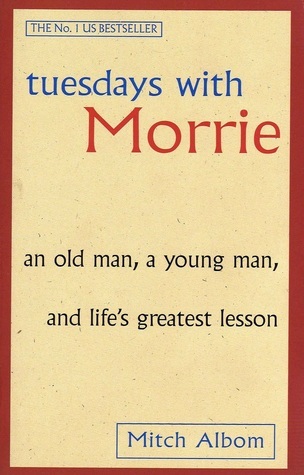
Maybe it was a grandparent, or a teacher or a colleague. Someone older, patient and wise, who understood you when you were young and searching, and gave you sound advice to help you make your way through it. For Mitch Albom, that person was Morrie Schwartz, his college professor from nearly twenty years ago.
Maybe, like Mitch, you lost track of this mentor as you made your way, and the insights faded. Wouldn’t you like to see that person again, ask the bigger questions that still haunt you?
Mitch Albom had that second chance. He rediscovered Morrie in the last months of the older man’s life. Knowing he was dying of ALS – or motor neurone disease – Mitch visited Morrie in his study every Tuesday, just as they used to back in college. Their rekindled relationship turned into one final ‘class’: lessons in how to live.
A lot of professors give talks titled 'The Last Lecture'. Professors are asked to consider their demise and to ruminate on what matters most to them: What wisdom would we impart to the world if we knew it was our last chance? If we had to vanish tomorrow, what would we want as our legacy?
When Randy Pausch, a computer science professor at Carnegie Mellon, was asked to give such a lecture, he didn't have to imagine it as his last, since he had recently been diagnosed with terminal cancer. But the lecture he gave, 'Really Achieving Your Childhood Dreams', wasn't about dying. It was about the importance of overcoming obstacles, of enabling the dreams of others, of seizing every moment (because time is all you have and you may find one day that you have less than you think). It was a summation of everything Randy had come to believe. It was about living.
In this book, Randy Pausch has combined the humour, inspiration, and intelligence that made his lecture such a phenomenon and given it an indelible form. It is a book that will be shared for generations to come.
This book challenges the status quo of humanity by inviting us to look at the morass of confusion, despair and uncertainty that pervade our society. Through this series of heartfelt essays Renée examines topics such as ‘Pride’, ‘Desire’, ‘Responsibility’, ‘Betrayal’ and ‘Loneliness’ - what are they and how do they affect our lives? These topics - and many more - delve into the human psyche to places many are reticent to visit, but need to if we are ever to change our world. This ‘journey’ begins with us, and only through this journey can we discover our true nature. Fear creates the roadblock that prevents us from taking that first bold step to changing our world - fear of the unknown. Our challenge is to overcome that fear, and the inertia that prevents us from getting started.
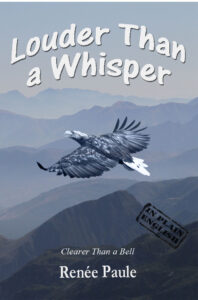
‘A Three Course Meal for the Mind’ combines three books into a single volume: 'On The Other Hand', 'Just Around The Bend' and 'Louder Than a Whisper' (also available separately). The books chronical Renée Paule’s philosophical journey of self-reflection. She questions many facets of life that we take for granted, unlearning all that she has been taught: thus freeing her mind from the conditioning that society imprints. There is much to think about in these pages and it can make for uncomfortable reading as questions we tend to avoid are raised and discussed, particularly in ‘On The Other Hand’.
This collection is ‘self-help’ in the truest sense as there are no answers provided and it is left to the reader to cogitate and draw their own conclusions - conclusions that Renée maintains we already know but shy away from. One thing that stands out in all three books is that 'we' are responsible for what happens in our world: there is no-one else to blame. You may not like what you read herein but you will be hard-pressed to refute it.
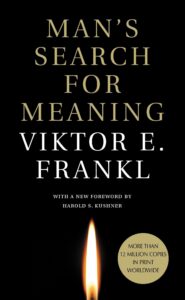
Psychiatrist Viktor Frankl's memoir has riveted generations of readers with its descriptions of life in Nazi death camps and its lessons for spiritual survival. Based on his own experience and the stories of his patients, Frankl argues that we cannot avoid suffering but we can choose how to cope with it, find meaning in it, and move forward with renewed purpose. At the heart of his theory, known as logotherapy, is a conviction that the primary human drive is not pleasure but the pursuit of what we find meaningful. Man's Search for Meaning has become one of the most influential books in America; it continues to inspire us all to find significance in the very act of living.
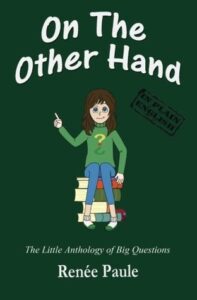
A straight from the shoulder look at life in which I ask some awkward questions; such as, ‘Who am I?’, ‘Where did I come from?’, ‘What am I doing here?’ and ‘Why do we resist change?’ If at this point you’re tempted to flick through this book looking for the answers, save yourself the trouble - you won’t find any. This isn’t a book of answers - it’s a book of self-reflective questions that have fascinated me all of my life. Reflecting on them has given new meaning and purpose to my life and changed not only the way I see the world, but the way I see you too. When we change our mind … we also change our world.
Apparently, just around the bend is everything we’ve been looking forward to including world peace, winning the lottery and a blissful retirement. Regrettably, the energy and drive most of us need to enjoy them, should they materialise, have been left way behind us. The buzz word is ‘Now’ but somehow we always seem to be either side of it. Perhaps we’re too busy with the rituals of daily life to consider what homilies like ‘Know Thyself’, and ‘Who am I?’ really mean. Maybe we missed something along the way, or prefer to live with the mystery of it all - contenting ourselves with ‘poster’ philosophy. However, if ‘poster’ philosophy leaves you feeling dissatisfied, then this book, which covers a range of mind-stretching topics, might be just what you’re looking for.
2020 International Book Awards Finalist for Health: Addiction & Recovery 2021 Literary Titan Silver Award
"Some people won't believe in you, and that's ok, this journey isn't about them. It's about you."
The Addiction Manifesto has been uniquely designed to provide you with a new perspective on recovery and will show you that anything is possible.
In this deeply personal book, JR Weaver has crafted a raw insight into his life and how he's been affected by substance abuse over the past 20 years. He details his recovery process and how he's dealt with loss.
With this book he wishes to help people on their journey to recovery. His realistic approach details his journey to try to have a normal life again.
If you're going through addiction recovery or want to help someone who is... This book allows you to fain a greater understanding of substance abuse and its many challenges.
A searing memoir of reckoning and healing from an acclaimed journalist and former This American Life producer investigating the little-understood science behind Complex PTSD and how it has shaped her life.
By age thirty, Stephanie Foo was successful on paper: She had her dream job as a radio producer at This American Life and had won an Emmy. But behind her office door she was having panic attacks and sobbing at her desk. After years of questioning what was wrong with her, she was diagnosed with Complex PTSD--a condition that occurs when trauma happens continuously, over the course of years.
Both of Stephanie's parents had abandoned her as a teenager after years of physical and verbal abuse and neglect. She thought she'd overcome her trauma, but her diagnosis illuminated the ways in which her past continued to threaten her health, her relationships, and her career. Finding few resources to help her heal, Stephanie set out to map her experience onto the scarce scientific research on C-PTSD.
In this deeply personal and thoroughly researched account, Stephanie interviews scientists and psychologists and tries a variety of innovative therapies with the determination and curiosity of an award-winning journalist. She returns to her hometown of San Jose, California, to investigate the effects of immigrant trauma on a community, she uncovers family secrets in the country of her birth, Malaysia, and learns how trauma can be inherited through generations. Ultimately, she discovers that you don't move on from trauma--but you can learn to move with it, with grace and joy.
Powerful, enlightening, and clarifying, What My Bones Know is a brave narrative that reckons with the hold of the past over the present, the mind over the body--and one woman's ability to reclaim agency from her trauma.
Welcome Back!
Track your reading progress and sync your library.