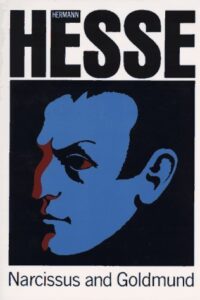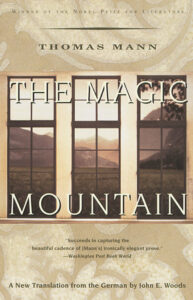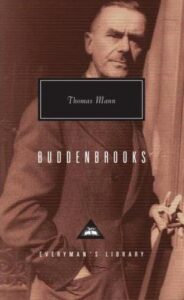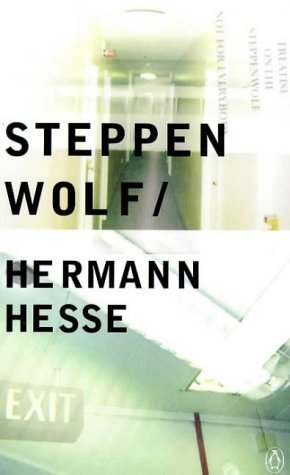
Steppenwolf is a poetical self-portrait of a man who felt himself to be half-human and half-wolf. This Faust-like and magical story is evidence of Hesse’s searching philosophy and extraordinary sense of humanity as he tells of the humanization of a middle-aged misanthrope. Yet his novel can also be seen as a plea for rigorous self-examination and an indictment of the intellectual hypocrisy of the period. As Hesse himself remarked, “Of all my books Steppenwolf is the one that was more often and more violently misunderstood than any of the others”.
Emil Sinclair ist ein Junge, der in einem als "Scheinwelt" beschrieben bürgerlichen Elternhaus aufgewachsen ist. Dies ist die dramatische Geschichte seiner Abstieg - gesteuert durch sein frühreifen Schulkamerad Max Demian - in eine geheime und gefährliche Welt der Kleinkriminalität und Revolte gegen Konvention und seiner Erwachen zu Selbstheit.
Written in 1914 but not published until 1925, a year after Kafka’s death, The Trial is the terrifying tale of Josef K., a respectable bank officer who is suddenly and inexplicably arrested and must defend himself against a charge about which he can get no information. Whether read as an existential tale, a parable, or a prophecy of the excesses of modern bureaucracy wedded to the madness of totalitarianism, The Trial has resonated with chilling truth for generations of readers.
Seul l'être capable d'indépendance spirituelle est digne des grandes entreprises. Tel Napoléon qui n'hésita pas à ouvrir le feu sur une foule désarmée, Raskolnikov, qui admire le grand homme, se place au-dessus du commun des mortels. Les considérations théoriques qui le poussent à tuer une vieille usurière cohabitent en s'opposant dans l'esprit du héros et constituent l'essence même du roman. Pour Raskolnikov, le crime qu'il va commettre n'est que justice envers les hommes en général et les pauvres qui se sont fait abusés en particulier. « Nous acceptons d'être criminels pour que la terre se couvre enfin d'innocents », écrira Albert Camus. Mais cet idéal d'humanité s'accorde mal avec la conscience de supériorité qui anime le héros, en qualité de « surhomme », il se situe au-delà du bien et du mal. Fomenté avec un sang-froid mêlé de mysticisme, le meurtre tourne pourtant à l'échec. Le maigre butin ne peut satisfaire son idéal de justice, tandis que le crime loin de l'élever de la masse, l'abaisse parmi les hommes. Raskolnikov finira par se rendre et accepter la condamnation, par-là même, il accèdera à la purification. Crime et Châtiment est le roman de la déchéance humaine, l’œuvre essentielle du maître de la littérature russe. — Lenaïc Gravis et Jocelyn Blériot
Published in 1942 by French author Albert Camus, The Stranger has long been considered a classic of twentieth-century literature. Le Monde ranks it as number one on its "100 Books of the Century" list. Through this story of an ordinary man unwittingly drawn into a senseless murder on a sundrenched Algerian beach, Camus explores what he termed "the nakedness of man faced with the absurd."
The Brothers Karamazov is a murder mystery, a courtroom drama, and an exploration of erotic rivalry in a series of triangular love affairs involving the “wicked and sentimental” Fyodor Pavlovich Karamazov and his three sons―the impulsive and sensual Dmitri; the coldly rational Ivan; and the healthy, red-cheeked young novice Alyosha. Through the gripping events of their story, Dostoevsky portrays the whole of Russian life, is social and spiritual striving, in what was both the golden age and a tragic turning point in Russian culture.
This award-winning translation by Richard Pevear and Larissa Volokhonsky remains true to the verbal inventiveness of Dostoevsky’s prose, preserving the multiple voices, the humor, and the surprising modernity of the original. It is an achievement worthy of Dostoevsky’s last and greatest novel.
The Plague is a novel by Albert Camus, published in 1947.
It tells the story from the point of view of a narrator of a plague sweeping the French Algerian city of Oran. The narrator remains unknown until the start of the last chapter, chapter 5 of part 5. The novel presents a snapshot of life in Oran as seen through the author's distinctive absurdist point of view.
The book tells a gripping tale of human unrelieved horror, of survival and resilience, and of the ways in which humankind confronts death, The Plague is at once a masterfully crafted novel, eloquently understated and epic in scope, and a parable of ageless moral resonance, profoundly relevant to our times. In Oran, a coastal town in North Africa, the plague begins as a series of portents, unheeded by the people. It gradually becomes an omnipresent reality, obliterating all traces of the past and driving its victims to almost unearthly extremes of suffering, madness, and compassion.
The Plague is considered an existentialist classic despite Camus' objection to the label. The novel stresses the powerlessness of the individual characters to affect their destinies. The narrative tone is similar to Kafka's, especially in The Trial, whose individual sentences potentially have multiple meanings; the material often pointedly resonating as stark allegory of phenomenal consciousness and the human condition.
In The Unbearable Lightness of Being, Milan Kundera tells the story of a young woman in love with a man torn between his love for her and his incorrigible womanizing and one of his mistresses and her humbly faithful lover. This magnificent novel juxtaposes geographically distant places, brilliant and playful reflections, and a variety of styles, to take its place as perhaps the major achievement of one of the world’s truly great writers.
Marcel Proust’s In Search of Lost Time is one of the most entertaining reading experiences in any language and arguably the finest novel of the twentieth century. But since its original prewar translation there has been no completely new version in English. Now, Penguin Classics brings Proust’s masterpiece to new audiences throughout the world, beginning with Lydia Davis’s internationally acclaimed translation of the first volume, Swann’s Way.
Welcome Back!
Track your reading progress and sync your library.