
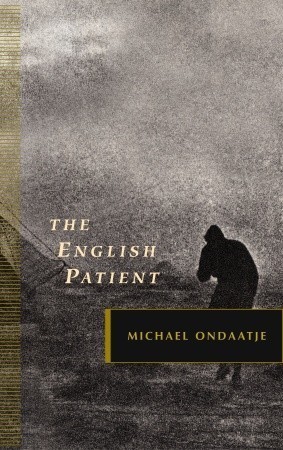
With ravishing beauty and unsettling intelligence, Michael Ondaatje’s Booker Prize-winning novel traces the intersection of four damaged lives in an Italian villa at the end of World War II. Hana, the exhausted nurse; the maimed thief, Caravaggio; the wary sapper, Kip: each is haunted by the riddle of the English patient, the nameless, burned man who lies in an upstairs room and whose memories of passion, betrayal,and rescue illuminates this book like flashes of heat lightening.
This brilliant novel with universal resonance, set during the 1990s Siege of Sarajevo, tells the story of three people trying to survive in a city rife with the extreme fear of desperate times, and of the sorrowing cellist who plays undaunted in their midst.
One day a shell lands in a bread line and kills twenty-two people as the cellist watches from a window in his flat. He vows to sit in the hollow where the mortar fell and play Albinoni’s Adagio once a day for each of the twenty-two victims. The Adagio had been re-created from a fragment after the only extant score was firebombed in the Dresden Music Library, but the fact that it had been rebuilt by a different composer into something new and worthwhile gives the cellist hope.
Meanwhile, Kenan steels himself for his weekly walk through the dangerous streets to collect water for his family on the other side of town, and Dragan, a man Kenan doesn’t know, tries to make his way towards the source of the free meal he knows is waiting. Both men are almost paralyzed with fear, uncertain when the next shot will land on the bridges or streets they must cross, unwilling to talk to their old friends of what life was once like before divisions were unleashed on their city. Then there is “Arrow,” the pseudonymous name of a gifted female sniper, who is asked to protect the cellist from a hidden shooter who is out to kill him as he plays his memorial to the victims.
In this beautiful and unforgettable novel, Steven Galloway has taken an extraordinary, imaginative leap to create a story that speaks powerfully to the dignity and generosity of the human spirit under extraordinary duress.
It is 1919, and Niska, the last Oji-Cree woman to live off the land, has received word that one of the two boys she saw off to the Great War has returned. Xavier Bird, her sole living relation, is gravely wounded and addicted to morphine. As Niska slowly paddles her canoe on the three-day journey to bring Xavier home, travelling through the stark but stunning landscape of Northern Ontario, their respective stories emerge—stories of Niska’s life among her kin and of Xavier’s horrifying experiences in the killing fields of Ypres and the Somme.
A moving love story set in the Canadian wilderness, Mrs. Mike is a classic tale that has enchanted millions of readers worldwide. It brings the fierce, stunning landscape of the Great North to life—and tenderly evokes the love that blossoms between Sergeant Mike Flannigan and beautiful young Katherine Mary O'Fallon.
Scarlett O'Hara, the beautiful, spoiled daughter of a well-to-do Georgia plantation owner, must use every means at her disposal to claw her way out of the poverty she finds herself in after Sherman's March to the Sea.
Published to international critical and popular acclaim, this intensely romantic yet stunningly realistic novel spans three generations and the unimaginable gulf between the First World War and the present. As the young Englishman Stephen Wraysford passes through a tempestuous love affair with Isabelle Azaire in France and enters the dark, surreal world beneath the trenches of No Man's Land, Sebastian Faulks creates a world of fiction that is as tragic as A Farewell to Arms and as sensuous as The English Patient. Crafted from the ruins of war and the indestructibility of love, Birdsong is a novel that will be read and marveled at for years to come.
Captain Corelli’s Mandolin is set in the early days of the second world war, before Benito Mussolini invaded Greece. Dr Iannis practices medicine on the island of Cephalonia, accompanied by his daughter, Pelagia, to whom he imparts much of his healing art. Even when the Italians do invade, life isn’t so bad—at first anyway. The officer in command of the Italian garrison is the cultured Captain Antonio Corelli, who responds to a Nazi greeting of “Heil Hitler” with his own “Heil Puccini”, and whose most precious possession is his mandolin. It isn't long before Corelli and Pelagia are involved in a heated affair--despite her engagement to a young fisherman, Mandras, who has gone off to join Greek partisans. Love is complicated enough in wartime, even when the lovers are on the same side. And for Corelli and Pelagia, it becomes increasingly difficult to negotiate the minefield of allegiances, both personal and political, as all around them atrocities mount, former friends become enemies and the ugliness of war infects everyone it touches.
British author Louis de Bernières is well known for his forays into magical realism in such novels as The War of Don Emmanuel's Nether Parts, Señor Vivo and the Coca Lord and The Troublesome Offspring of Cardinal Guzman. Here he keeps it to a minimum, though certainly the secondary characters with whom he populates his island—the drunken priest, the strongman, the fisherman who swims with dolphins—would be at home in any of his wildly imaginative Latin American fictions. Instead, de Bernières seems interested in dissecting the nature of history as he tells his ever-darkening tale from many different perspectives. Captain Corelli’s Mandolin works on many levels, as a love story, a war story and a deconstruction of just what determines the facts that make it into the history books.
It is 1939. Despite a law banning him from performing surgery, Ravic – a German doctor and refugee living in Paris – has been treating some of the city’s most elite citizens for two years on the behalf of two less-than-skillful French physicians. Forbidden to return to his own country, and dodging the everyday dangers of jail and deportation, Ravic manages to hang on – all the while searching for the Nazi who tortured him back in Germany. And though he’s given up on the possibility of love, life has a curious way of taking a turn for the romantic, even during the worst of times….
It's 1843, and Grace Marks has been convicted for her involvement in the vicious murders of her employer and his housekeeper and mistress. Some believe Grace is innocent; others think her evil or insane. Now serving a life sentence, Grace claims to have no memory of the murders.
An up-and-coming expert in the burgeoning field of mental illness is engaged by a group of reformers and spiritualists who seek a pardon for Grace. He listens to her story while bringing her closer and closer to the day she cannot remember. What will he find in attempting to unlock her memories?
Captivating and disturbing, Alias Grace showcases best-selling, Booker Prize-winning author Margaret Atwood at the peak of her powers.
Welcome Back!
Track your reading progress and sync your library.