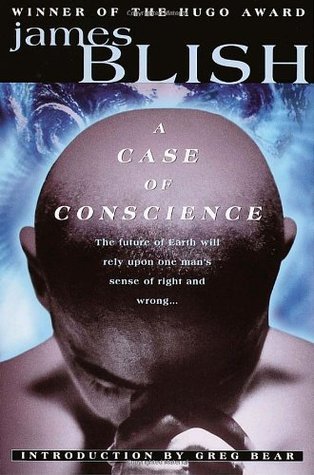
Father Ruiz-Sanchez is a dedicated man–a priest who is also a scientist, and a scientist who is also a human being. He has found no insoluble conflicts in his beliefs or his ethics . . . until he is sent to Lithia. There he comes upon a race of aliens who are admirable in every way except for their total reliance on cold reason; they are incapable of faith or belief.
Confronted with a profound scientific riddle and ethical quandary, Father Ruiz-Sanchez soon finds himself torn between the teachings of his faith, the teachings of his science, and the inner promptings of his humanity. There is only one solution: He must accept an ancient and unforgivable heresy–and risk the futures of both worlds . . .
David Brin's Uplift novels are among the most thrilling and extraordinary science fiction ever written. Sundiver, Startide Rising, and The Uplift War—a New York Times bestseller—together make up one of the most beloved sagas of all time. Brin's tales are set in a future universe in which no species can reach sentience without being "uplifted" by a patron race. But the greatest mystery of all remains unsolved: who uplifted humankind?
The Terran exploration vessel Streaker has crashed in the uncharted water world of Kithrup, bearing one of the most important discoveries in galactic history. Below, a handful of her human and dolphin crew battles armed rebellion and a hostile planet to safeguard her secret—the fate of the Progenitors, the fabled First Race who seeded wisdom throughout the stars.
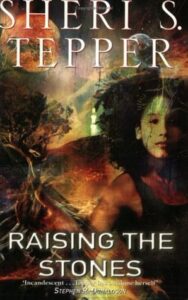
The author of The Gate to Women's Country and Grass weaves a moving story of one man's coming to accept his role in a far future universe, providing a brilliant exploration of relations between the sexes, the value of religion, and mankind's place in the universe.
Mary Doria Russell's debut novel, The Sparrow, took us on a journey to a distant planet and into the center of the human soul. A critically acclaimed bestseller, The Sparrow was chosen as one of Entertainment Weekly's Ten Best Books of the Year, a finalist for the Book-of-the-Month Club's First Fiction Prize and the winner of the James M. Tiptree Memorial Award. Now, in Children of God, Russell further establishes herself as one of the most innovative, entertaining and philosophically provocative novelists writing today.
The only member of the original mission to the planet Rakhat to return to Earth, Father Emilio Sandoz has barely begun to recover from his ordeal when the Society of Jesus calls upon him for help in preparing for another mission to Alpha Centauri. Despite his objections and fear, he cannot escape his past or the future.
Old friends, new discoveries and difficult questions await Emilio as he struggles for inner peace and understanding in a moral universe whose boundaries now extend beyond the solar system and whose future lies with children born in a faraway place.
Strikingly original, richly plotted, replete with memorable characters and filled with humanity and humor, Children of God is an unforgettable and uplifting novel that is a potent successor to The Sparrow and a startlingly imaginative adventure for newcomers to Mary Doria Russell’s special literary magic.
Conrad Nomikos has a long, rich personal history that he'd rather not talk about. And, as Arts Commissioner, he's been given a job he'd rather not do. Escorting an alien grandee on a guided tour of the shattered remains of Earth is not something he relishes—especially when it is apparent that this places him at the center high-level intrigue that has some bearing on the future of Earth itself.
To Your Scattered Bodies Go is the Hugo Award-winning beginning to the story of Riverworld, Philip José Farmer's unequaled tale about life after death. When famous adventurer Sir Richard Francis Burton dies, the last thing he expects to do is awaken naked on a foreign planet along the shores of a seemingly endless river. But that's where Burton and billions of other humans (plus a few nonhumans) find themselves as the epic Riverworld saga begins. It seems that all of Earthly humanity has been resurrected on the planet, each with an indestructible container that provides three meals a day, cigarettes, alcoholic beverages, a lighter, and the odd tube of lipstick. But why? And by whom?
That's what Burton and a handful of fellow adventurers are determined to discover as they construct a boat and set out in search of the river's source, thought to be millions of miles away. Although there are many hardships during the journey--including an encounter with the infamous Hermann Goring--Burton's resolve to complete his quest is strengthened by a visit from the Mysterious Stranger, a being who claims to be a renegade within the very group that created the Riverworld. The stranger tells Burton that he must make it to the river's headwaters, along with a dozen others the Stranger has selected, to help stop an evil experiment at the end of which humanity will simply be allowed to die. --Craig E. Engler
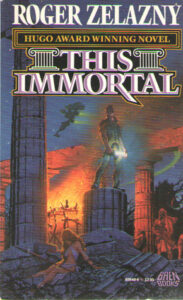
All eyes were watching the eclipse of the Moon when the Wanderer--a huge, garishly colored artificial world--emerged. Only a few scientists even suspected its presence, and then, suddenly and silently, it arrived, dwarfing and threatening the Moon and wreaking havoc on Earth's tides and weather. Though the Wanderer is stopping in the solar system only to refuel, its mere presence is catastrophic. A tense, thrilling, and towering achievement. Winner of the Hugo Award for Best SF Novel of the Year!
Robert Gu is a recovering Alzheimer's patient. The world that he remembers was much as we know it today. Now, as he regains his faculties through a cure developed during the years of his near-fatal decline, he discovers that the world has changed and so has his place in it. He was a world-renowned poet. Now he is seventy-five years old, though by a medical miracle he looks much younger, and he’s starting over, for the first time unsure of his poetic gifts. Living with his son’s family, he has no choice but to learn how to cope with a new information age in which the virtual and the real are a seamless continuum, layers of reality built on digital views seen by a single person or millions, depending on your choice. But the consensus reality of the digital world is available only if, like his thirteen-year-old granddaughter Miri, you know how to wear your wireless access—through nodes designed into smart clothes—and to see the digital context—through smart contact lenses.
With knowledge comes risk. When Robert begins to re-train at Fairmont High, learning with other older people what is second nature to Miri and other teens at school, he unwittingly becomes part of a wide-ranging conspiracy to use technology as a tool for world domination.
In a world where every computer chip has Homeland Security built-in, this conspiracy is something that baffles even the most sophisticated security analysts, including Robert’s son and daughter-in law, two top people in the U.S. military. And even Miri, in her attempts to protect her grandfather, may be entangled in the plot.
As Robert becomes more deeply involved in conspiracy, he is shocked to learn of a radical change planned for the UCSD Geisel Library; all the books there, and worldwide, would cease to physically exist. He and his fellow re-trainees feel compelled to join protests against the change. With forces around the world converging on San Diego, both the conspiracy and the protest climax in a spectacular moment as unique and satisfying as it is unexpected.
Welcome Back!
Track your reading progress and sync your library.