A Man for All Seasons: A Play in Two Acts
The classic play about Sir Thomas More, the Lord chancellor who refused to compromise and was executed by Henry VIII.
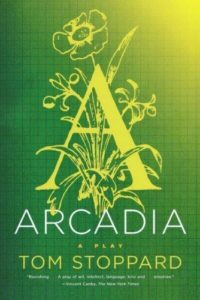
Arcadia takes us back and forth between the nineteenth and twentieth centuries, ranging over the nature of truth and time, the difference between the Classical and the Romantic temperament, and the disruptive influence of sex on our orbits in life. Focusing on the mysteries--romantic, scientific, literary--that engage the minds and hearts of characters whose passions and lives intersect across scientific planes and centuries, it is "Stoppard's richest, most ravishing comedy to date, a play of wit, intellect, language, brio and... emotion. It's like a dream of levitation: you're instantaneously aloft, soaring, banking, doing loop-the-loops and then, when you think you're about to plummet to earth, swooping to a gentle touchdown of not easily described sweetness and sorrow... Exhilarating" (Vincent Canby, The New York Times).
The Oxford School Shakespeare has become the preferred introduction to the literary legacy of the greatest playwright in the English language. This exclusive collection of the Bard's best works has been designed specifically for readers new to Shakespeare's rich literary legacy. Each play is
presented complete and unabridged, in large print. Every book is well illustrated, and starts with a commentary and character summary. Scene synopses and character summaries clarify confusing plots, while incisive essays explore the historical context and Shakespeare's sources. Each book ends with a complete list of Shakespeare's plays and a brief chronology of the Bard's life. The detailed explanatory notes are written clearly and positioned right next to the text--no more squinting at microscopic footnotes or flipping pages back and forth in search of endnotes!
The new edition of the series features new covers and new illustrations, including both new drawings and photos from recent productions of Shakespeare's plays around the globe. In addition, the notes and the introductory material have been completely revised in line with new research and in order to
make them clearer and more accessible. Finally, the entire text has been redesigned and reset to enhance readability. The new edition achieves the feat of unprecedented clarity of presentation without any cuts to the original text or the detailed explanations.
One of George Bernard Shaw's best-known plays, Pygmalion was a rousing success on the London and New York stages, an entertaining motion picture and a great hit with its musical version, My Fair Lady. An updated and considerably revised version of the ancient Greek legend of Pygmalion and Galatea, the 20th-century story pokes fun at the antiquated British class system.
In Shaw's clever adaptation, Professor Henry Higgins, a linguistic expert, takes on a bet that he can transform an awkward cockney flower seller into a refined young lady simply by polishing her manners and changing the way she speaks. In the process of convincing society that his creation is a mysterious royal figure, the Professor also falls in love with his elegant handiwork.
The irresistible theme of the emerging butterfly, together with Shaw's brilliant dialogue and splendid skills as a playwright, have made Pygmalion one of the most popular comedies in the English language. A staple of college drama courses, it is still widely performed.
'For a salesman, there is no rock bottom to life. He don't put a bolt to a nut, he don't tell you the law or give you medicine. He's a man way out there in the blue, riding on a smile and a shoeshine.'
Willy Loman has been a salesman for 34 years. At 60, he is cast aside, his usefulness now exhausted. With no future to dream about he must face the crushing disappointments of his past. He takes one final brave action, but is he heroic at last?, or a self-deluding fool?
"Never before, in the entire history of the American theater, has so much of the truth of black people's lives been seen on the stage," observed James Baldwin shortly before A Raisin in the Sun opened on Broadway in 1959.
Indeed Lorraine Hansberry's award-winning drama about the hopes and aspirations of a struggling, working-class family living on the South Side of Chicago connected profoundly with the psyche of black America--and changed American theater forever. The play's title comes from a line in Langston Hughes's poem "Harlem," which warns that a dream deferred might "dry up/like a raisin in the sun."
"The events of every passing year add resonance to A Raisin in the Sun," said The New York Times. "It is as if history is conspiring to make the play a classic." This Modern Library edition presents the fully restored, uncut version of Hansberry's landmark work with an introduction by Robert Nemiroff.
In this lively comedy of love and money in sixteenth-century Venice, Bassanio wants to impress the wealthy heiress Portia but lacks the necessary funds. He turns to his merchant friend, Antonio, who is forced to borrow from Shylock, a Jewish moneylender. When Antonio's business falters, repayment becomes impossible--and by the terms of the loan agreement, Shylock is able to demand a pound of Antonio's flesh. Portia cleverly intervenes, and all ends well (except of course for Shylock).
No play in the modern theater has so captured the imagination and heart of the American public as Tennessee Williams's The Glass Menagerie. As Williams's first popular success, it launched the brilliant, if somewhat controversial, career, of our pre-eminent lyric playwright. Since its premiere in Chicago in 1944, with the legendary Laurette Taylor in the role of Amanda, Menagaerie has been the bravura piece for great actresses from Jessica Tandy to Joanne Woodward, and is studied and performed in classrooms and theatres around the world.
The Glass Menagerie (in the reading text the author preferred) is now available only in its New Directions Paperbook edition. A new introduction by the editor of The Tennessee Williams Annual Review, Robert Bray, reappraises the play more than half a century after it won the New York Drama Critics Circle Award. This edition of The Glass Menagerie also includes Williams's essay on the impact of sudden fame on a struggling writer, "The Catastrophe of Success," as well as a short section of Williams's own "Production Notes."
(back cover)