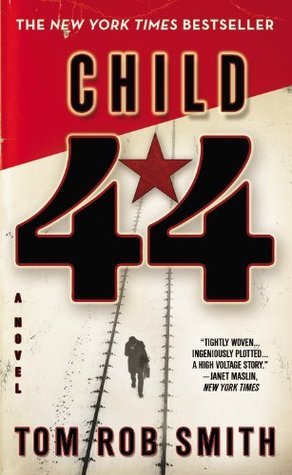
MGB officer Leo is a man who never questions the Party Line. He arrests whomever he is told to arrest. He dismisses the horrific death of a young boy because he is told to, because he believes the Party stance that there can be no murder in Communist Russia. Leo is the perfect soldier of the regime. But suddenly his confidence that everything he does serves a great good is shaken. He is forced to watch a man he knows to be innocent be brutally tortured. And then he is told to arrest his own wife. Leo understands how the State works: Trust and check, but check particularly on those we trust. He faces a stark choice: his wife or his life. And still the killings of children continue…
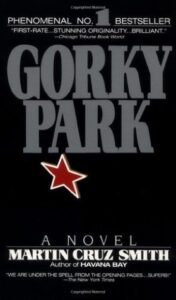
It begins with a triple murder in a Moscow amusement three corpses found frozen in the snow, faces and fingers missing. Chief homicide investigator Arkady Renko is brilliant, sensitive, honest, and cynical about everything except his profession. To identify the victims and uncover the truth, he must battle the KGB, FBI, and the New York City police as he pursues a rich, ruthless, and well-connected American fur dealer. Meanwhile, Renko is falling in love with a beautiful, headstrong dissident for whom he may risk everything.
At an icebound naval weather station in far Siberia, the young daughter of an exiled dies under suspicious circumstances. The high-ranking Commissar sent to investigate the mystery suffers a similar fate: he is murdered by an icicle thrust into his skull.
One Live Cop
Inspector Porfiry Rostnikov is dispatched to solve the Commissar's murder, with one caveat: he is not to investigate the girl's death. Even if all the clues tell him that the two cases are linked.
One Cold Killer
In a single, fateful day, Rostnikov will hear two confessions, watch someone die, conspire against the government, and nearly meet his own death. All under the watchful eye of the KGB -- and someone much closer and infinitely more terrifying.
Set in Boston at the end of the First World War, New York Times best-selling author Dennis Lehane's long-awaited eighth novel unflinchingly captures the political and social unrest of a nation caught at the crossroads between past and future.
The Given Day tells the story of two families—one black, one white—swept up in a maelstrom of revolutionaries and anarchists, immigrants and ward bosses, Brahmins and ordinary citizens, all engaged in a battle for survival and power.
Beat cop Danny Coughlin, the son of one of the city's most beloved and powerful police captains, joins a burgeoning union movement and the hunt for violent radicals.
Luther Laurence, on the run after a deadly confrontation with a crime boss in Tulsa, works for the Coughlin family and tries desperately to find his way home to his pregnant wife.
Here, too, are some of the most influential figures of the era—Babe Ruth; Eugene O'Neill; leftist activist Jack Reed; NAACP founder W. E. B. DuBois; Mitchell Palmer, Woodrow Wilson's ruthless Red-chasing attorney general; cunning Massachusetts governor Calvin Coolidge; and an ambitious young Department of Justice lawyer named John Hoover.
Coursing through some of the pivotal events of the time—including the Spanish Influenza pandemic—and culminating in the Boston Police Strike of 1919, The Given Day explores the crippling violence and irrepressible exuberance of a country at war with, and in the thrall of, itself. As Danny, Luther, and those around them struggle to define themselves in increasingly turbulent times, they gradually find family in one another and, together, ride a rising storm of hardship, deprivation, and hope that will change all their lives.
The year is 1896, the place, New York City. On a cold March night New York Times reporter John Schuyler Moore is summoned to the East River by his friend and former Harvard classmate Dr. Laszlo Kreizler, a psychologist, or "alienist." On the unfinished Williamsburg Bridge, they view the horribly mutilated body of an adolescent boy, a prostitute from one of Manhattan's infamous brothels.
The newly appointed police commissioner, Theodore Roosevelt, in a highly unorthodox move, enlists the two men in the murder investigation, counting on the reserved Kreizler's intellect and Moore's knowledge of New York's vast criminal underworld. They are joined by Sara Howard, a brave and determined woman who works as a secretary in the police department. Laboring in secret (for alienists, and the emerging discipline of psychology, are viewed by the public with skepticism at best), the unlikely team embarks on what is a revolutionary effort in criminology-- amassing a psychological profile of the man they're looking for based on the details of his crimes. Their dangerous quest takes them into the tortured past and twisted mind of a murderer who has killed before--and will kill again before the hunt is over.
Fast-paced and gripping, infused with a historian's exactitude, The Alienist conjures up the Gilded Age and its untarnished underside: verminous tenements and opulent mansions, corrupt cops and flamboyant gangsters, shining opera houses and seamy gin mills. Here is a New York during an age when questioning society's belief that all killers are born, not made, could have unexpected and mortal consequences.
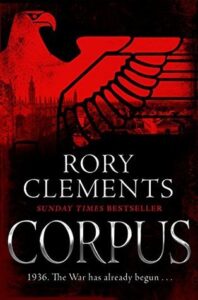
1936. Europe is in turmoil. The Nazis have marched into the Rhineland. In Russia, Stalin has unleashed his Great Terror. Spain has erupted in civil war.
In Berlin, a young Englishwoman evades the Gestapo to deliver vital papers to a Jewish scientist. Within weeks, she is found dead, a silver syringe clutched in her fingers.
In an exclusive London club, a conspiracy is launched that threatens the very heart of government. When a renowned society couple with fascist leanings are found brutally murdered, a maverick Cambridge professor is drawn into a world of espionage he knows only from history books. The deeper Thomas Wilde delves, the more he finds to link the murders with the girl with the silver syringe - and even more worryingly to the scandal surrounding the Abdication . . .
A magnificent blend of fact and fiction, a brilliantly realized paean to Dante's continued grip on our imagination, and a captivating thriller that will surprise readers from beginning to end.Words can bleed.In 1865 Boston, the literary geniuses of the Dante Club—poets and Harvard professors Henry Wadsworth Longfellow, Dr. Oliver Wendell Holmes, and James Russell Lowell, along with publisher J. T. Fields—are finishing America's first translation of The Divine Comedy and preparing to unveil Dante's remarkable visions to the New World. The powerful Boston Brahmins at Harvard College are fighting to keep Dante in obscurity, believing that the infiltration of foreign superstitions into American minds will prove as corrupting as the immigrants arriving at Boston Harbor.The members of the Dante Club fight to keep a sacred literary cause alive, but their plans fall apart when a series of murders erupts through Boston and Cambridge. Only this small group of scholars realizes that the gruesome killings are modeled on the descriptions of Hell's punishments from Dante's Inferno. With the lives of the Boston elite and Dante's literary future in America at stake, the Dante Club members must find the killer before the authorities discover their secret.Dr. Oliver Wendell Holmes and an outcast police officer named Nicholas Rey, the first black member of the Boston police department, must place their careers on the line to end the terror. Together, they discover that the source of the murders lies closer to home than they ever could have imagined.The Dante Club is a magnificent blend of fact and fiction, a brilliantly realized paean to Dante's continued grip on our imagination, and a captivating thriller that will surprise readers from beginning to end.
Librarian note: an alternate cover for this edition can be found here.
The Jackal. A tall, blond Englishman with opaque, gray eyes. A killer at the top of his profession. A man unknown to any secret service in the world. An assassin with a contract to kill the world's most heavily guarded man.
One man with a rifle who can change the course of history. One man whose mission is so secretive not even his employers know his name. And as the minutes count down to the final act of execution, it seems that there is no power on earth that can stop the Jackal.
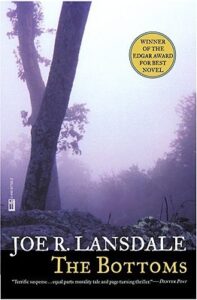
The narrator of The Bottoms is Harry Collins, an old man obsessively reflecting on certain key experiences of his childhood. In 1933, the year that forms the centerpiece of the narrative, Harry is 11 years old and living with his mother, father, and younger sister on a farm outside of Marvel Creek, Texas, near the Sabine River bottoms. Harry's world changes forever when he discovers the corpse of a young black woman tied to a tree in the forest near his home. The woman, who is eventually identified as a local prostitute, has been murdered, molested, and sexually mutilated. She is also, as Harry will soon discover, the first in a series of similar corpses, all of them the victims of a new, unprecedented sort of monster: a traveling serial killer.
From his privileged position as the son of constable (and farmer and part-time barber) Jacob Collins, Harry watches as the distinctly amateur investigation unfolds. As more bodies -- not all of them "colored" -- surface, the mood of the local residents darkens. Racial tensions -- never far from the surface, even in the best of times -- gradually kindle. When circumstantial evidence implicates an ancient, innocent black man named Mose, the Ku Klux Klan mobilizes, initiating a chilling, graphically described lynching that will occupy a permanent place in Harry Collins's memories. With Mose dead and the threat to local white women presumably put to rest, the residents of Marvel Creek resume their normal lives, only to find that the actual killer remains at large and continues to threaten the safety and stability of the town.
Lansdale uses this protracted murder investigation to open up a window on an insular, poverty-stricken, racially divided community. With humor, precision, and great narrative economy, he evokes the society of Marvel Creek in all its alternating tawdriness and nobility, offering us a varied, absolutely convincing portrait of a world that has receded into history. At the same time, he offers us a richly detailed re-creation of the vibrant, dangerous physical landscapes that were part of that world and have since been buried under the concrete and cement of the industrialized juggernaut of the late 20th century. In Lansdale's hands, the gritty realities of Depression-era Texas are as authentic -- and memorable -- as anything in recent American fiction.
Welcome Back!
Track your reading progress and sync your library.