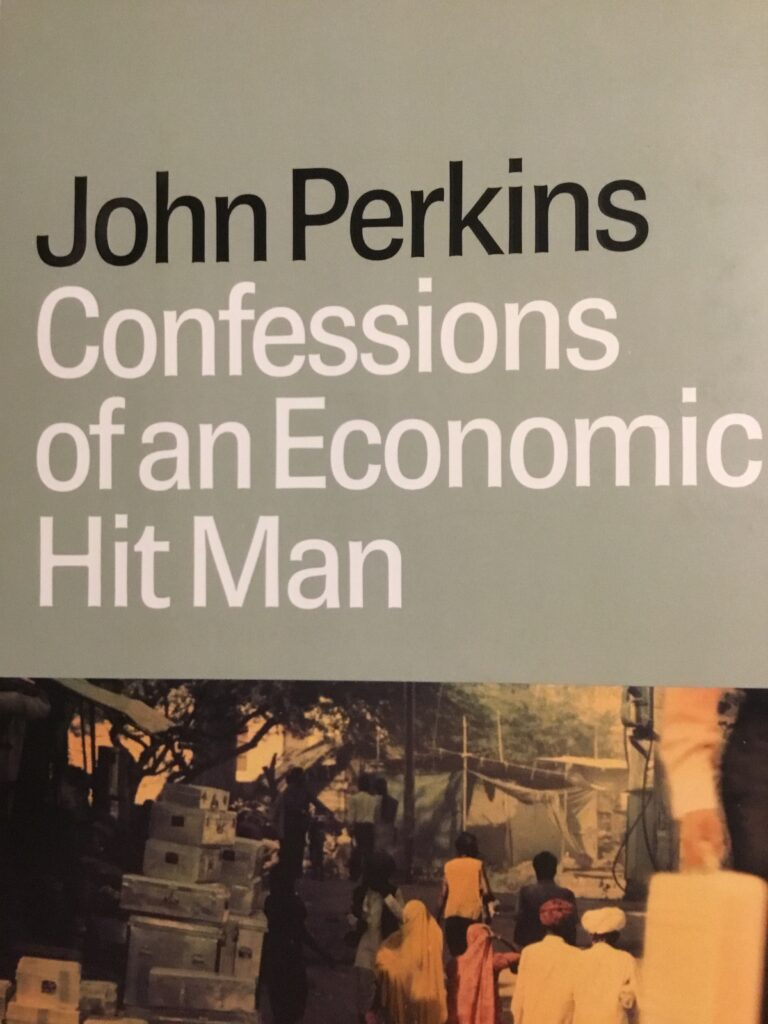
Tôi viết những dòng đó vào năm 1982 để mở đầu cho cuốn sách có tiêu đề là Lương tâm của một sát thủ kinh tế. Cuốn sách này dành tặng cho hai vị tổng thống của hai nước đã từng là khách hàng của tôi, những người mà tôi đã kính trọng và luôn coi như ruột thịt – Jaime Roldós (Tổng thống Êcuađo) và Omar Torijos (Tổng thống Panama). Cả hai đã mất trong những vụ tai nạn khủng khiếp. Cái chết của họ không phải là ngẫu nhiên. Họ bị ám sát vì họ đã đứng lên chống lại phe phái các công ty, chính phủ và các trùm ngân hàng, những người có chung mục tiêu là thống trị toàn cầu. Những sát thủ kinh tế chúng tôi đã không thể mua chuộc được Roldós và Torrijos, và vì thế một loại sát thủ khác, những tên giết người thực sự của CIA, những kẻ luôn đi sau chúng tôi, đã vào cuộc.
The #1 New York Times bestseller: "It is the work of our greatest financial journalist, at the top of his game. And it's essential reading."—Graydon Carter, Vanity Fair
The real story of the crash began in bizarre feeder markets where the sun doesn't shine and the SEC doesn't dare, or bother, to tread: the bond and real estate derivative markets where geeks invent impenetrable securities to profit from the misery of lower- and middle-class Americans who can't pay their debts. The smart people who understood what was or might be happening were paralyzed by hope and fear; in any case, they weren't talking.
Michael Lewis creates a fresh, character-driven narrative brimming with indignation and dark humor, a fitting sequel to his #1 bestseller Liar's Poker. Out of a handful of unlikely-really unlikely-heroes, Lewis fashions a story as compelling and unusual as any of his earlier bestsellers, proving yet again that he is the finest and funniest chronicler of our time.
In her ground-breaking reporting from Iraq, Naomi Klein exposed how the trauma of invasion was being exploited to remake the country in the interest of foreign corporations. She called it "disaster capitalism." Covering Sri Lanka in the wake of the tsunami, and New Orleans post-Katrina, she witnessed something remarkably similar. People still reeling from catastrophe were being hit again, this time with economic "shock treatment" losing their land and homes to rapid-fire corporate makeovers. The Shock Doctrine retells the story of the most dominant ideology of our time, Milton Friedman's free market economic revolution. In contrast to the popular myth of this movement's peaceful global victory, Klein shows how it has exploited moments of shock and extreme violence in order to implement its economic policies in so many parts of the world from Latin America and Eastern Europe to South Africa, Russia, and Iraq. At the core of disaster capitalism is the use of cataclysmic events to advance radical privatization combined with the privatization of the disaster response itself. By capitalizing on crises, created by nature or war, Klein argues that the disaster capitalism complex now exists as a booming new economy, and is the violent culmination of a radical economic project that has been incubating for fifty years.
In the post-meltdown world, it is irresponsible, ineffective, and ultimately useless to have a serious economic debate without considering and challenging the role of the Federal Reserve.
Most people think of the Fed as an indispensable institution without which the country's economy could not properly function. But in END THE FED, Ron Paul draws on American history, economics, and fascinating stories from his own long political life to argue that the Fed is both corrupt and unconstitutional. It is inflating currency today at nearly a Weimar or Zimbabwe level, a practice that threatens to put us into an inflationary depression where $100 bills are worthless. What most people don't realize is that the Fed -- created by the Morgans and Rockefellers at a private club off the coast of Georgia -- is actually working against their own personal interests. Congressman Paul's urgent appeal to all citizens and officials tells us where we went wrong and what we need to do fix America's economic policy for future generations.
With a new Afterword to the 2002 edition, No Logo employs journalistic savvy and personal testament to detail the insidious practices and far-reaching effects of corporate marketing—and the powerful potential of a growing activist sect that will surely alter the course of the 21st century. First published before the World Trade Organization protests in Seattle, this is an infuriating, inspiring, and altogether pioneering work of cultural criticism that investigates money, marketing, and the anti-corporate movement.
As global corporations compete for the hearts and wallets of consumers who not only buy their products but willingly advertise them from head to toe—witness today's schoolbooks, superstores, sporting arenas, and brand-name synergy—a new generation has begun to battle consumerism with its own best weapons. In this provocative, well-written study, a front-line report on that battle, we learn how the Nike swoosh has changed from an athletic status-symbol to a metaphor for sweatshop labor, how teenaged McDonald's workers are risking their jobs to join the Teamsters, and how "culture jammers" utilize spray paint, computer-hacking acumen, and anti-propagandist wordplay to undercut the slogans and meanings of billboard ads (as in "Joe Chemo" for "Joe Camel").
No Logo will challenge and enlighten students of sociology, economics, popular culture, international affairs, and marketing.
"This book is not another account of the power of the select group of corporate Goliaths that have gathered to form our de facto global government. Rather, it is an attempt to analyze and document the forces opposing corporate rule, and to lay out the particular set of cultural and economic conditions that made the emergence of that opposition inevitable." —Naomi Klein, from her Introduction
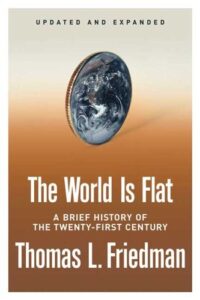
Toàn cầu hóa là chủ đề vốn phức tạp và thu hút sự quan tâm của dư luận với không ít những ý kiến trái ngược nhau, được Thomas L.Friedman phân tích một cách độc đáo, với lập luận trung tâm về quá trình “trở nên phẳng” của thế giới. Khái niệm “phẳng” ở đây đồng nghĩa với “sự kết nối”. Những dở bỏ rào cản về chính trị cùng với những tiến bộ vượt bậc của cách mạng số đang làm cho thế giới “phẳng ra” và không còn nhiều trở ngại về địa lý như trước. Điều này mở ra cho các nước những phương thức sản xuất kinh doanh, những tình thế địa chính trị và địa kinh tế hoàn toàn mới.
Thông điệp Friedman chuyển tải không xa lạ đối với nhiều bạn độc giả. Toàn cầu hoá là hiện tượng khách quan, từng được biểu hiện lẻ tẻ có khi như một trạng huống, một tiến trình, nhưng giờ đây được nhìn nhận rõ nét và khái quát hơn, khi nó trỗi dậy trở thành một hệ thống quốc tế. Điểm mấu chốt ở đây là, đôi lúc dư luận có dấu hiệu sao nhãng đối với các đòi hỏi mang tính tất yếu để thúc đẩy toàn cầu hoá (do sự kiện 11/9, cuộc chiến tranh Irag hoặc các lý do tương tự), Friedman đã giống lên hồi chuông cảnh báo rằ Toàn cầu hoá 3.0 thực chất đang ở vào giai đoạn tăng tốc, nó làm cho thế giới chuyển từ cỡ nhỏ xuống cỡ siêu nhỏ và đồng thời san phẳng thế giới. Chúng ta đang sống trong một thế giới phẳng! Trong thế giới này, không chỉ các quốc gia, những tập đoàn kinh tế lớn như Dell, IBM, Wal-Mart, mà là các cá nhân ở khắp mọi nơi trên hành tinh này (chỉ cần kết nối internet và tiếp cận các công cụ của thế giới mới) có thể cộng với nhau trong những chuỗi cung toàn cầu để tạo ra những giá trị gia tăng lớn hơn. Chiếc “bánh” toàn cầu ngày càng trở nên to hơn nhưng đồng thời cũng khó chia hơn….
Xu thế toàn cầu hóa đang là đặc điểm chi phối thời đại, như chính Nghị quyết Đại hội Đảng Cộng Sản Việt Nam lần thứ X đã khẳng định. Quá trình chúng ta chủ động hội nhập quốc tế, mà việc gia nhập WTO là một biểu hiện, có cả cơ hội lẫn thách thức. Chính vì thế, việc tiếp cận và tham khảo những tri thức đương đại từ những nước đã phát triển về sự chuyển động của thế giới (đang ở bước ngoặt từ “tròn” sang “phẳng”, như cách nói của tác giả) có lẽ sẽ giúp chúng ta có thêm những thông tin bổ ích để có sự chủ động trong quá trình hội nhập.
Với mục đích cung cấp và cập nhật những thông tin đang là sự kiện dẫn đầu có giá trị tham khảo, xin giới thiệu tới bạn đọc bản dịch Việt ngữ của THE WORLD IS FLAT – tác phẩm được xếp vào danh mục sách bán chạy nhất ở Mỹ (kể từ lần xuất bản đầu tiên tháng 4/ 2005, và lần tái bản gần đây tháng 1/ 2006). Đây là bản dịch từ bản sách gốc mới nhất được cập nhật, bổ sung bởi chính tác giả.
One of the most acclaimed books of our time, winner of both the Pulitzer and the Francis Parkman prizes, The Power Broker tells the hidden story behind the shaping (and mis-shaping) of twentieth-century New York (city and state) and makes public what few have known: that Robert Moses was, for almost half a century, the single most powerful man of our time in New York, the shaper not only of the city's politics but of its physical structure and the problems of urban decline that plague us today.
In revealing how Moses did it--how he developed his public authorities into a political machine that was virtually a fourth branch of government, one that could bring to their knees Governors and Mayors (from La Guardia to Lindsay) by mobilizing banks, contractors, labor unions, insurance firms, even the press and the Church, into an irresistible economic force--Robert Caro reveals how power works in all the cities of the United States. Moses built an empire and lived like an emperor. He personally conceived and completed public works costing 27 billion dollars--the greatest builder America (and probably the world) has ever known. Without ever having been elected to office, he dominated the men who were--even his most bitter enemy, Franklin D. Roosevelt, could not control him--until he finally encountered, in Nelson Rockefeller, the only man whose power (and ruthlessness in wielding it) equalled his own.
Through a life of passion and struggle, Malcolm X became one of the most influential figures of the 20th Century. In this riveting account, he tells of his journey from a prison cell to Mecca, describing his transition from hoodlum to Muslim minister. Here, the man who called himself "the angriest Black man in America" relates how his conversion to true Islam helped him confront his rage and recognize the brotherhood of all mankind.
An established classic of modern America, "The Autobiography of Malcolm X" was hailed by the New York Times as "Extraordinary. A brilliant, painful, important book." Still extraordinary, still important, this electrifying story has transformed Malcolm X's life into his legacy. The strength of his words, and the power of his ideas continue to resonate more than a generation after they first appeared.
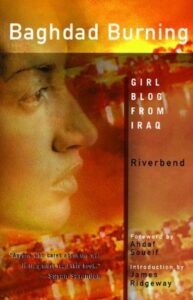
"In August 2003 a young Iraqi blogger began reporting her experiences as a civilian observer in Baghdad. Calling herself Riverbend, she has offered searing eyewitness accounts of daily life in the war zone and has garnered a worldwide audience hungry for unfiltered news and fresh analysis." "Riverbend's blog, Baghdad Burning, collected here for the first time, responds to events both personal and political - from the impact on her family of the invasion's aftermath to the Abu Ghraib prison abuses. She reveals for us most sharply the fate of Iraqi women, whose rights and freedoms are falling victim to rising fundamentalisms." Describing the reality of regime change in Iraq in a voice at turns outraged, witty, and deeply moving, Riverbend is a witness to the recent events that are shaping the future of her homeland.
Welcome Back!
Track your reading progress and sync your library.