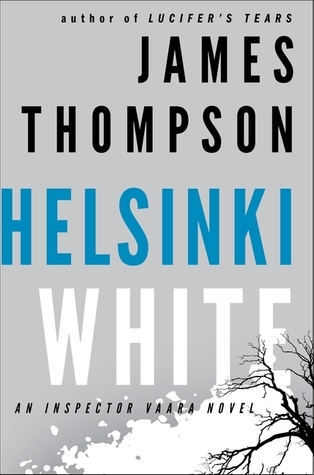
Two days after their daughter is born, Kari Vaara drops a bombshell on his American wife, He has a brain tumor . . . and he’s been handpicked to run a rogue black-ops unit, using crime to fight crime. After recovering from surgery, he gets to work. The black-ops unit is small, and reports directly to Finland’s national chief of police. They have secrecy, autonomy, and the cash to buy all the high-tech gear. Soon the unit is cleaning house, robbing Helsinki’s mobsters blind of their cash, dope, and illegal firearms. But Kari’s team is too good, and their actions have unintended consequences. . . . Meanwhile, Finland roils with hatred as its most extreme right political party gains popularity despite having no agenda besides xenophobia. When the country’s leading immigrants’ rights advocate is assassinated and her head sent by mail to the Finnish Somalia Network, the president assigns Kari to the murder. Cracking this case will involve the unsolved kidnapping of a billionaire’s children, a Faustian bargain with a former French legionnaire-and Kate.
In this electrifying new addition to Jo Nesbø’s internationally acclaimed series, Harry Hole must confront the darkest demons in his city—and in himself.
Inspector Harry Hole has retreated to Hong Kong, escaping the trauma of his last case in squalid opium dens, when two young women are found dead in Oslo, both drowned in their own blood. Media coverage quickly reaches a fever pitch. There are no clues, the police investigation is stalled, and Harry—the one man who might be able to help—can’t be found. After he returns to Oslo, the killer strikes again, Harry’s instincts take over, and nothing can keep him from the investigation, though there is little to go on. Worse, he will soon come to understand that he is dealing with a psychopath who will put him to the test, both professionally and personally, as never before.
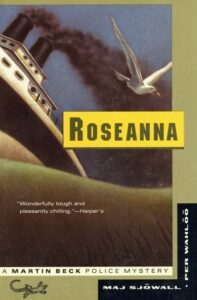
The masterful first novel in the Martin Beck series of mysteries by the internationally renowned crime writing duo Maj Sjöwall and Per Wahlöö, finds Beck hunting for the murderer of a lonely traveler. On a July afternoon, a young woman's body is dredged from Sweden's beautiful Lake Vattern. With no clues Beck begins an investigation not only to uncover a murderer but also to discover who the victim was. Three months later, all Beck knows is that her name was Roseanna and that she could have been strangled by any one of eighty-five people on a cruise. As the melancholic Beck narrows the list of suspects, he is drawn increasingly to the enigma of the victim, a free-spirited traveler with a penchant for casual sex, and to the psychopathology of a murderer with a distinctive--indeed, terrifying--sense of propriety..
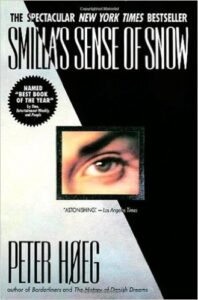
She thinks more highly of snow and ice than she does of love. She lives in a world of numbers, science and memories--a dark, exotic stranger in a strange land. And now Smilla Jaspersen is convinced she has uncovered a shattering crime...
It happened in the Copenhagen snow. A six-year-old boy, a Greenlander like Smilla, fell to his death from the top of his apartment building. While the boy's body is still warm, the police pronounce his death an accident. But Smilla knows her young neighbor didn't fall from the roof on his own. Soon she is following a path of clues as clear to her as footsteps in the snow. For her dead neighbor, and for herself, she must embark on a harrowing journey of lies, revelation and violence that will take her back to the world of ice and snow from which she comes, where an explosive secret waits beneath the ice....
It was a senselessly violent crime: on a cold night in a remote Swedish farmhouse an elderly farmer is bludgeoned to death, and his wife is left to die with a noose around her neck. And as if this didn’t present enough problems for the Ystad police Inspector Kurt Wallander, the dying woman’s last word is foreign, leaving the police the one tangible clue they have–and in the process, the match that could inflame Sweden’s already smoldering anti-immigrant sentiments.
Unlike the situation with his ex-wife, his estranged daughter, or the beautiful but married young prosecuter who has piqued his interest, in this case, Wallander finds a problem he can handle. He quickly becomes obsessed with solving the crime before the already tense situation explodes, but soon comes to realize that it will require all his reserves of energy and dedication to solve. --back cover
The Expose Millenium publisher Mikael Blomkvist has made his reputation exposing corrupt establishment figures. So when a young journalist approaches him with an investigation into sex trafficking, Blomkvist cannot resist waging war on the powerful figures who control this lucrative industry.
The Murder When a young couple is found dead in their Stockholm apartment, it's a straightforward job for Inspector Bublanski and his team. The killer left the weapon at the scene - and the fingerprints on the gun point in only one direction.
The Girl Who Played with Fire Ex-security analyst Lisbeth Salander is wanted for murder. Her history of unpredictable and vengeful behaviour makes her an official danger to society - but no-one can find her. The only way Salander can be reached is by computer. But she can break into almost any network she chooses...
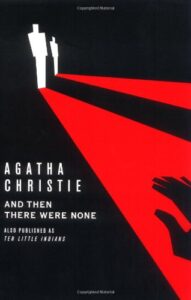
First, there were ten—a curious assortment of strangers summoned as weekend guests to a little private island off the coast of Devon. Their host, an eccentric millionaire unknown to all of them, is nowhere to be found. All that the guests have in common is a wicked past they're unwilling to reveal—and a secret that will seal their fate. For each has been marked for murder. A famous nursery rhyme is framed and hung in every room of the mansion:
"Ten little boys went out to dine; One choked his little self and then there were nine. Nine little boys sat up very late; One overslept himself and then there were eight. Eight little boys traveling in Devon; One said he'd stay there then there were seven. Seven little boys chopping up sticks; One chopped himself in half and then there were six. Six little boys playing with a hive; A bumblebee stung one and then there were five. Five little boys going in for law; One got in Chancery and then there were four. Four little boys going out to sea; A red herring swallowed one and then there were three. Three little boys walking in the zoo; A big bear hugged one and then there were two. Two little boys sitting in the sun; One got frizzled up and then there was one. One little boy left all alone; He went out and hanged himself and then there were none."
When they realize that murders are occurring as described in the rhyme, terror mounts. One by one they fall prey. Before the weekend is out, there will be none. Who has choreographed this dastardly scheme? And who will be left to tell the tale? Only the dead are above suspicion.
Pretty and popular high school senior Andie Bell was murdered by her boyfriend, Sal Singh, who then killed himself. It was all anyone could talk about. And five years later, Pip sees how the tragedy still haunts her town.
But she can't shake the feeling that there was more to what happened that day. She knew Sal when she was a child, and he was always so kind to her. How could he possibly have been a killer?
Now a senior herself, Pip decides to reexamine the closed case for her final project, at first just to cast doubt on the original investigation. But soon she discovers a trail of dark secrets that might actually prove Sal innocent . . . and the line between past and present begins to blur. Someone in Fairview doesn't want Pip digging around for answers, and now her own life might be in danger.
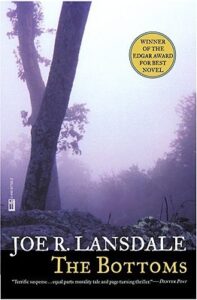
The narrator of The Bottoms is Harry Collins, an old man obsessively reflecting on certain key experiences of his childhood. In 1933, the year that forms the centerpiece of the narrative, Harry is 11 years old and living with his mother, father, and younger sister on a farm outside of Marvel Creek, Texas, near the Sabine River bottoms. Harry's world changes forever when he discovers the corpse of a young black woman tied to a tree in the forest near his home. The woman, who is eventually identified as a local prostitute, has been murdered, molested, and sexually mutilated. She is also, as Harry will soon discover, the first in a series of similar corpses, all of them the victims of a new, unprecedented sort of monster: a traveling serial killer.
From his privileged position as the son of constable (and farmer and part-time barber) Jacob Collins, Harry watches as the distinctly amateur investigation unfolds. As more bodies -- not all of them "colored" -- surface, the mood of the local residents darkens. Racial tensions -- never far from the surface, even in the best of times -- gradually kindle. When circumstantial evidence implicates an ancient, innocent black man named Mose, the Ku Klux Klan mobilizes, initiating a chilling, graphically described lynching that will occupy a permanent place in Harry Collins's memories. With Mose dead and the threat to local white women presumably put to rest, the residents of Marvel Creek resume their normal lives, only to find that the actual killer remains at large and continues to threaten the safety and stability of the town.
Lansdale uses this protracted murder investigation to open up a window on an insular, poverty-stricken, racially divided community. With humor, precision, and great narrative economy, he evokes the society of Marvel Creek in all its alternating tawdriness and nobility, offering us a varied, absolutely convincing portrait of a world that has receded into history. At the same time, he offers us a richly detailed re-creation of the vibrant, dangerous physical landscapes that were part of that world and have since been buried under the concrete and cement of the industrialized juggernaut of the late 20th century. In Lansdale's hands, the gritty realities of Depression-era Texas are as authentic -- and memorable -- as anything in recent American fiction.
Welcome Back!
Track your reading progress and sync your library.