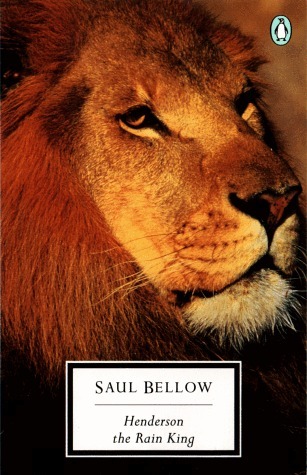
Henderson the Rain King
A middle-age American millionaire goes to Africa in search of a more meaningful life and receives the adoration of an African tribe that believes he has a gift for rainmaking.
The magnificent second novel from the legendary author of One Flew Over the Cuckoo's Nest...
Following the astonishing success of his first novel, One Flew Over the Cuckoo's Nest, Ken Kesey wrote what Charles Bowden calls "one of the few essential books written by an American in the last half century." This wild-spirited tale tells of a bitter strike that rages through a small lumber town along the Oregon coast. Bucking that strike out of sheer cussedness are the Stampers. Out of the Stamper family's rivalries and betrayals Ken Kesey has crafted a novel with the mythic impact of Greek tragedy.
This book contains two separate stories: "Raise High the Roof Beam, Carpenters" is the first, and "Seymour: An Introduction" is the second.
"Raise High the Roof Beam, Carpenters" is a story about the Glass family, narrated by Buddy, the second oldest brother. Buddy is attending his brother Seymour's wedding to a gal named Muriel, but he's on Army leave during active duty in World War II. At the wedding, everyone is stunned when Seymour does not show up.
The action of the story picks up when several characters end up carpooling together following the failed wedding. The others (the Matron of Honor and her husband, and a couple of stragglers) are talking about Seymour and the disappointment of his not showing up, and Buddy never tells them that he is secretly Seymour's brother, so they talk more openly with him than they otherwise would.
They criticize Seymour and speculate about his character flaws and deficiencies, but Buddy finds their assessments quite judgmental and biased. He then decides to tell the car who he really is, shaming them for their loose criticisms.
He finds Seymour's journal, and he discovers a strange message from their sister Boo Boo for Seymour on their bathroom mirror: "Raise high the roof beam, carpenters. Like Ares comes the bridegroom/ taller far than a tall man." This is a fragment from the Greek poet Sappho.
"Seymour: An Introduction" is a kind of elegy for Seymour from Buddy, told in the form of an introduction to the reader. The reader makes Seymour's acquaintance while knowing that Seymour technically isn't alive when the story is published, having killed himself in 1948.
This portion of the story is told in stream of consciousness, and it discusses Eastern religious mysticism.

This compelling novel has as its protagonist Cornelius Suttree, living alone and in exile in a disintegrating houseboat on the wrong side of the Tennessee River close by Knoxville. He stays at the edge of an outcast community inhabited by eccentrics, criminals and the poverty-stricken. Rising above the physical and human squalor around him, his detachment and wry humour enable him to survive dereliction and destitution with dignity.
Charles Mason (1728-1786) and Jeremiah Dixon (1733-1779) were the British surveyors best remembered for running the boundary between Pennsylvania and Maryland that we know today as the Mason-Dixon Line. Here is their story as re-imagined by Thomas Pynchon, featuring Native Americans and frontier folk, ripped bodices, naval warfare, conspiracies erotic and political, major caffeine abuse.
We follow the mismatch'd pair—one rollicking, the other depressive; one Gothic, the other pre-Romantic—from their first journey together to the Cape of Good Hope, to pre-Revolutionary America and back, through the strange yet redemptive turns of fortune in their later lives, on a grand tour of the Enlightenment's dark hemisphere, as they observe and participate in the many opportunities for insanity presented them by the Age of Reason.
Ethan Allen Hawley, the protagonist of Steinbeck’s last novel, works as a clerk in a grocery store that his family once owned. With Ethan no longer a member of Long Island’s aristocratic class, his wife is restless, and his teenage children are hungry for the tantalizing material comforts he cannot provide. Then one day, in a moment of moral crisis, Ethan decides to take a holiday from his own scrupulous standards.
Set in Steinbeck’s contemporary 1960 America, the novel explores the tenuous line between private and public honesty that today ranks it alongside his most acclaimed works of penetrating insight into the American condition. This edition features an introduction and notes by Steinbeck scholar Susan Shillinglaw.
“The first of my father’s illusions was that bears could survive the life lived by human beings, and the second was that human beings could survive a life led in hotels.” So says John Berry, son of a hapless dreamer, brother to a cadre of eccentric siblings, and chronicler of the lives lived, the loves experienced, the deaths met, and the myriad strange and wonderful times encountered by the family Berry. Hoteliers, pet-bear owners, friends of Freud (the animal trainer and vaudevillian, that is), and playthings of mad fate, they “dream on” in a funny, sad, outrageous, and moving novel by the remarkable author of A Prayer for Owen Meany and Last Night in Twisted River.
The National Book Award-winning classic from the author of Underworld and Libra, now a Netflix film starring Adam Driver, Don Cheadle, and Greta Gerwig
White Noise tells the story of Jack Gladney, his fourth wife, Babette, and four ultramodern offspring as they navigate the rocky passages of family life to the background babble of brand-name consumerism. When an industrial accident unleashes an "airborne toxic event," a lethal black chemical cloud floats over their lives. The menacing cloud is a more urgent and visible version of the "white noise" engulfing the Gladneys—radio transmissions, sirens, microwaves, ultrasonic appliances, and TV murmurings—pulsing with life, yet suggesting something ominous.
Part of the Penguin Orange Collection, a limited-run series of twelve influential and beloved American classics in a bold series design offering a modern take on the iconic Penguin paperback
Winner of the 2016 AIGA + Design Observer 50 Books | 50 Covers competition
Pulitzer Prize Winner (1998)
In American Pastoral, Philip Roth gives us a novel of unqualified greatness that is an elegy for all the twentieth century's promises of prosperity, civic order, and domestic bliss. Roth's protagonist is Seymour 'Swede' Levov—a legendary high school athlete, a devoted family man, a hard worker, the prosperous inheritor of his father's Newark glove factory—comes of age in thriving, triumphant post-war America. And then one day in 1968, Swede's beautiful American luck deserts him.
For Swede's adored daughter, Merry, has grown from a loving, quick-witted girl into a sullen, fanatical teenager—a teenager capable of an outlandishly savage act of political terrorism. And overnight Swede is wrenched out of the longed-for American pastoral and into the indigenous American berserk. Compulsively readable, propelled by sorrow, rage, and a deep compassion for its characters, this is Roth's masterpiece.