Umberto Eco’s groundbreaking and much-acclaimed first illustrated book has been a critical success since its first publication in 2004. What is beauty? Umberto Eco, among Italy’s finest and most important contemporary thinkers, explores the nature, the meaning, and the very history of the idea of beauty in Western culture. The profound and subtle text is lavishly illustrated with abundant examples of sublime painting and sculpture and lengthy quotations from writers and philosophers. This is the first paperback edition of History of Beauty, making this intellectual and philosophical journey with one of the world’s most acclaimed thinkers available in a more compact and affordable format.
Art of 4 Elements Spiritual Poetry Book. Discover Alchemy through Poetry and Love through Alchemy.
Four artists, a poet Nataša Pantović, a photographer Christine Cutajar, and two painters Jason Lu and Jeni Caruana, worked together to create The Art of Four Elements book with 120 art works and 120 poems. The poetry acted as an inspiration for the work of the artists: each one of them chose 40 poems and created the art work based on the theme and the ‘vibe' of the poems.
The poetry, the photography, the drawings, you will find in the Art of 4 Elements book attempt to deeper explore the infinite game of Life, through the exploration of:
Earth that is fixed, rigid, static and quiet, and symbolizes the world of senses; Water that is the primordial Chaos, is fluidity and flexibility, and symbolizes the world of emotions; Air that has no shape and is incapable of any fixed form. It is a symbol of thoughts. Fire that is boundless and invisible, and is a parching heat that consumes all, or within its highest manifestation, becomes the expression of Divine Love; and Spirit that stands at the center of the four elements as an Essence, an Observer, Consciousness coming forth to experience the magic of Life.
In Sapiens, he explored our past. In Homo Deus, he looked to our future. Now, one of the most innovative thinkers on the planet turns to the present to make sense of today's most pressing issues.
How do computers and robots change the meaning of being human? How do we deal with the epidemic of fake news? Are nations and religions still relevant? What should we teach our children?
Yuval Noah Harari's 21 Lessons for the 21st Century is a probing and visionary investigation into today's most urgent issues as we move into the uncharted territory of the future. As technology advances faster than our understanding of it, hacking becomes a tactic of war, and the world feels more polarized than ever, Harari addresses the challenge of navigating life in the face of constant and disorienting change and raises the important questions we need to ask ourselves in order to survive.
In twenty-one accessible chapters that are both provocative and profound, Harari builds on the ideas explored in his previous books, untangling political, technological, social, and existential issues and offering advice on how to prepare for a very different future from the world we now live in: How can we retain freedom of choice when Big Data is watching us? What will the future workforce look like, and how should we ready ourselves for it? How should we deal with the threat of terrorism? Why is liberal democracy in crisis?
Harari's unique ability to make sense of where we have come from and where we are going has captured the imaginations of millions of readers. Here he invites us to consider values, meaning, and personal engagement in a world full of noise and uncertainty. When we are deluged with irrelevant information, clarity is power. Presenting complex contemporary challenges clearly and accessibly, 21 Lessons for the 21st Century is essential reading.
From a renowned historian comes a groundbreaking narrative of humanity’s creation and evolution—a #1 international bestseller—that explores the ways in which biology and history have defined us and enhanced our understanding of what it means to be “human.” One hundred thousand years ago, at least six different species of humans inhabited Earth. Yet today there is only one—homo sapiens. What happened to the others? And what may happen to us? Most books about the history of humanity pursue either a historical or a biological approach, but Dr. Yuval Noah Harari breaks the mold with this highly original book that begins about 70,000 years ago with the appearance of modern cognition. From examining the role evolving humans have played in the global ecosystem to charting the rise of empires, Sapiens integrates history and science to reconsider accepted narratives, connect past developments with contemporary concerns, and examine specific events within the context of larger ideas. Dr. Harari also compels us to look ahead, because over the last few decades humans have begun to bend laws of natural selection that have governed life for the past four billion years. We are acquiring the ability to design not only the world around us, but also ourselves. Where is this leading us, and what do we want to become? Featuring 27 photographs, 6 maps, and 25 illustrations/diagrams, this provocative and insightful work is sure to spark debate and is essential reading for aficionados of Jared Diamond, James Gleick, Matt Ridley, Robert Wright, and Sharon Moalem.
A landmark volume in science writing by one of the great minds of our time, Stephen Hawking’s book explores such profound questions as: How did the universe begin—and what made its start possible? Does time always flow forward? Is the universe unending—or are there boundaries? Are there other dimensions in space? What will happen when it all ends?
Told in language we all can understand, A Brief History of Time plunges into the exotic realms of black holes and quarks, of antimatter and “arrows of time,” of the big bang and a bigger God—where the possibilities are wondrous and unexpected. With exciting images and profound imagination, Stephen Hawking brings us closer to the ultimate secrets at the very heart of creation.
Celebrating the 500th anniversary of Michelangelo’s David, New American Library releases a special edition of Irving Stone’s classic biographical novel—in which both the artist and the man are brought to life in full. A masterpiece in its own right, this novel offers a compelling portrait of Michelangelo’s dangerous, impassioned loves, and the God-driven fury from which he wrested the greatest art the world has ever known.
The King James Version is an Early Modern English translation of the Christian Bible for the Church of England, which was commissioned in 1604 and published in 1611. The 80 books of the King James Version include 39 books of the Old Testament, 14 books of Apocrypha, and the 27 books of the New Testament.
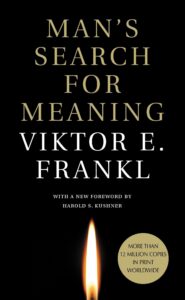
Psychiatrist Viktor Frankl's memoir has riveted generations of readers with its descriptions of life in Nazi death camps and its lessons for spiritual survival. Based on his own experience and the stories of his patients, Frankl argues that we cannot avoid suffering but we can choose how to cope with it, find meaning in it, and move forward with renewed purpose. At the heart of his theory, known as logotherapy, is a conviction that the primary human drive is not pleasure but the pursuit of what we find meaningful. Man's Search for Meaning has become one of the most influential books in America; it continues to inspire us all to find significance in the very act of living.
A good book may have the power to change the way we see the world, but a great book actually becomes part of our daily consciousness, pervading our thinking to the point that we take it for granted, and we forget how provocative and challenging its ideas once were—and still are. The Structure of Scientific Revolutions is that kind of book. When it was first published in 1962, it was a landmark event in the history and philosophy of science. Fifty years later, it still has many lessons to teach.
With The Structure of Scientific Revolutions, Kuhn challenged long-standing linear notions of scientific progress, arguing that transformative ideas don’t arise from the day-to-day, gradual process of experimentation and data accumulation but that the revolutions in science, those breakthrough moments that disrupt accepted thinking and offer unanticipated ideas, occur outside of “normal science,” as he called it. Though Kuhn was writing when physics ruled the sciences, his ideas on how scientific revolutions bring order to the anomalies that amass over time in research experiments are still instructive in our biotech age.
This new edition of Kuhn’s essential work in the history of science includes an insightful introduction by Ian Hacking, which clarifies terms popularized by Kuhn, including paradigm and incommensurability, and applies Kuhn’s ideas to the science of today. Usefully keyed to the separate sections of the book, Hacking’s introduction provides important background information as well as a contemporary context. Newly designed, with an expanded index, this edition will be eagerly welcomed by the next generation of readers seeking to understand the history of our perspectives on science.
Welcome Back!
Track your reading progress and sync your library.