Lady Chatterley’s Lover
Lawrence’s frank portrayal of an extramarital affair and the explicit sexual explorations of its central characters caused this controversial book, now considered a masterpiece, to be banned as pornography until 1960.
For nearly a century, the original version of Upton Sinclair's classic novel has remained almost entirely unknown.
When it was published in serial form in 1905, it was a full third longer than the censored, commercial edition published in book form the following year. That expurgated commercial edition edited out much of the ethnic flavor of the original, as well as some of the goriest descriptions of the meat-packing industry and much of Sinclair's most pointed social and political commentary.
The text of this new edition is as it appeared in the original uncensored edition of 1905.
It contains the full 36 chapters as originally published, rather than the 31 of the expurgated edition.
A new foreword describes the discovery in the 1980s of the original edition and its subsequent suppression, and a new introduction places the novel in historical context by explaining the pattern of censorship in the shorter commercial edition.
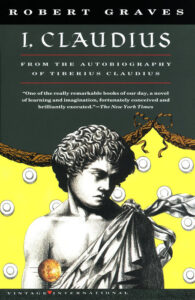
A modern classic of historical fiction written in the form of Claudius's autobiography.
Tiberius Claudius Drusus Nero Germanicus lived from 10 B.C. to 54 A.D. Despised as a weakling and dismissed as an idiot because of his physical infirmities, Claudius survived the intrigues and poisonings that marked the reigns of Augustus, Tiberius, and the mad Caligula to become emperor of Rome in 41 A.D. The first part of Robert Graves’s two-part account of the life of Tiberius Claudius, I, Claudius stands as a landmark historical novel of the 20th century from one of its great writers.
Cannery Row is a book without much of a plot. Rather, it is an attempt to capture the feeling and people of a place, the cannery district of Monterey, California, which is populated by a mix of those down on their luck and those who choose for other reasons not to live "up the hill" in the more respectable area of town. The flow of the main plot is frequently interrupted by short vignettes that introduce us to various denizens of the Row, most of whom are not directly connected with the central story. These vignettes are often characterized by direct or indirect reference to extreme violence: suicides, corpses, and the cruelty of the natural world.
The "story" of Cannery Row follows the adventures of Mack and the boys, a group of unemployed yet resourceful men who inhabit a converted fish-meal shack on the edge of a vacant lot down on the Row.
Sweet Thursday is the sequel to Cannery Row.
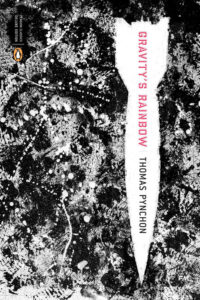
Winner of the 1973 National Book Award, Gravity's Rainbow is a postmodern epic, a work as exhaustively significant to the second half of the 20th century as Joyce's Ulysses was to the first. Its sprawling, encyclopedic narrative, and penetrating analysis of the impact of technology on society make it an intellectual tour de force.
The most nostalgic and reflective of Evelyn Waugh's novels, Brideshead Revisited looks back to the golden age before the Second World War. It tells the story of Charles Ryder's infatuation with the Marchmains and the rapidly-disappearing world of privilege they inhabit. Enchanted first by Sebastian at Oxford, then by his doomed Catholic family, in particular his remote sister, Julia, Charles comes finally to recognize only his spiritual and social distance from them.
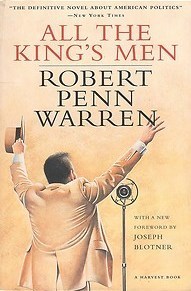
All the King's Men is a 1946 novel by Robert Penn Warren. Its title is drawn from the nursery rhyme "Humpty Dumpty". The novel tells the story of charismatic populist governor Willie Stark and his political machinations in the Depression-era Deep South. It is commonly thought to have been loosely inspired by the real-life story of U.S. Senator Huey P. Long, who was assassinated in 1935. Warren won the Pulitzer Prize for All the King's Men in 1947. The novel has received critical acclaim and remained perennially popular since its first publication. It was rated the 36th greatest novel of the 20th century by Modern Library, and it was chosen as one of Time magazine's 100 best novels since 1923. All the King's Men portrays the dramatic and theatrical political rise and governorship of Willie Stark, a cynical populist in the 1930s American South.
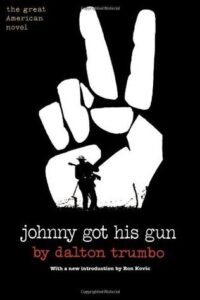
This was no ordinary war. This was a war to make the world safe for democracy. And if democracy was made safe, then nothing else mattered - not the millions of dead bodies, nor the thousands of ruined lives...
This is no ordinary novel. This is a novel that never takes the easy way out: it is shocking, violent, terrifying, horrible, uncompromising, brutal, remorseless and gruesome... but so is war.
Winner of the National Book Award.
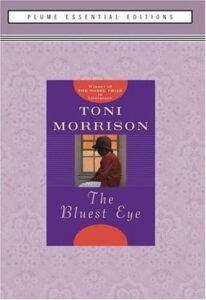
The Bluest Eye is Toni Morrison's first novel, a book heralded for its richness of language and boldness of vision. Set in the author's girlhood hometown of Lorain, Ohio, it tells the story of black, eleven-year-old Pecola Breedlove. Pecola prays for her eyes to turn blue so that she will be as beautiful and beloved as all the blond, blue-eyed children in America. In the autumn of 1941, the year the marigolds in the Breedloves' garden do not bloom. Pecola's life does change—in painful, devastating ways.
With its vivid evocation of the fear and loneliness at the heart of a child's yearning, and the tragedy of its fulfillment. The Bluest Eye remains one of Toni Morrison's most powerful, unforgettable novels- and a significant work of American fiction.