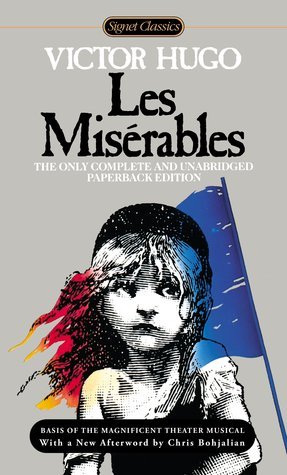
Victor Hugo’s tale of injustice, heroism and love follows the fortunes of Jean Valjean, an escaped convict determined to put his criminal past behind him. But his attempts to become a respected member of the community are constantly put under threat: by his own conscience, when, owing to a case of mistaken identity, another man is arrested in his place; and by the relentless investigations of the dogged Inspector Javert. It is not simply for himself that Valjean must stay free, however, for he has sworn to protect the baby daughter of Fantine, driven to prostitution by poverty.
Published in 1942 by French author Albert Camus, The Stranger has long been considered a classic of twentieth-century literature. Le Monde ranks it as number one on its "100 Books of the Century" list. Through this story of an ordinary man unwittingly drawn into a senseless murder on a sundrenched Algerian beach, Camus explores what he termed "the nakedness of man faced with the absurd."
Marcel Proust’s In Search of Lost Time is one of the most entertaining reading experiences in any language and arguably the finest novel of the twentieth century. But since its original prewar translation there has been no completely new version in English. Now, Penguin Classics brings Proust’s masterpiece to new audiences throughout the world, beginning with Lydia Davis’s internationally acclaimed translation of the first volume, Swann’s Way.
The Plague is a novel by Albert Camus, published in 1947.
It tells the story from the point of view of a narrator of a plague sweeping the French Algerian city of Oran. The narrator remains unknown until the start of the last chapter, chapter 5 of part 5. The novel presents a snapshot of life in Oran as seen through the author's distinctive absurdist point of view.
The book tells a gripping tale of human unrelieved horror, of survival and resilience, and of the ways in which humankind confronts death, The Plague is at once a masterfully crafted novel, eloquently understated and epic in scope, and a parable of ageless moral resonance, profoundly relevant to our times. In Oran, a coastal town in North Africa, the plague begins as a series of portents, unheeded by the people. It gradually becomes an omnipresent reality, obliterating all traces of the past and driving its victims to almost unearthly extremes of suffering, madness, and compassion.
The Plague is considered an existentialist classic despite Camus' objection to the label. The novel stresses the powerlessness of the individual characters to affect their destinies. The narrative tone is similar to Kafka's, especially in The Trial, whose individual sentences potentially have multiple meanings; the material often pointedly resonating as stark allegory of phenomenal consciousness and the human condition.
An alternative cover edition for this ISBN can be found here
Thrown in prison for a crime he has not committed, Edmond Dantes is confined to the grim fortress of If. There he learns of a great hoard of treasure hidden on the Isle of Monte Cristo and becomes determined not only to escape but to unearth the treasure and use it to plot the destruction of the three men responsible for his incarceration. A huge popular success when it was first serialized in the 1840s, Dumas was inspired by a real-life case of wrongful imprisonment when writing his epic tale of suffering and retribution.
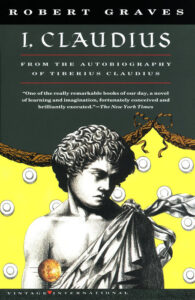
A modern classic of historical fiction written in the form of Claudius's autobiography.
Tiberius Claudius Drusus Nero Germanicus lived from 10 B.C. to 54 A.D. Despised as a weakling and dismissed as an idiot because of his physical infirmities, Claudius survived the intrigues and poisonings that marked the reigns of Augustus, Tiberius, and the mad Caligula to become emperor of Rome in 41 A.D. The first part of Robert Graves’s two-part account of the life of Tiberius Claudius, I, Claudius stands as a landmark historical novel of the 20th century from one of its great writers.
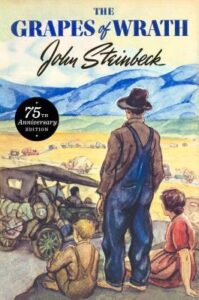
The Pulitzer Prize-winning epic of the Great Depression, a book that galvanized—and sometimes outraged—millions of readers.
First published in 1939, Steinbeck’s Pulitzer Prize-winning epic of the Great Depression chronicles the Dust Bowl migration of the 1930s and tells the story of one Oklahoma farm family, the Joads—driven from their homestead and forced to travel west to the promised land of California. Out of their trials and their repeated collisions against the hard realities of an America divided into Haves and Have-Nots evolves a drama that is intensely human yet majestic in its scale and moral vision, elemental yet plainspoken, tragic but ultimately stirring in its human dignity. A portrait of the conflict between the powerful and the powerless, of one man’s fierce reaction to injustice, and of one woman’s stoical strength, the novel captures the horrors of the Great Depression and probes into the very nature of equality and justice in America. At once a naturalistic epic, captivity narrative, road novel, and transcendental gospel, Steinbeck’s powerful landmark novel is perhaps the most American of American Classics.
This extraordinary historical French gothic novel, set in Medieval Paris under the twin towers of its greatest structure and supreme symbol, the cathedral of Notre-Dame, is the haunting drama of Quasimodo, the disabled bell-ringer of Notre-Dame, as he struggles to stand up to his ableist guardian Claude Frollo, who also wants to commit genocide against Paris' Romani population.
The novel has been described as a key text in French literature[1] and has been adapted for film over a dozen times, in addition to numerous television and stage adaptations, such as a 1923 silent film with Lon Chaney, a 1939 sound film with Charles Laughton, and a 1996 Disney animated film with Tom Hulce (both as Quasimodo).
The novel sought to preserve values of French culture in a time period of great change, which resulted in the destruction of many French Gothic structures. The novel made Notre-Dame de Paris a national icon and served as a catalyst for renewed interest in the restoration of Gothic form.
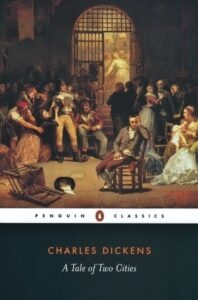
A Tale of Two Cities is Charles Dickens’s great historical novel, set against the violent upheaval of the French Revolution. The most famous and perhaps the most popular of his works, it compresses an event of immense complexity to the scale of a family history, with a cast of characters that includes a bloodthirsty ogress and an antihero as believably flawed as any in modern fiction. Though the least typical of the author’s novels, A Tale of Two Cities still underscores many of his enduring themes—imprisonment, injustice, social anarchy, resurrection, and the renunciation that fosters renewal.
Welcome Back!
Track your reading progress and sync your library.