From the author of White Noise (winner of the National Book Award) and The Silence , an eerily convincing fictional speculation on the events leading up to the assassination of John F. Kennedy
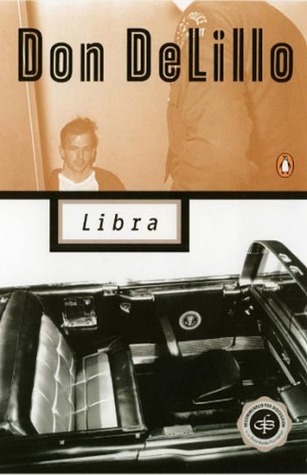
In this powerful, unsettling novel, Don DeLillo chronicles Lee Harvey Oswald’s odyssey from troubled teenager to a man of precarious stability who imagines himself an agent of history. When “history” presents itself in the form of two disgruntled CIA operatives who decide that an unsuccessful attempt on the life of the president will galvanize the nation against communism, the scales are irrevocably tipped.
A gripping, masterful blend of fact and fiction, alive with meticulously portrayed characters both real and created, Libra is a grave, haunting, and brilliant examination of an event that has become an indelible part of the American psyche.
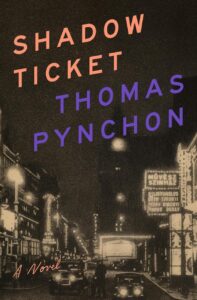
Milwaukee 1932, the Great Depression going full blast, repeal of Prohibition just around the corner, Al Capone in the federal pen, the private investigation business shifting from labor-management relations to the more domestic kind. Hicks McTaggart, a one-time strikebreaker turned private eye, thinks he’s found job security until he gets sent out on what should be a routine case, locating and bringing back the heiress of a Wisconsin cheese fortune who’s taken a mind to go wandering. Before he knows it, he’s been shanghaied onto a transoceanic liner, ending up eventually in Hungary where there’s no shoreline, a language from some other planet, and enough pastry to see any cop well into retirement—and of course no sign of the runaway heiress he’s supposed to be chasing. By the time Hicks catches up with her he will find himself also entangled with Nazis, Soviet agents, British counterspies, swing musicians, practitioners of the paranormal, outlaw motorcyclists, and the troubles that come with each of them, none of which Hicks is qualified, forget about being paid, to deal with. Surrounded by history he has no grasp on and can’t see his way around in or out of, the only bright side for Hicks is it’s the dawn of the Big Band Era and as it happens he’s a pretty good dancer. Whether this will be enough to allow him somehow to lindy-hop his way back again to Milwaukee and the normal world, which may no longer exist, is another question.
Thomas Pynchon is the author of V.; The Crying of Lot 49; Gravity’s Rainbow; Slow Learner, a collection of short stories; Vineland; Mason & Dixon; Against the Day; and, most recently, Inherent Vice. He received the National Book Award for Gravity’s Rainbow in 1974.
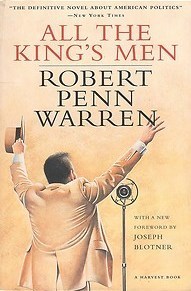
All the King's Men is a 1946 novel by Robert Penn Warren. Its title is drawn from the nursery rhyme "Humpty Dumpty". The novel tells the story of charismatic populist governor Willie Stark and his political machinations in the Depression-era Deep South. It is commonly thought to have been loosely inspired by the real-life story of U.S. Senator Huey P. Long, who was assassinated in 1935. Warren won the Pulitzer Prize for All the King's Men in 1947. The novel has received critical acclaim and remained perennially popular since its first publication. It was rated the 36th greatest novel of the 20th century by Modern Library, and it was chosen as one of Time magazine's 100 best novels since 1923. All the King's Men portrays the dramatic and theatrical political rise and governorship of Willie Stark, a cynical populist in the 1930s American South.
Cannery Row is a book without much of a plot. Rather, it is an attempt to capture the feeling and people of a place, the cannery district of Monterey, California, which is populated by a mix of those down on their luck and those who choose for other reasons not to live "up the hill" in the more respectable area of town. The flow of the main plot is frequently interrupted by short vignettes that introduce us to various denizens of the Row, most of whom are not directly connected with the central story. These vignettes are often characterized by direct or indirect reference to extreme violence: suicides, corpses, and the cruelty of the natural world.
The "story" of Cannery Row follows the adventures of Mack and the boys, a group of unemployed yet resourceful men who inhabit a converted fish-meal shack on the edge of a vacant lot down on the Row.
Winner of the 1973 National Book Award, Gravity's Rainbow is a postmodern epic, a work as exhaustively significant to the second half of the 20th century as Joyce's Ulysses was to the first. Its sprawling, encyclopedic narrative, and penetrating analysis of the impact of technology on society make it an intellectual tour de force.
Like his father and grandfather before him, Kino is a poor diver, gathering pearls from the gulf beds that once brought great wealth to the kings of Spain and now provide Kino, Juana, and their infant son with meager subsistence. Then, on a day like any other, Kino emerges from the sea with a pearl as large as a sea gull’s egg, as “perfect as the moon.” With the pearl comes hope, the promise of comfort and of security…
A story of classic simplicity, based on a Mexican folk tale, The Pearl explores the secrets of man’s nature, greed, the darkest depths of evil, and the luminous possibilities of love.
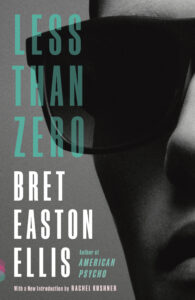
Set in Los Angeles in the early 1980s, this coolly mesmerizing novel is a raw, powerful portrait of a lost generation that experienced sex, drugs, and disaffection at too early an age, growing up in a world shaped by casual nihilism, passivity, and too much money.
Clay comes home for Christmas vacation from his Eastern college and re-enters a landscape of limitless privilege and absolute moral entropy, where everyone drives Porches, dines at Spago, and snorts mountains of cocaine. He tries to renew feelings for his girlfriend, Blair, and for his best friend from high school, Julian, who is careering into hustling and heroin. Clay's holiday turns into a dizzying spiral of desperation that takes him through the relentless parties in glitzy mansions, seedy bars, and underground rock clubs, and into the seamy world of L.A. after dark.
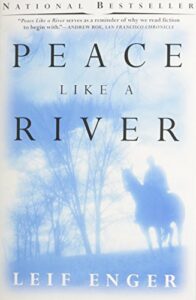
Once in a great while, we encounter a novel in our voluminous reading that begs to be read aloud. Leif Enger's debut, Peace Like a River, is one such work. His richly evocative novel, narrated by an asthmatic 11-year-old named Reuben Land, is the story of Reuben's unusual family and their journey across the frozen Badlands of the Dakotas in search of his fugitive older brother. Charged with the murder of two locals who terrorized their family, Davy has fled, understanding that the scales of justice will not weigh in his favor. But Reuben, his father, Jeremiah—a man of faith so deep he has been known to produce miracles—and Reuben's little sister, Swede, follow closely behind the fleeing Davy.
Affecting and dynamic, Peace Like a River is at once a tragedy, a romance, and an unflagging exploration into the spirituality and magic possible in the everyday world, and in that of the world awaiting us on the other side of life. In Enger's superb debut effort, we witness a wondrous celebration of family, faith, and spirit, the likes of which we haven't seen in a long, long time—and the birth of a classic work of literature.
With only a yellowing photograph in hand, a young man -- also named Jonathan Safran Foer -- sets out to find the woman who may or may not have saved his grandfather from the Nazis. Accompanied by an old man haunted by memories of the war; an amorous dog named Sammy Davis, Junior, Junior; and the unforgettable Alex, a young Ukrainian translator who speaks in a sublimely butchered English, Jonathan is led on a quixotic journey over a devastated landscape and into an unexpected past.
Welcome Back!
Track your reading progress and sync your library.