They were called “The Devil’s Brood,” though never to their faces. They were the four surviving sons of Henry Plantagenet and Eleanor of Aquitaine. With two such extraordinary parents, much was expected of them. But the eldest-charming yet mercurial-would turn on his father and, like his brother Geoffrey, meet an early death. When Henry died, Richard would take the throne and, almost immediately, set off for the Holy Land. This was the Third Crusade, and it would be characterized by internecine warfare among the Christians and extraordinary campaigns against the Saracens. And, back in England, by the conniving of Richard’s youngest brother, John, to steal his crown.
In When Christ and His Saints Slept, acclaimed historical novelist Sharon Kay Penman portrayed all the deceit, danger, and drama of Henry II's ascension to the throne. Now, in Time and Chance, she continues the ever-more-captivating tale.
It was medieval England's immortal marriage--Eleanor of Aquitaine and Henry II, bound by passion and ambition, certain to leave a legacy of greatness. But while lust would divide them, it was friendship--and ultimately faith--that brought bloodshed into their midst. It began with Thomas Becket, Henry's closest confidant, and his elevation to be Archbishop of Canterbury. It ended with a perceived betrayal that made a royal murder seem inevitable. Along the way were enough scheming, seductions, and scandals to topple any kingdom but their own. . . .
Only Sharon Kay Penman can re-create this truly tumultuous time--and capture the couple who loved power as much as each other . . . and a man who loved God most of all.
Librarian's note: An alternate cover edition can be found here
World Without End takes place in the same town of Kingsbridge, two centuries after the townspeople finished building the exquisite Gothic cathedral that was at the heart of The Pillars of the Earth. The cathedral and the priory are again at the center of a web of love and hate, greed and pride, ambition and revenge, but this sequel stands on its own. This time the men and women of an extraordinary cast of characters find themselves at a crossroads of new ideas—about medicine, commerce, architecture, and justice. In a world where proponents of the old ways fiercely battle those with progressive minds, the intrigue and tension quickly reach a boiling point against the devastating backdrop of the greatest natural disaster ever to strike the human race—the Black Death.
Agincourt is one of the epic battles of history. It was fought by two badly matched armies that met in atrocious conditions on St Crispin's Day 1415, and resulted in an extraordinary victory that was celebrated in England long before Shakespeare immortalised it in Henry V. It has always been held to be the triumph of the longbow against the armoured knight, and of the common man against the feudal aristocrat, but those are history's myths. Bernard Cornwell, who has long wanted to write this story, depicts the reality behind the myths.
Nicholas Hook is an English archer. He seems born to trouble and, when his lord orders him to London as part of a force sent to quell an expected Lollard uprising, Nick's headstrong behaviour leads to him being proscribed an outlaw. He finds refuge across the Channel, part of an English mercenary force protecting the town of Soissons against the French. What happened at the Siege of Soissons shocked all Europe, and propels Nick back to England where he is enrolled in the archer companyof the doughty Sir John Cornwaille, a leader of Henry V's army. The army was superb, but sickness and the unexpected French defiance at Harfleur, reduce it to near-shambolic condition. Henry stubbornly refuses to accept defeat and, in appalling weather, leads his shrunken force to what appears to be inevitable disaster.
Azincourt culminates in the battle. Seen from several points of view on the English side, but also from the French ranks, the scene is vivid, convincing and compelling. Bernard Cornwell has a great understanding of men at war and battlefields and this is his masterpiece. This is what it must have been like to fight at Agincourt.
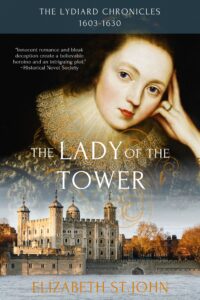
London, 1609. When Lucy St.John, a beautiful highborn orphan at the court of King James, is seduced by the Earl of Suffolk, she never imagines the powerful enemy she creates in his beloved sister, the Countess of Rochester. Or that her own sister Barbara would betray her and force Lucy to leave the court in disgrace. Spirited, educated, and skilled in medicine and precious remedies, Lucy fights her way back into society, and through an unexpected love match, becomes mistress of the Tower of London. Living inside the walls of the infamous prison, she defies plague, political intrigues and tragic executions to tend to aristocratic prisoners and criminals alike. Now married into the immensely powerful Villiers family, Barbara unites with the king’s favorite, the Duke of Buckingham, to raise the fortunes of Lucy and her family to dizzying heights. But with great wealth comes treachery, leaving Lucy to fight for her survival—and her honor—in a world of deceit and debauchery. Elizabeth St.John’s critically acclaimed debut novel tells the true story of her ancestress Lucy through her family’s surviving diaries, letters, and court papers. Lucy’s personal friendships with historical figures such as Sir Walter Raleigh and the Stuart kings brings a unique perspective to the history of seventeenth century England.
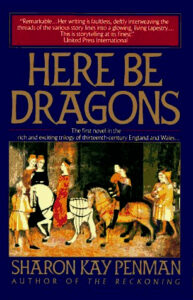
Thirteenth-century Wales is a divided country, ever at the mercy of England's ruthless, power-hungry King John. Then Llewelyn, Prince of North Wales, secures an uneasy truce with England by marrying the English king's beloved, illegitimate daughter, Joanna. Reluctant to wed her father's bitter enemy, Joanna slowly grows to love her charismatic and courageous husband who dreams of uniting Wales. But as John's attentions turn again and again to subduing Wales--and Llewelyn--Joanna must decide to which of these powerful men she owes her loyalty and love.
A sweeping novel of power and passion, loyalty and lives, this is the book that began the trilogy that includes FALLS THE SHADOW and THE RECKONING.
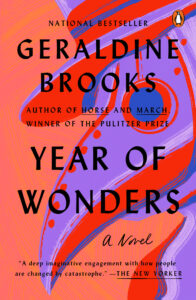
When an infected bolt of cloth carries plague from London to an isolated village, a housemaid named Anna Frith emerges as an unlikely heroine and healer.
Through Anna's eyes we follow the story of the fateful year of 1666, as she and her fellow villagers confront the spread of disease and superstition.
As death reaches into every household and villagers turn from prayers to murderous witch-hunting, Anna must find the strength to confront the disintegration of her community and the lure of illicit love.
As she struggles to survive and grow, a year of catastrophe becomes instead annus mirabilis, a "year of wonders."
Inspired by the true story of Eyam, a village in the rugged hill country of England, Year of Wonders is a richly detailed evocation of a singular moment in history.
Alternate Cover Edition ISBN 0805090037 (ISBN13: 9780805090031)
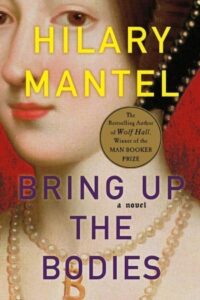
Though he battled for years to marry her, Henry VIII has become disenchanted with the audacious Anne Boleyn. She has failed to give him a son, and her sharp intelligence and strong will have alienated his old friends and the noble families of England.
When the discarded Katherine, Henry's first wife, dies in exile from the court, Anne stands starkly exposed, the focus of gossip and malice, setting in motion a dramatic trial of the queen and her suitors for adultery and treason.
At a word from Henry, Thomas Cromwell is ready to bring her down. Over a few terrifying weeks, Anne is ensnared in a web of conspiracy, while the demure Jane Seymour stands waiting her turn for the poisoned wedding ring. But Anne and her powerful family will not yield without a ferocious struggle. To defeat the Boleyns, Cromwell must ally himself with his enemies. What price will he pay for Annie's head?
A glorious novel of the controversial Richard III - a monarch betrayed in life by his allies and betrayed in death by history.
In this beautifully rendered modern classic, Sharon Kay Penman redeems Richard III - vilified as the bitter, twisted, scheming hunchback who murdered his nephews, the princes in the Tower - from his maligned place in history with a dazzling combination of research and storytelling.
Born into the treacherous courts of fifteenth-century England, in the midst of what history has called The War of the Roses, Richard was raised in the shadow of his charismatic brother, King Edward IV. Loyal to his friends and passionately in love with the one woman who was denied him, Richard emerges as a gifted man far more sinned against than sinning.
This magnificent retelling of his life is filled with all of the sights and sounds of battle, the customs and lore of the fifteenth century, the rigors of court politics, and the passions and prejudices of royalty.
Welcome Back!
Track your reading progress and sync your library.