Through Jim Burden’s endearing, smitten voice, we revisit the remarkable vicissitudes of immigrant life in the Nebraska heartland, with all its insistent bonds. Guiding the way are some of literature’s most beguiling characters: the Russian brothers plagued by memories of a fateful sleigh ride, Antonia’s desperately homesick father and self-indulgent mother, and the coy Lena Lingard. Holding the pastoral society’s heart, of course, is the bewitching, free-spirited Antonia.
Like his father and grandfather before him, Kino is a poor diver, gathering pearls from the gulf beds that once brought great wealth to the kings of Spain and now provide Kino, Juana, and their infant son with meager subsistence. Then, on a day like any other, Kino emerges from the sea with a pearl as large as a sea gull’s egg, as “perfect as the moon.” With the pearl comes hope, the promise of comfort and of security…
A story of classic simplicity, based on a Mexican folk tale, The Pearl explores the secrets of man’s nature, greed, the darkest depths of evil, and the luminous possibilities of love.
Cannery Row is a book without much of a plot. Rather, it is an attempt to capture the feeling and people of a place, the cannery district of Monterey, California, which is populated by a mix of those down on their luck and those who choose for other reasons not to live "up the hill" in the more respectable area of town. The flow of the main plot is frequently interrupted by short vignettes that introduce us to various denizens of the Row, most of whom are not directly connected with the central story. These vignettes are often characterized by direct or indirect reference to extreme violence: suicides, corpses, and the cruelty of the natural world.
The "story" of Cannery Row follows the adventures of Mack and the boys, a group of unemployed yet resourceful men who inhabit a converted fish-meal shack on the edge of a vacant lot down on the Row.
Fair and long-legged, independent and articulate, Janie Crawford sets out to be her own person—no mean feat for a black woman in the '30s. Janie's quest for identity takes her through three marriages and into a journey back to her roots.
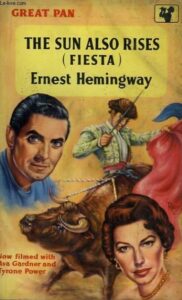
The quintessential novel of the Lost Generation, The Sun Also Rises (Fiesta) is one of Ernest Hemingway's masterpieces and a classic example of his spare but powerful writing style. A poignant look at the disillusionment and angst of the post-World War I generation, the novel introduces two of Hemingway's most unforgettable characters: Jake Barnes and Lady Brett Ashley. The story follows the flamboyant Brett and the hapless Jake as they journey from the wild nightlife of 1920s Paris to the brutal bullfighting rings of Spain with a motley group of expatriates. It is an age of moral bankruptcy, spiritual dissolution, unrealized love, and vanishing illusions. First published in 1926, The Sun Also Rises helped to establish Hemingway as one of the greatest writers of the twentieth century.
Winner of the 1921 Pulitzer Prize, The Age of Innocence is Edith Wharton’s masterful portrait of desire and betrayal during the sumptuous Golden Age of Old New York, a time when society people “dreaded scandal more than disease.”
This is Newland Archer’s world as he prepares to marry the beautiful but conventional May Welland. But when the mysterious Countess Ellen Olenska returns to New York after a disastrous marriage, Archer falls deeply in love with her. Torn between duty and passion, Archer struggles to make a decision that will either courageously define his life—or mercilessly destroy it.
In the hopeful 1950s, Frank and April Wheeler appear to be a model American couple: bright, beautiful, talented, with two young children and a starter home in the suburbs. Perhaps they married too young and started a family too early. Maybe Frank's job is dull. And April never saw herself as a housewife. Yet they have always lived on the assumption that greatness is only just around the corner. But now that certainty is now about to crumble. With heartbreaking compassion and remorseless clarity, Richard Yates shows how Frank and April mortgage their spiritual birthright, betraying not only each other, but their best selves.
The Waste Land, first published in 1922, is often regarded as T.S. Eliot's masterpiece, as well as one of the most important poems of the 20th century and a central work of modernist poetry.
The work, divided in 5 sections, juxtaposes the legend of the Holy Grail and the Fisher King, with a snapshot of early twentieth-century British society. In contemporary times, it is often read published within The Waste Land and Other Poems and has come to be Eliot's most popular poem.
T.S. Elliot was a poet, essayist, publisher, playwright, literary critic and editor. Born in 1888 in St. Louis (MO, USA), he is considered one of the 20th century's major poets, and a central figure in English-language Modernist poetry."In ten years' time," wrote Edmund Wilson in Axel's Castle (1931), "Elliot has left upon English poetry a mark more unmistakable than that of any other poet writing in English." In 1948, Eliot was awarded the Nobel Price "for his work as a trail-blazing pioneer of modern poetry."
Librarian's note: An alternate cover edition can be found here
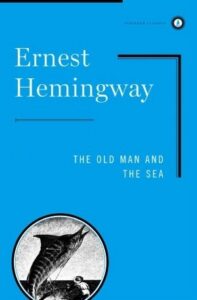
This short novel, already a modern classic, is the superbly told, tragic story of a Cuban fisherman in the Gulf Stream and the giant Marlin he kills and loses—specifically referred to in the citation accompanying the author's Nobel Prize for literature in 1954.
Welcome Back!
Track your reading progress and sync your library.