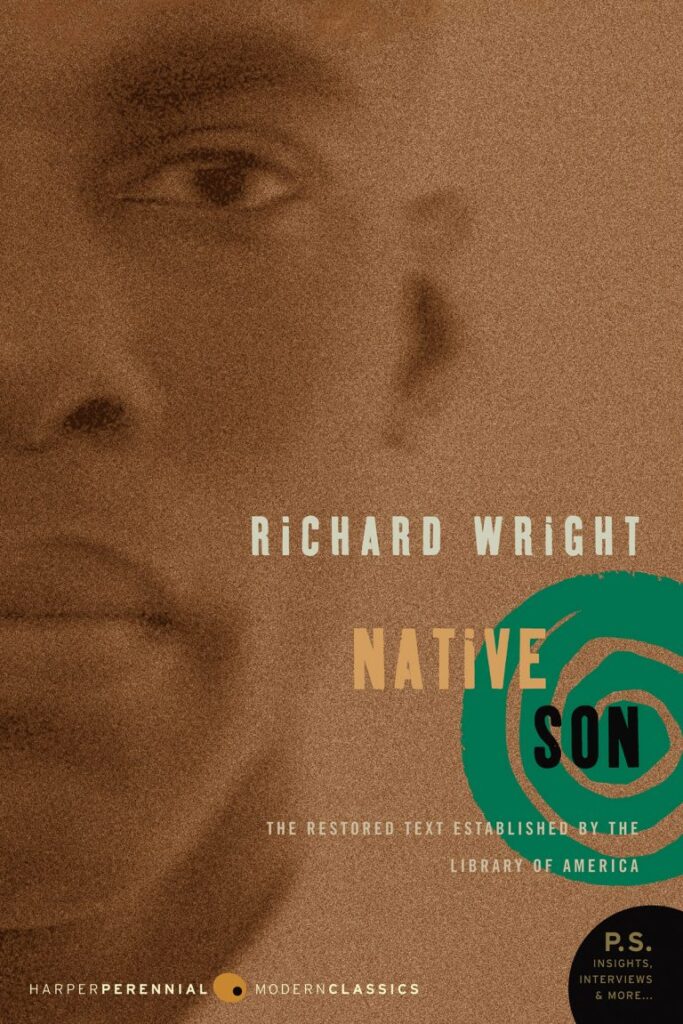
Right from the start, Bigger Thomas had been headed for jail. It could have been for assault or petty larceny; by chance, it was for murder and rape. Native Son tells the story of this young black man caught in a downward spiral after he kills a young white woman in a brief moment of panic. Set in Chicago in the 1930s, Wright’s powerful novel is an unsparing reflection on the poverty and feelings of hopelessness experienced by people in inner cities across the country and of what it means to be black in America.
The Bluest Eye is Toni Morrison's first novel, a book heralded for its richness of language and boldness of vision. Set in the author's girlhood hometown of Lorain, Ohio, it tells the story of black, eleven-year-old Pecola Breedlove. Pecola prays for her eyes to turn blue so that she will be as beautiful and beloved as all the blond, blue-eyed children in America. In the autumn of 1941, the year the marigolds in the Breedloves' garden do not bloom. Pecola's life does change—in painful, devastating ways.
With its vivid evocation of the fear and loneliness at the heart of a child's yearning, and the tragedy of its fulfillment. The Bluest Eye remains one of Toni Morrison's most powerful, unforgettable novels- and a significant work of American fiction.
First published in 1952 and immediately hailed as a masterpiece, Invisible Man is one of those rare novels that have changed the shape of American literature. For not only does Ralph Ellison's nightmare journey across the racial divide tell unparalleled truths about the nature of bigotry and its effects on the minds of both victims and perpetrators, it gives us an entirely new model of what a novel can be.
As he journeys from the Deep South to the streets and basements of Harlem, from a horrifying "battle royal" where black men are reduced to fighting animals, to a Communist rally where they are elevated to the status of trophies, Ralph Ellison's nameless protagonist ushers readers into a parallel universe that throws our own into harsh and even hilarious relief. Suspenseful and sardonic, narrated in a voice that takes in the symphonic range of the American language, black and white, Invisible Man is one of the most audacious and dazzling novels of our century.
When he was a boy in Henning, Tennessee, Alex Haley's grandmother used to tell him stories about their family—stories that went back to her grandparents, and their grandparents, down through the generations all the way to a man she called "the African." She said he had lived across the ocean near what he called the "Kamby Bolongo" and had been out in the forest one day chopping wood to make a drum when he was set upon by four men, beaten, chained and dragged aboard a slave ship bound for Colonial America.
Still vividly remembering the stories after he grew up and became a writer, Haley began to search for documentation that might authenticate the narrative. It took ten years and a half a million miles of travel across three continents to find it, but finally, in an astonishing feat of genealogical detective work, he discovered not only the name of "the African"—Kunta Kinte—but the precise location of Juffure, the very village in The Gambia, West Africa, from which he was abducted in 1767 at the age of sixteen and taken on the Lord Ligonier to Maryland and sold to a Virginia planter.
Haley has talked in Juffure with his own African sixth cousins. On September 29, 1967, he stood on the dock in Annapolis where his great-great-great-great-grandfather was taken ashore on September 29, 1767. Now he has written the monumental two-century drama of Kunta Kinte and the six generations who came after him—slaves and freedmen, farmers and blacksmiths, lumber mill workers and Pullman porters, lawyers and architects—and one author.
But Haley has done more than recapture the history of his own family. As the first black American writer to trace his origins back to their roots, he has told the story of 25,000,000 Americans of African descent. He has rediscovered for an entire people a rich cultural heritage that slavery took away from them, along with their names and their identities. But Roots speaks, finally, not just to blacks, or to whites, but to all people and all races everywhere, for the story it tells is one of the most eloquent testimonials ever written to the indomitability of the human spirit.
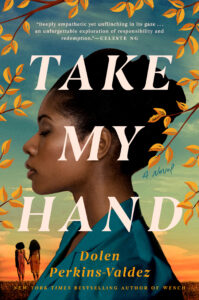
Inspired by true events that rocked the nation, a profoundly moving novel about a Black nurse in post-segregation Alabama who blows the whistle on a terrible wrong done to her patients, from the New York Times bestselling author of Wench.
Montgomery, Alabama 1973. Fresh out of nursing school, Civil Townsend has big plans to make a difference, especially in her African American community. At the Montgomery Family Planning Clinic, she intends to help women make their own choices for their lives and bodies.
But when her first week on the job takes her down a dusty country road to a worn down one-room cabin, she’s shocked to learn that her new patients are children—just 11 and 13 years old. Neither of the Williams sisters has even kissed a boy, but they are poor and Black and for those handling the family’s welfare benefits that’s reason enough to have the girls on birth control. As Civil grapples with her role, she takes India, Erica and their family into her heart. Until one day, she arrives at the door to learn the unthinkable has happened and nothing will ever be the same for any of them.
Decades later, with her daughter grown and a long career in her wake, Dr. Civil Townsend is ready to retire, to find her peace and to leave the past behind. But there are people and stories that refuse to be forgotten.That must not be forgotten.
Milkman Dead was born shortly after a neighborhood eccentric hurled himself off a rooftop in a vain attempt at flight. For the rest of his life he, too, will be trying to fly. With this brilliantly imagined novel, Toni Morrison transfigures the coming-of-age story as audaciously as Saul Bellow or Gabriel García Márquez. As she follows Milkman from his rustbelt city to the place of his family’s origins, Morrison introduces an entire cast of strivers and seeresses, liars and assassins, the inhabitants of a fully realized black world.
Fair and long-legged, independent and articulate, Janie Crawford sets out to be her own person—no mean feat for a black woman in the '30s. Janie's quest for identity takes her through three marriages and into a journey back to her roots.
For nearly a century, the original version of Upton Sinclair's classic novel has remained almost entirely unknown.
When it was published in serial form in 1905, it was a full third longer than the censored, commercial edition published in book form the following year. That expurgated commercial edition edited out much of the ethnic flavor of the original, as well as some of the goriest descriptions of the meat-packing industry and much of Sinclair's most pointed social and political commentary.
The text of this new edition is as it appeared in the original uncensored edition of 1905. It contains the full 36 chapters as originally published, rather than the 31 of the expurgated edition.
A new foreword describes the discovery in the 1980s of the original edition and its subsequent suppression, and a new introduction places the novel in historical context by explaining the pattern of censorship in the shorter commercial edition.
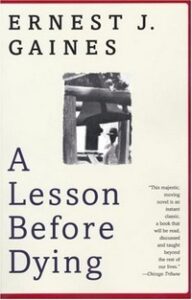
A Lesson Before Dying is set in a small Cajun community in the late 1940s. Jefferson, a young black man, is an unwitting party to a liquor store shoot out in which three men are killed; the only survivor, he is convicted of murder and sentenced to death. Grant Wiggins, who left his hometown for the university, has returned to the plantation school to teach. As he struggles with his decision whether to stay or escape to another state, his aunt and Jefferson's godmother persuade him to visit Jefferson in his cell and impart his learning and his pride to Jefferson before his death. In the end, the two men forge a bond as they both come to understand the simple heroism of resisting and defying the expected. Ernest J. Gaines brings to this novel the same rich sense of place, the same deep understanding of the human psyche, and the same compassion for a people and their struggle that have informed his previous, highly praised works of fiction.
Welcome Back!
Track your reading progress and sync your library.