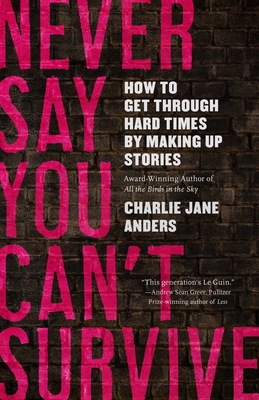
Things are scary right now. We’re all being swept along by a tidal wave of history, and it’s easy to feel helpless. But we’re not helpless: we have minds, and imaginations, and the ability to visualize other worlds and valiant struggles. And writing can be an act of resistance that reminds us that other futures and other ways of living are possible.
Full of memoir, personal anecdote, and insight about how to flourish during the present emergency, Never Say You Can’t Survive is the perfect manual for creativity in unprecedented times.
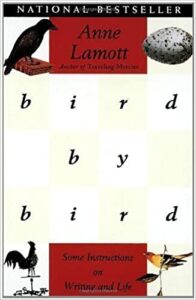
"Thirty years ago my older brother, who was ten years old at the time, was trying to get a report on birds written that he'd had three months to write. [It] was due the next day. We were out at our family cabin in Bolinas, and he was at the kitchen table close to tears, surrounded by binder paper and pencils and unopened books on birds, immobilized by the hugeness of the task ahead. Then my father sat down beside him, put his arm around my brother's shoulder, and said. 'Bird by bird, buddy. Just take it bird by bird.'"
With this basic instruction always in mind, Anne Lamott returns to offer us a new gift: a step-by-step guide on how to write and on how to manage the writer's life. From "Getting Started,' with "Short Assignments," through "Shitty First Drafts," "Character," "Plot," "Dialogue." all the way from "False Starts" to "How Do You Know When You're Done?" Lamott encourages, instructs, and inspires. She discusses "Writers Block," "Writing Groups," and "Publication." Bracingly honest, she is also one of the funniest people alive.
If you have ever wondered what it takes to be a writer, what it means to be a writer, what the contents of your school lunches said about what your parents were really like, this book is for you. From faith, love, and grace to pain, jealousy, and fear, Lamott insists that you keep your eyes open, and then shows you how to survive. And always, from the life of the artist she turns to the art of life.
"Hard times are coming, when we’ll be wanting the voices of writers who can see alternatives to how we live now, can see through our fear-stricken society and its obsessive technologies to other ways of being, and even imagine real grounds for hope. We’ll need writers who can remember freedom — poets, visionaries — realists of a larger reality. . . ."
Words Are My Matter collects talks, essays, introductions to beloved books, and book reviews by Ursula K. Le Guin, one of our fore- most public literary intellectuals. Words Are My Matter is essential reading. It is a manual for investigating the depth and breadth of con- temporary fiction — and, through the lens of deep considerations of contemporary writing, a way of exploring the world we are all living in.
"We need writers who know the difference between production of a market commodity and the practice of an art. Developing written material to suit sales strategies in order to maximise corporate profit and advertising revenue is not the same thing as responsible book publishing or authorship.” *
Le Guin is one of those authors and this is another of her moments. She has published more than sixty books ranging from fiction to nonfiction, children’s books to poetry, and has received many lifetime achievement awards including the Library of Congress Living Legends award. This year her publications include three survey collections: The Found and the Lost: The Collected Novellas; The Unreal and the Real: The Selected Short Stories; and The Complete Orsinia: Malafrena, Stories and Songs (Library of America).
* From “Freedom” A speech in acceptance of the National Book Foundation Medal for Distinguished Contribution to American Letters.
From acclaimed author Ursula K. Le Guin, and with an introduction by Karen Joy Fowler, a collection of thoughts—always adroit, often acerbic—on aging, belief, the state of literature, and the state of the nation.
Ursula K. Le Guin has taken readers to imaginary worlds for decades. Now she’s in the last great frontier of life, old age, and exploring new literary territory: the blog, a forum where her voice—sharp, witty, as compassionate as it is critical—shines. No Time to Spare collects the best of Ursula’s blog, presenting perfectly crystallized dispatches on what matters to her now, her concerns with this world, and her wonder at it.
On the absurdity of denying your age, she says, If I’m ninety and believe I’m forty-five, I’m headed for a very bad time trying to get out of the bathtub. On cultural perceptions of fantasy: The direction of escape is toward freedom. So what is ‘escapism’ an accusation of? On her new cat: He still won’t sit on a lap…I don’t know if he ever will. He just doesn’t accept the lap hypothesis. On breakfast: Eating an egg from the shell takes not only practice, but resolution, even courage, possibly willingness to commit crime. And on all that is unknown, all that we discover as we muddle through life: How rich we are in knowledge, and in all that lies around us yet to learn. Billionaires, all of us.
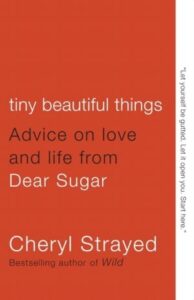
Life can be hard: your lover cheats on you; you lose a family member; you can’t pay the bills - and it can be great: you've had the hottest sex of your life; you get that plum job; you muster the courage to write your novel. Sugar - the once-anonymous online columnist at The Rumpus, now revealed as Cheryl Strayed, author of the bestselling memoir Wild - is the person thousands turn to for advice. Tiny Beautiful Things brings the best of Dear Sugar in one place and includes never-before-published columns and a new introduction by Steve Almond. Rich with humor, insight, compassion - and absolute honesty - this bookis a balm for everything life throws our way.
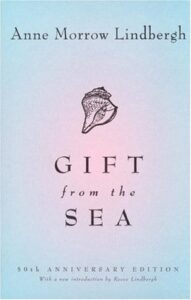
In this inimitable, beloved classic—graceful, lucid and lyrical—Anne Morrow Lindbergh shares her meditations on youth and age; love and marriage; peace, solitude and contentment as she set them down during a brief vacation by the sea. Drawing inspiration from the shells on the shore, Lindbergh’s musings on the shape of a woman’s life bring new understanding to both men and women at any stage of life. A mother of five, an acclaimed writer and a pioneering aviator, Lindbergh casts an unsentimental eye on the trappings of modernity that threaten to overwhelm us: the time-saving gadgets that complicate rather than simplify, the multiple commitments that take us from our families. And by recording her thoughts during a brief escape from everyday demands, she helps readers find a space for contemplation and creativity within their own lives.
With great wisdom and insight Lindbergh describes the shifting shapes of relationships and marriage, presenting a vision of life as it is lived in an enduring and evolving partnership. A groundbreaking, best-selling work when it was originally published in 1955, Gift from the Sea continues to be discovered by new generations of readers. With a new introduction by Lindbergh’s daughter Reeve, this fiftieth-anniversary edition will give those who are revisiting the book and those who are coming upon it for the first time fresh insight into the life of this remarkable woman.
The sea and the beach are elements that have been woven throughout Anne Morrow Lindbergh’s life. She spent her childhood summers with her family on a Maine island. After her marriage to Charles Lindbergh in 1929, she accompanied him on his survey flights around the North Atlantic to launch the first transoceanic airlines. The Lindberghs eventually established a permanent home on the Connecticut coast, where they lived quietly, wrote books and raised their family.
After the children left home for lives of their own, the Lindberghs traveled extensively to Africa and the Pacific for environmental research.
'People think that stories are shaped by people. In fact, it’s the other way around.'
At the time of his death in 2015, award-winning and bestselling author Sir Terry Pratchett was working on his finest story yet - his own.
At six years old, Terry was told by his headteacher that he would never amount to anything.
He spent the rest of his life proving that teacher wrong. At sixty-six, Terry had lived a life full of achievements: becoming one of the UK's bestselling writers, winning the Carnegie Medal and being awarded a knighthood for services to literature.
Following his untimely death from Alzheimer's disease, the mantle of completing Terry's memoir was passed to Rob Wilkins, his former assistant, friend and now head of the author's literary estate.
Drawing on his own extensive memories, along with those of Terry's family, friends, fans and colleagues, Rob recounts Terry's extraordinary story - from his early childhood to the literary phenomenon that his Discworld series became; and how he met and coped with the challenges that 'The Embuggerance' of Alzheimer's brought with it.
A searing memoir of reckoning and healing from an acclaimed journalist and former This American Life producer investigating the little-understood science behind Complex PTSD and how it has shaped her life.
By age thirty, Stephanie Foo was successful on paper: She had her dream job as a radio producer at This American Life and had won an Emmy. But behind her office door she was having panic attacks and sobbing at her desk. After years of questioning what was wrong with her, she was diagnosed with Complex PTSD--a condition that occurs when trauma happens continuously, over the course of years.
Both of Stephanie's parents had abandoned her as a teenager after years of physical and verbal abuse and neglect. She thought she'd overcome her trauma, but her diagnosis illuminated the ways in which her past continued to threaten her health, her relationships, and her career. Finding few resources to help her heal, Stephanie set out to map her experience onto the scarce scientific research on C-PTSD.
In this deeply personal and thoroughly researched account, Stephanie interviews scientists and psychologists and tries a variety of innovative therapies with the determination and curiosity of an award-winning journalist. She returns to her hometown of San Jose, California, to investigate the effects of immigrant trauma on a community, she uncovers family secrets in the country of her birth, Malaysia, and learns how trauma can be inherited through generations. Ultimately, she discovers that you don't move on from trauma--but you can learn to move with it, with grace and joy.
Powerful, enlightening, and clarifying, What My Bones Know is a brave narrative that reckons with the hold of the past over the present, the mind over the body--and one woman's ability to reclaim agency from her trauma.
Gilbert offers insights into the mysterious nature of inspiration. She asks us to embrace our curiosity and let go of needless suffering. She shows us how to tackle what we most love, and how to face down what we most fear. She discusses the attitudes, approaches, and habits we need in order to live our most creative lives. Balancing between soulful spirituality and cheerful pragmatism, Gilbert encourages us to uncover the “strange jewels” that are hidden within each of us. Whether we are looking to write a book, make art, find new ways to address challenges in our work, embark on a dream long deferred, or simply infuse our everyday lives with more mindfulness and passion, Big Magic cracks open a world of wonder and joy.
Welcome Back!
Track your reading progress and sync your library.