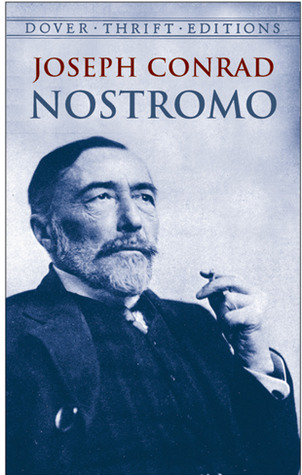
A gripping tale of capitalist exploitation and rebellion, set amid the mist-shrouded mountains of a fictional South American republic, employs flashbacks and glimpses of the future to depict the lure of silver and its effects on men. Conrad’s deeply moral consciousness and masterful narrative technique are at their best in this, one of his finest works.
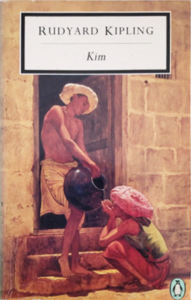
Set after the Second Afghan War which ended in 1881, but before the Third fought in 1919, probably in the period 1893 to 1898. The novel is notable for its detailed portrait of the people, culture, and varied religions of India. The book presents a vivid picture of India, its teeming populations, religions, and superstitions, and the life of the bazaars and the road.
Two men - a boy who grows into early manhood and an old ascetic priest, the lama - are at the center of the novel. A quest faces them both. Born in India, Kim is nevertheless white, a sahib. While he wants to play the Great Game of Imperialism, he is also spiritually bound to the lama. His aim, as he moves chameleon-like through the two cultures, is to reconcile these opposing strands, while the lama searches for redemption from the Wheel of Life.
A celebration of their friendship in a beautiful but often hostile environment, 'Kim' captures the opulence of India's exotic landscape, overlaid by the uneasy presence of the British Raj.
"A Tale of Passion," as its subtitle declares, The Good Soldier relates the complex social and sexual relationships between two couples, one English, one American, and the growing awareness by the American narrator John Dowell of the intrigues and passions behind their orderly Edwardian facade. It is the attitude of Dowell, his puzzlement, his uncertainty, and the seemingly haphazard manner of his narration that make the book so powerful and mysterious. Despite its catalogue of death, insanity, and despair, the novel has many comic moments, and has inspired the work of several distinguished writers, including Graham Greene. This is the only annotated edition available.
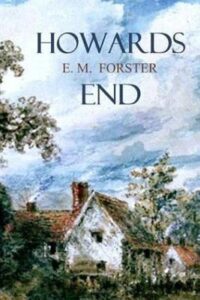
Howards End is considered by many to be E. M. Forster’s masterpiece. First published in 1910, this beguiling and completely captivating tale explores social conventions, codes of conduct, and relationships in turn-of-the-century Edwardian England. The story revolves around three families: the Wilcoxes, rich capitalists with a fortune made in the colonies; the half-German Schlegel siblings, whose cultural pursuits have much in common with the Bloomsbury Group—a loose collective of friends and relatives who were united by an abiding belief in the importance of the arts; and the Basts, an impoverished young couple from a lower-class background. A chance encounter, impetuous youth, love, and ambition play into the inheritance of Howards End, the Wilcox’s charming country home.
Howards End was adapted as a film in 1992 by the Merchant-Ivory team, starring Vanessa Redgrave, Emma Thompson, Anthony Hopkins, and Helena Bonham-Carter.
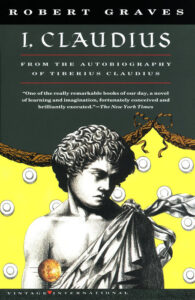
A modern classic of historical fiction written in the form of Claudius's autobiography.
Tiberius Claudius Drusus Nero Germanicus lived from 10 B.C. to 54 A.D. Despised as a weakling and dismissed as an idiot because of his physical infirmities, Claudius survived the intrigues and poisonings that marked the reigns of Augustus, Tiberius, and the mad Caligula to become emperor of Rome in 41 A.D. The first part of Robert Graves’s two-part account of the life of Tiberius Claudius, I, Claudius stands as a landmark historical novel of the 20th century from one of its great writers.
Giants in the Earth (Norwegian: Verdens Grøde) is a novel by Norwegian-American author Ole Edvart Rølvaag. First published in Norway as two books in 1924 and 1925, the author collaborated with Minnesotan Lincoln Colcord on the English translation.
The novel follows a Norwegian family's struggles as they try to make a new life as pioneers in the Dakota territory. Rølvaag is interested in psychology and the human cost of empire building, at a time when other writers focused on the glamor and romance of the West. The book reflects his personal experiences as a settler as well as the immigrant homesteader experience of his wife’s family. Both the grim realities of pioneering and the gloomy fatalism of the Norse mind are captured in depictions of snow storms, locusts, poverty, hunger, loneliness, homesickness, the difficulty of fitting into a new culture, and the estrangement of immigrant children who grow up in a new land. It is a novel at once palpably European and distinctly American.
Giants in the Earth was turned into an opera by Douglas Moore and Arnold Sundgaard; it won the Pulitzer Prize for Music in 1951.
Diamond Head, Hawaii, 1941. Pvt. Robert E. Lee Prewitt is a champion welterweight and a fine bugler. But when he refuses to join the company's boxing team, he gets "the treatment" that may break him or kill him.
First Sgt. Milton Anthony Warden knows how to soldier better than almost anyone, yet he's risking his career to have an affair with the commanding officer's wife.
Both Warden and Prewitt are bound by a common bond: the Army is their heart and blood... and, possibly, their death.
In this magnificent but brutal classic of a soldier's life, James Jones portrays the courage, violence and passions of men and women who live by unspoken codes and with unutterable despair... in the most important American novel to come out of World War II, a masterpiece that captures as no other the honor and savagery of men.
The classic novel, international sensation, and inspiration for the film starring Anthony Quinn explores the struggle between the aesthetic and the rational, the inner life and the life of the mind.
The classic novel Zorba the Greek is the story of two men, their incredible friendship, and the importance of living life to the fullest. Zorba, a Greek working man, is a larger-than-life character, energetic and unpredictable. He accompanies the unnamed narrator to Crete to work in the narrator’s lignite mine, and the pair develops a singular relationship. The two men couldn’t be further apart: The narrator is cerebral, modest, and reserved; Zorba is unfettered, spirited, and beyond the reins of civility. Over the course of their journey, he becomes the narrator’s greatest friend and inspiration and helps him to appreciate the joy of living.
Zorba has been acclaimed as one of the most remarkable figures in literature; he is a character in the great tradition of Sinbad the Sailor, Falstaff, and Sancho Panza. He responds to all that life offers him with passion, whether he’s supervising laborers at a mine, confronting mad monks in a mountain monastery, embellishing the tales of his past adventures, or making love. Zorba the Greek explores the beauty and pain of existence, inviting readers to reevaluate the most important aspects of their lives and live to the fullest.
Welcome Back!
Track your reading progress and sync your library.