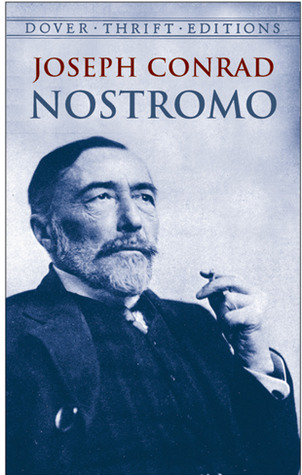
A gripping tale of capitalist exploitation and rebellion, set amid the mist-shrouded mountains of a fictional South American republic, employs flashbacks and glimpses of the future to depict the lure of silver and its effects on men. Conrad’s deeply moral consciousness and masterful narrative technique are at their best in this, one of his finest works.
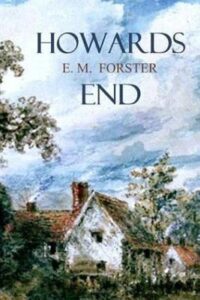
Howards End is considered by many to be E. M. Forster’s masterpiece. First published in 1910, this beguiling and completely captivating tale explores social conventions, codes of conduct, and relationships in turn-of-the-century Edwardian England. The story revolves around three families: the Wilcoxes, rich capitalists with a fortune made in the colonies; the half-German Schlegel siblings, whose cultural pursuits have much in common with the Bloomsbury Group—a loose collective of friends and relatives who were united by an abiding belief in the importance of the arts; and the Basts, an impoverished young couple from a lower-class background. A chance encounter, impetuous youth, love, and ambition play into the inheritance of Howards End, the Wilcox’s charming country home.
Howards End was adapted as a film in 1992 by the Merchant-Ivory team, starring Vanessa Redgrave, Emma Thompson, Anthony Hopkins, and Helena Bonham-Carter.
"A Tale of Passion," as its subtitle declares, The Good Soldier relates the complex social and sexual relationships between two couples, one English, one American, and the growing awareness by the American narrator John Dowell of the intrigues and passions behind their orderly Edwardian facade. It is the attitude of Dowell, his puzzlement, his uncertainty, and the seemingly haphazard manner of his narration that make the book so powerful and mysterious. Despite its catalogue of death, insanity, and despair, the novel has many comic moments, and has inspired the work of several distinguished writers, including Graham Greene. This is the only annotated edition available.
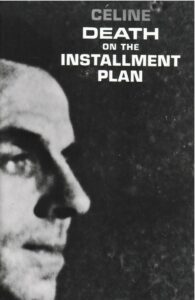
Published in rapid succession in the middle 1930s, Journey to the End of the Night and Death on the Installment Plan shocked European literature and world consciousness. Nominally fiction but more rightly called "creative confessions," they told of the author's childhood in excoriating Paris slums, of service in the mud wastes of World War I and African jungles. Mixing unmitigated despair with Gargantuan comedy, they also created a new style, in which invective and obscenity were laced with phrases of unforgettable poetry. Céline's influence revolutionized the contemporary approach to fiction. Under a cloud for a period, his work is now acknowledged as the forerunner of today's "black comedy."
Death on the Installment Plan is the story of young Ferdinand's first 18 years. His life is one of hatred, of the grinding struggle of small shopkeepers to survive, of childhood sensations and fantasies—lusty, scatological, violent, but also poetic. There is a running battle with his ineffectual insurance clerk of a father, with his mother, who lives and whines around the junkshop she runs for the boys benefit; there is also the superbly funny Meanwell College in England, where the boy went briefly, a Dickensian, nightmare institution. Always there is humiliation, failure, and boredom, at least until he teams up with the "scientist" des Pereires. This inventor, con-man, incorrigible optimist—whose last project is to grow enormous potatoes by electricity—rescues him, if only temporarily; for the reader he is one of the most lovable charlatans in French literature.
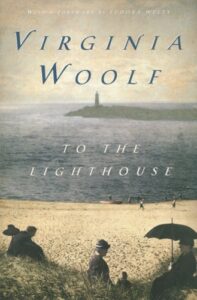
The serene and maternal Mrs. Ramsay, the tragic yet absurd Mr. Ramsay, and their children and assorted guests are on holiday on the Isle of Skye. From the seemingly trivial postponement of a visit to a nearby lighthouse, Woolf constructs a remarkable, moving examination of the complex tensions and allegiances of family life and the conflict between men and women.
As time winds its way through their lives, the Ramsays face, alone and simultaneously, the greatest of human challenges and its greatest triumph—the human capacity for change.
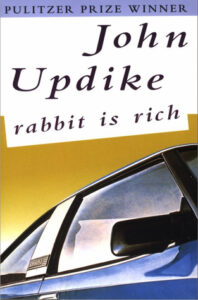
Ten years after Rabbit Redux, Harry Angstrom has come to enjoy prosperity as the Chief Sales Representative of Springer Motors. The rest of the world may be falling to pieces, but Harry's doing all right. That is, until his son returns from the West, and the image of an old love pays a visit to his lot....
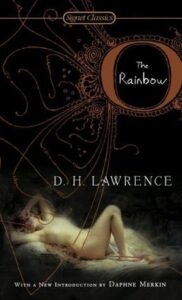
D. H. Lawrence's controversial classic, The Rainbow, follows the lives and loves of three generations of the Brangwen family between 1840 and 1905. Their tempestuous relationships are played out against a backdrop of change as they witness the arrival of industrialization - the only constant being their unending attempts to grasp a higher form of existence symbolized by the persistent, unifying motif of the "rainbow". Lawrence's fourth novel, a prequel to Women in Love, is an invigorating, absorbing tale about the undying determination of the human soul.
Biberkopf hat geschworen, er will anständig sein, und ihr habt gesehen, wie er wochenlang anständig ist, aber das war gewissermaßen nur eine Gnadenfrist. Das Leben findet das auf die Dauer zu fein und stellt ihm hinterlistig ein Bein. Die Geschichte des Transportarbeiters Franz Biberkopf, der, aus der Strafanstalt Berlin-Tegel entlassen, als ehrlicher Mann ins Leben zurückfinden möchte, ist der erste deutsche Großstadtroman von literarischem Rang. Das Berlin der Zwanziger Jahre ist der Schauplatz des Geschehens. Dabei wird die Großstadt selbst zum Gegenspieler des gutmütig-jähzornigen Franz Biberkopf, der dieser verlockenden, aber auch unerbittlichen Welt zu trotzen versucht. Mit Berlin Alexanderplatz vollzog Döblin die radikale Abkehr vom bürgerlich psychologischen Roman. Hier wurde kein Einzelschicksal analysiert. Das kollektive Geschehen, das Allgemeine einer menschlichen Situation erfuhr hier eine gültige dichterische Gestaltung. Der Roman zählt zu den großen Epen unserer Zeit.
Welcome Back!
Track your reading progress and sync your library.