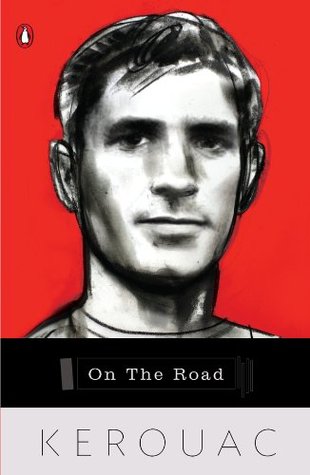
A quintessential novel of America & the Beat Generation On the Road chronicles Jack Kerouac’s years traveling the N. American continent with his friend Neal Cassady, “a sideburned hero of the snowy West.” As “Sal Paradise” & “Dean Moriarty,” the two roam the country in a quest for self-knowledge & experience. Kerouac’s love of America, compassion for humanity & sense of language as jazz combine to make On the Road an inspirational work of lasting importance. This classic novel of freedom & longing defined what it meant to be “Beat” & has inspired every generation since its initial publication.
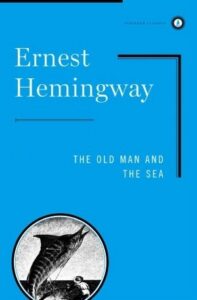
Librarian's note: An alternate cover edition can be found here
This short novel, already a modern classic, is the superbly told, tragic story of a Cuban fisherman in the Gulf Stream and the giant Marlin he kills and loses—specifically referred to in the citation accompanying the author's Nobel Prize for literature in 1954.
"It is the horrible texture of a fabric that should be woven of ships' cables and hawsers. A Polar wind blows through it, and birds of prey hover over it."
So Melville wrote of his masterpiece, one of the greatest works of imagination in literary history. In part, Moby-Dick is the story of an eerily compelling madman pursuing an unholy war against a creature as vast and dangerous and unknowable as the sea itself. But more than just a novel of adventure, more than an encyclopaedia of whaling lore and legend, the book can be seen as part of its author's lifelong meditation on America. Written with wonderfully redemptive humour, Moby-Dick is also a profound inquiry into character, faith, and the nature of perception.
This edition of Moby-Dick, which reproduces the definitive text of the novel, includes invaluable explanatory notes, along with maps, illustrations, and a glossary of nautical terms.
Cannery Row is a book without much of a plot. Rather, it is an attempt to capture the feeling and people of a place, the cannery district of Monterey, California, which is populated by a mix of those down on their luck and those who choose for other reasons not to live "up the hill" in the more respectable area of town. The flow of the main plot is frequently interrupted by short vignettes that introduce us to various denizens of the Row, most of whom are not directly connected with the central story. These vignettes are often characterized by direct or indirect reference to extreme violence: suicides, corpses, and the cruelty of the natural world.
The "story" of Cannery Row follows the adventures of Mack and the boys, a group of unemployed yet resourceful men who inhabit a converted fish-meal shack on the edge of a vacant lot down on the Row.
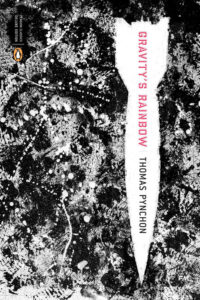
Winner of the 1973 National Book Award, Gravity's Rainbow is a postmodern epic, a work as exhaustively significant to the second half of the 20th century as Joyce's Ulysses was to the first. Its sprawling, encyclopedic narrative, and penetrating analysis of the impact of technology on society make it an intellectual tour de force.
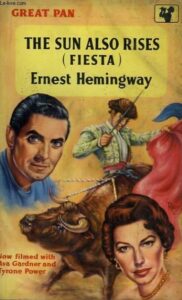
The quintessential novel of the Lost Generation, The Sun Also Rises (Fiesta) is one of Ernest Hemingway's masterpieces and a classic example of his spare but powerful writing style. A poignant look at the disillusionment and angst of the post-World War I generation, the novel introduces two of Hemingway's most unforgettable characters: Jake Barnes and Lady Brett Ashley. The story follows the flamboyant Brett and the hapless Jake as they journey from the wild nightlife of 1920s Paris to the brutal bullfighting rings of Spain with a motley group of expatriates. It is an age of moral bankruptcy, spiritual dissolution, unrealized love, and vanishing illusions. First published in 1926, The Sun Also Rises helped to establish Hemingway as one of the greatest writers of the twentieth century.
Few novels have caused as much debate as Hubert Selby Jr.'s notorious masterpiece, Last Exit to Brooklyn, and this Penguin Modern Classics edition includes an introduction by Irvine Welsh, author of Trainspotting.
Described by various reviewers as hellish and obscene, Last Exit to Brooklyn tells the stories of New Yorkers who at every turn confront the worst excesses in human nature. Yet there are moments of exquisite tenderness in these troubled lives. Georgette, the transvestite who falls in love with a callous hoodlum; Tralala, the conniving prostitute who plumbs the depths of sexual degradation; and Harry, the strike leader who hides his true desires behind a boorish masculinity, are unforgettable creations. Last Exit to Brooklyn was banned by British courts in 1967, a decision that was reversed the following year with the help of a number of writers and critics including Anthony Burgess and Frank Kermode.
Hubert Selby, Jr. (1928-2004) was born in Brooklyn, New York. At the age of 15, he dropped out of school and went to sea with the merchant marines. While at sea he was diagnosed with lung disease. With no other way to make a living, he decided to try writing: 'I knew the alphabet. Maybe I could be a writer.' In 1964 he completed his first book, Last Exit to Brooklyn, which has since become a cult classic. In 1966, it was the subject of an obscenity trial in the UK. His other books include The Room, The Demon, Requiem for a Dream, The Willow Tree and Waiting Period. In 2000, Requiem for a Dream was adapted into a film starring Jared Leto and Ellen Burstyn, and directed by Darren Aronofsky.
'Last Exit to Brooklyn will explode like a rusty hellish bombshell over America, and still be eagerly read in 100 years' Allen Ginsberg
Like his father and grandfather before him, Kino is a poor diver, gathering pearls from the gulf beds that once brought great wealth to the kings of Spain and now provide Kino, Juana, and their infant son with meager subsistence. Then, on a day like any other, Kino emerges from the sea with a pearl as large as a sea gull’s egg, as “perfect as the moon.” With the pearl comes hope, the promise of comfort and of security…
A story of classic simplicity, based on a Mexican folk tale, The Pearl explores the secrets of man’s nature, greed, the darkest depths of evil, and the luminous possibilities of love.
One of Bukowski's best, this beer-soaked, deliciously degenerate novel follows the wanderings of aspiring writer Henry Chinaski across World War II-era America. Deferred from military service, Chinaski travels from city to city, moving listlessly from one odd job to another, always needing money but never badly enough to keep a job. His day-to-day existence spirals into an endless litany of pathetic whores, sordid rooms, dreary embraces, and drunken brawls, as he makes his bitter, brilliant way from one drink to the next.
Charles Bukowski's posthumous legend continues to grow. Factotum is a masterfully vivid evocation of slow-paced, low-life urbanity and alcoholism, and an excellent introduction to the fictional world of Charles Bukowski.
Welcome Back!
Track your reading progress and sync your library.