
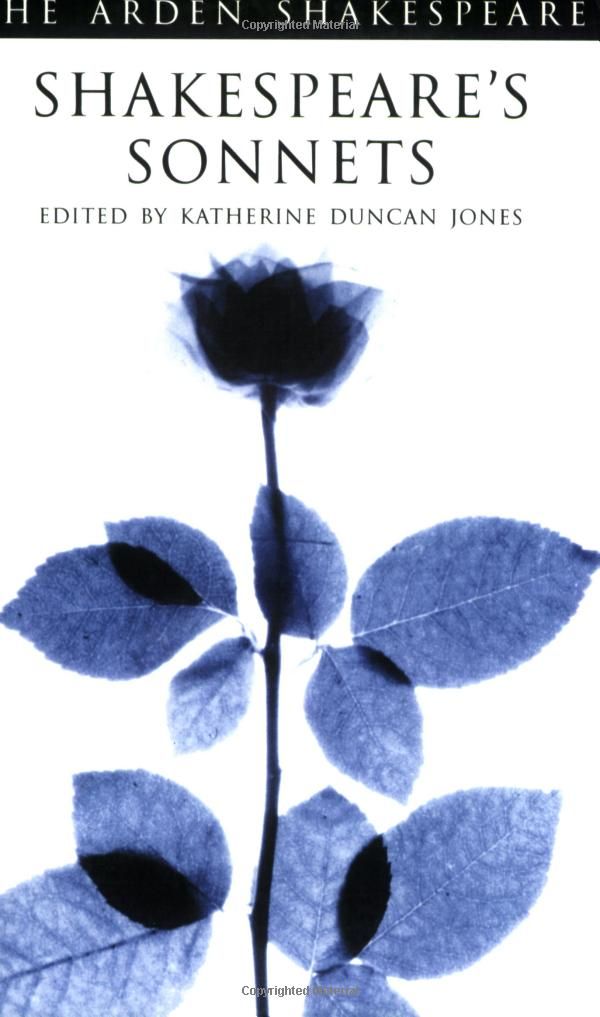
The Arden Shakespeare has long been acclaimed as the established scholarly edition of Shakespeare’s work. Now being totally reedited for the third time, Arden editions offer the very best in contemporary scholarship. Each volume provides a clear and authoritative text, edited to the highest standards; detailed textual notes and commentary on the same page of the text; full contextual, illustrated introduction, including an in-depth survey of critical and performance approaches to the play; and selected bibliography.

Tempest Two Gentlemen of Verona Merry Wives of Windsor Measure for Measure Comedy of Errors Much Ado About Nothing Love's Labour's Lost Midsummer Night's Dream Merchant of Venice As You Like It Taming of the Shrew All's Well That Ends Well Twelfth Night Winter's Tale King John King Richard II King Henry IV. Part 1 King Henry IV. Part 2 King Henry V King Henry VI. Part 1 King Henry VI. Part 2 King Henry VI. Part 3 King Richard III King Henry VIII Troilus and Cressida Coriolanus Titus Andronicus Romeo and Juliet Timon of Athens Julius Caesar Macbeth Hamlet King Lear Othello Anthony and Cleopatra Cymbeline Pericles Venus and Adonis Rape of Lucrece Sonnets Lover's Complaint Passionate Pilgrim Sonnets to Sundry Notes of Music Phoenix and the Turtle
Among Shakespeare's plays, "Hamlet" is considered by many his masterpiece. Among actors, the role of Hamlet, Prince of Denmark, is considered the jewel in the crown of a triumphant theatrical career. Now Kenneth Branagh plays the leading role and co-directs a brillant ensemble performance. Three generations of legendary leading actors, many of whom first assembled for the Oscar-winning film "Henry V", gather here to perform the rarely heard complete version of the play. This clear, subtly nuanced, stunning dramatization, presented by The Renaissance Theatre Company in association with "Bbc" Broadcasting, features such luminaries as Sir John Gielgud, Derek Jacobi, Emma Thompson and Christopher Ravenscroft. It combines a full cast with stirring music and sound effects to bring this magnificent Shakespearen classic vividly to life. Revealing new riches with each listening, this production of "Hamlet" is an invaluable aid for students, teachers and all true lovers of Shakespeare - a recording to be treasured for decades to come.
In Much Ado About Nothing, Shakespeare includes two quite different stories of romantic love. Hero and Claudio fall in love almost at first sight, but an outsider, Don John, strikes out at their happiness. Beatrice and Benedick are kept apart by pride and mutual antagonism until others decide to play Cupid.
In Romeo and Juliet, Shakespeare creates a violent world, in which two young people fall in love. It is not simply that their families disapprove; the Montagues and the Capulets are engaged in a blood feud.
In this death-filled setting, the movement from love at first sight to the lovers’ final union in death seems almost inevitable. And yet, this play set in an extraordinary world has become the quintessential story of young love. In part because of its exquisite language, it is easy to respond as if it were about all young lovers.
Named for the twelfth night after Christmas, the end of the Christmas season, Twelfth Night plays with love and power. The Countess Olivia, a woman with her own household, attracts Duke (or Count) Orsino. Two other would-be suitors are her pretentious steward, Malvolio, and Sir Andrew Aguecheek.
Onto this scene arrive the twins Viola and Sebastian; caught in a shipwreck, each thinks the other has drowned. Viola disguises herself as a male page and enters Orsino’s service. Orsino sends her as his envoy to Olivia—only to have Olivia fall in love with the messenger. The play complicates, then wonderfully untangles, these relationships.
Background information about Shakespeare, Elizabethan theater, and the text accompany his play about unrequited love and mistaken identity.
Readers and audiences have long greeted As You Like It with delight. Its characters are brilliant conversationalists, including the princesses Rosalind and Celia and their Fool, Touchstone. Soon after Rosalind and Orlando meet and fall in love, the princesses and Touchstone go into exile in the Forest of Arden, where they find new conversational partners. Duke Frederick, younger brother to Duke Senior, has overthrown his brother and forced him to live homeless in the forest with his courtiers, including the cynical Jaques. Orlando, whose older brother Oliver plotted his death, has fled there, too.
Recent scholars have also grounded the play in the issues of its time. These include primogeniture, passing property from a father to his oldest son. As You Like It depicts intense conflict between brothers, exposing the human suffering that primogeniture entails. Another perspective concerns cross-dressing. Most of Orlando’s courtship of Rosalind takes place while Rosalind is disguised as a man, “Ganymede.” At her urging, Orlando pretends that Ganymede is his beloved Rosalind. But as the epilogue reveals, the sixteenth-century actor playing Rosalind was male, following the practice of the time. In other words, a boy played a girl playing a boy pretending to be a girl.
In this lively comedy of love and money in sixteenth-century Venice, Bassanio wants to impress the wealthy heiress Portia but lacks the necessary funds. He turns to his merchant friend, Antonio, who is forced to borrow from Shylock, a Jewish moneylender. When Antonio's business falters, repayment becomes impossible--and by the terms of the loan agreement, Shylock is able to demand a pound of Antonio's flesh. Portia cleverly intervenes, and all ends well (except of course for Shylock).
In Othello, Shakespeare creates a powerful drama of a marriage that begins with fascination (between the exotic Moor Othello and the Venetian lady Desdemona), with elopement, and with intense mutual devotion and that ends precipitately with jealous rage and violent deaths. He sets this story in the romantic world of the Mediterranean, moving the action from Venice to the island of Cyprus and giving it an even more exotic coloring with stories of Othello's African past. Shakespeare builds so many differences into his hero and heroine—differences of race, of age, of cultural background—that one should not, perhaps, be surprised that the marriage ends disastrously. But most people who see or read the play feel that the love that the play presents between Othello and Desdemona is so strong that it would have overcome all these differences were it not for the words and actions of Othello's standard-bearer, Iago, who hates Othello and sets out to destroy him by destroying his love for Desdemona. As Othello succumbs to Iago's insinuations that Desdemona is unfaithful, fascination—which dominates the early acts of the play—turns to horror, especially for the audience. We are confronted by spectacles of a generous and trusting Othello in the grip of Iago's schemes; of an innocent Desdemona, who has given herself up entirely to her love for Othello only to be subjected to his horrifying verbal and physical assaults, the outcome of Othello's mistaken convictions about her faithlessness.
Welcome Back!
Track your reading progress and sync your library.