In this extraordinary coming-of-age odyssey, Wally Lamb invites us to hitch a wild ride on a journey of love, pain, and renewal with the most heartbreakingly comical heroine to come along in years.
Meet Dolores Price. She’s 13, wise-mouthed but wounded, having bid her childhood goodbye. Stranded in front of her bedroom TV, she spends the next few years nourishing herself with the Mallomars, potato chips, and Pepsi her anxious mother supplies. When she finally orbits into young womanhood at 257 pounds, Dolores is no stronger and life is no kinder. But this time she’s determined to rise to the occasion and give herself one more chance before she really goes under.

Everywhere hailed as a novel of rare beauty and power, White Oleander tells the unforgettable story of Ingrid, a brilliant poet imprisoned for murder, and her daughter, Astrid, whose odyssey through a series of Los Angeles foster homes--each its own universe, with its own laws, its own dangers, its own hard lessons to be learned--becomes a redeeming and surprising journey of self-discovery.
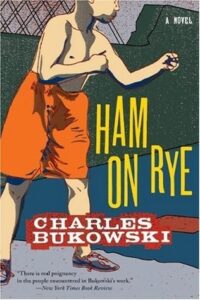
In what is widely hailed as the best of his many novels, Charles Bukowski details the long, lonely years of his own hardscrabble youth in the raw voice of alter ego Henry Chinaski. From a harrowingly cheerless childhood in Germany through acne-riddled high school years and his adolescent discoveries of alcohol, women, and the Los Angeles Public Library's collection of D. H. Lawrence, "Ham on Rye" offers a crude, brutal, and savagely funny portrait of an outcast's coming-of-age during the desperate days of the Great Depression.
Weakness has always been a concern for William Miller: growing up vegetarian in a family of bodybuilders will do that to a person. But William is further weakened by the death of his mother, the arrival of a new step-mother, and his irrepressible crush on his new step-sister, Lulu. As Lulu faces down her own challenges, William watches his life shift into tumult and despair. Once Lulu departs for college, Will goes into the world to find himself — discovering Western philosophy, a cruel dating world, enduring friendship, and, ultimately, his true calling. Emboldened by his turn as a late-night radio personality, Will rescues himself from the self-image of weakness he'd long wished to escape. This debut novel explores the fundamental difference between where we come from — and the endless possibilities of where we may go.
Twelve-year-old CeeCee is in trouble. For years she’s been the caretaker of her psychotic mother, Camille— the crown-wearing, lipstick-smeared laughingstock of an entire town. Though it’s 1967 and they live in Ohio, Camille believes it’s 1951 and she’s just been crowned the Vidalia Onion Queen of Georgia.
The day CeeCee discovers Camille in the front yard wearing a tattered prom dress and tiara as she blows kisses to passing motorists, she knows her mother has completely flipped. When tragedy strikes, Tootie Caldwell, a previously unknown great-aunt comes to CeeCee’s rescue and whisks her away to Savannah. Within hours of her arrival, CeeCee is catapulted into a perfumed world of prosperity and Southern eccentricities—a world that appears to be run entirely by women.
While Tootie is busy saving Savannah’s endangered historic homes from the wrecking ball, CeeCee encounters a cast of unforgettable, eccentric characters. From the mysterious Thelma Rae Goodpepper, who bathes in an outdoor tub under the watchful eyes of a voyeuristic peacock, to Oletta Jones, the all-knowing household cook, to Violene Hobbs, the loud-mouthed widow who entertains a local police officer in her yellow see-through peignoir, the women of Gaston Street keep CeeCee entertained and enthralled for an entire summer.
But CeeCee’s view of the world is challenged in ways she could have never imagined: there are secrets to keep, injustices to face, and loyalties to uphold. Just as she begins to find her ballast and experiences a sense of belonging, her newfound joy collides with the long-held fear that her mother’s legacy has left her destined for destruction.
Laugh-out-loud funny, at times heartbreaking, and written in a pitch-perfect voice, Saving CeeCee Honeycutt is a spirited Southern tale that explores the intricate frailties and strengths of female relationships while illuminating the journey of a young girl who loses her mother but finds many others.
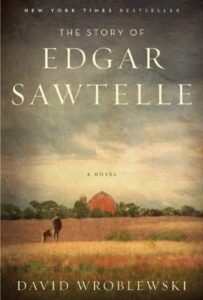
Born mute, speaking only in sign, Edgar Sawtelle leads an idyllic life with his parents on their farm in remote northern Wisconsin. For generations, the Sawtelles have raised and trained a fictional breed of dog whose thoughtful companionship is epitomized by Almondine, Edgar's lifelong friend and ally. But with the unexpected return of Claude, Edgar's paternal uncle, turmoil consumes the Sawtelles' once peaceful home. When Edgar's father dies suddenly, Claude insinuates himself into the life of the farm—and into Edgar's mother's affections.
Grief-stricken and bewildered, Edgar tries to prove Claude played a role in his father's death, but his plan backfires—spectacularly. Forced to flee into the vast wilderness lying beyond the farm, Edgar comes of age in the wild, fighting for his survival and that of the three yearling dogs who follow him. But his need to face his father's murderer and his devotion to the Sawtelle dogs turn Edgar ever homeward.
David Wroblewski is a master storyteller, and his breathtaking scenes—the elemental north woods, the sweep of seasons, an iconic American barn, a fateful vision rendered in the falling rain—create a riveting family saga, a brilliant exploration of the limits of language, and a compulsively readable modern classic.
That rare coming-of-age story able to blend the dark with the uplifting, Irma Voth follows a young Mennonite woman, vulnerable yet wise beyond her years, who carries a terrible family secret with her on a remarkable journey to survival and redemption.
Nineteen-year-old Irma lives in a rural Mennonite community in Mexico. She has already been cast out of her family for marrying a young Mexican ne'er-do-well she barely knows, although she remains close to her rebellious younger sister and yearns for the lost intimacy with her mother. With a husband who proves elusive and often absent, a punishing father, and a faith in God damaged beyond repair, Irma appears trapped in an untenable and desperate situation. When a celebrated Mexican filmmaker and his crew arrive from Mexico City to make a movie about the insular community in which she was raised, Irma is immediately drawn to the outsiders and is soon hired as a translator on the set. But her father, intractable and domineering, is determined to destroy the film and get rid of the interlopers. His action sets Irma on an irrevocable path toward something that feels like freedom.
A novel of great humanity, written with dry wit, edgy humor, and emotional poignancy, Irma Voth is the powerful story of a young woman's quest to discover all that she may become in the unexpectedly rich and confounding world that lies beyond the stifling, observant community she knows.
A heartstrong story of family and romance, tribulation and tenacity, set on the High Plains east of Denver.
In the small town of Holt, Colorado, a high school teacher is confronted with raising his two boys alone after their mother retreats first to the bedroom, then altogether. A teenage girl—her father long since disappeared, her mother unwilling to have her in the house—is pregnant, alone herself, with nowhere to go. And out in the country, two brothers, elderly bachelors, work the family homestead, the only world they've ever known.
From these unsettled lives emerges a vision of life, and of the town and landscape that bind them together—their fates somehow overcoming the powerful circumstances of place and station, their confusion, curiosity, dignity and humor intact and resonant. As the milieu widens to embrace fully four generations, Kent Haruf displays an emotional and aesthetic authority to rival the past masters of a classic American tradition.
Utterly true to the rhythms and patterns of life, Plainsong is a novel to care about, believe in, and learn from.
Clear-eyed and spirited, Taylor Greer grew up poor in rural Kentucky with the goals of avoiding pregnancy and getting away. But when she heads west with high hopes and a barely functional car, she meets the human condition head-on. By the time Taylor arrives in Tucson, Arizona, she has acquired a completely unexpected child, a three-year-old American Indian girl named Turtle, and must somehow come to terms with both motherhood and the necessity for putting down roots. Hers is a story about love and friendship, abandonment and belonging, and the discovery of surprising resources in apparently empty places.
Welcome Back!
Track your reading progress and sync your library.