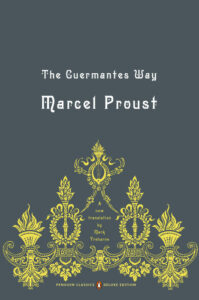
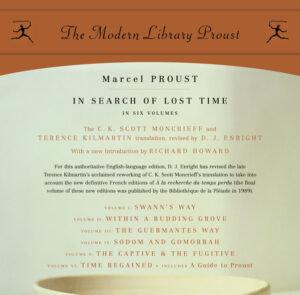
Marcel Proust’s In Search of Lost Time is one of the most entertaining reading experiences in any language and arguably the finest novel of the twentieth century. But since its original prewar translation there has been no completely new version in English. Now, Penguin Classics brings Proust’s masterpiece to new audiences throughout the world, beginning with Lydia Davis’s internationally acclaimed translation of the first volume, Swann’s Way.
Published in 1942 by French author Albert Camus, The Stranger has long been considered a classic of twentieth-century literature. Le Monde ranks it as number one on its "100 Books of the Century" list. Through this story of an ordinary man unwittingly drawn into a senseless murder on a sundrenched Algerian beach, Camus explores what he termed "the nakedness of man faced with the absurd."
The Plague is a novel by Albert Camus, published in 1947.
It tells the story from the point of view of a narrator of a plague sweeping the French Algerian city of Oran. The narrator remains unknown until the start of the last chapter, chapter 5 of part 5. The novel presents a snapshot of life in Oran as seen through the author's distinctive absurdist point of view.
The book tells a gripping tale of human unrelieved horror, of survival and resilience, and of the ways in which humankind confronts death, The Plague is at once a masterfully crafted novel, eloquently understated and epic in scope, and a parable of ageless moral resonance, profoundly relevant to our times. In Oran, a coastal town in North Africa, the plague begins as a series of portents, unheeded by the people. It gradually becomes an omnipresent reality, obliterating all traces of the past and driving its victims to almost unearthly extremes of suffering, madness, and compassion.
The Plague is considered an existentialist classic despite Camus' objection to the label. The novel stresses the powerlessness of the individual characters to affect their destinies. The narrative tone is similar to Kafka's, especially in The Trial, whose individual sentences potentially have multiple meanings; the material often pointedly resonating as stark allegory of phenomenal consciousness and the human condition.
Candide is the story of a gentle man who, though pummeled and slapped in every direction by fate, clings desperately to the belief that he lives in "the best of all possible worlds." On the surface a witty, bantering tale, this eighteenth-century classic is actually a savage, satiric thrust at the philosophical optimism that proclaims that all disaster and human suffering is part of a benevolent cosmic plan. Fast, funny, often outrageous, the French philosopher's immortal narrative takes Candide around the world to discover that — contrary to the teachings of his distinguished tutor Dr. Pangloss — all is not always for the best. Alive with wit, brilliance, and graceful storytelling, Candide has become Voltaire's most celebrated work.
Madame Bovary is the debut novel of French writer Gustave Flaubert, published in 1856. The character lives beyond her means in order to escape the banalities and emptiness of provincial life. When the novel was first serialized in La Revue de Paris between 1 October 1856 and 15 December 1856, public prosecutors attacked the novel for obscenity. The resulting trial in January 1857 made the story notorious. After Flaubert's acquittal on 7 February 1857, Madame Bovary became a bestseller in April 1857 when it was published in two volumes. A seminal work of literary realism, the novel is now considered Flaubert's masterpiece, and one of the most influential literary works in history.
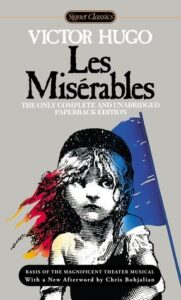
Victor Hugo's tale of injustice, heroism and love follows the fortunes of Jean Valjean, an escaped convict determined to put his criminal past behind him. But his attempts to become a respected member of the community are constantly put under threat: by his own conscience, when, owing to a case of mistaken identity, another man is arrested in his place; and by the relentless investigations of the dogged Inspector Javert. It is not simply for himself that Valjean must stay free, however, for he has sworn to protect the baby daughter of Fantine, driven to prostitution by poverty.
Emil Sinclair ist ein Junge, der in einem als "Scheinwelt" beschrieben bürgerlichen Elternhaus aufgewachsen ist. Dies ist die dramatische Geschichte seiner Abstieg - gesteuert durch sein frühreifen Schulkamerad Max Demian - in eine geheime und gefährliche Welt der Kleinkriminalität und Revolte gegen Konvention und seiner Erwachen zu Selbstheit.
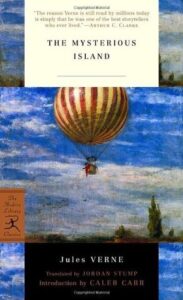
Based on the true story of Alexander Selkirk, who survived alone for almost five years on an uninhabited island off the coast of Chile, The Mysterious Island is considered by many to be Jules Verne’s masterpiece. “Wide-eyed mid-nineteenth-century humanistic optimism in a breezy, blissfully readable translation by Stump” (Kirkus Reviews), here is the enthralling tale of five men and a dog who land in a balloon on a faraway, fantastic island of bewildering goings-on and their struggle to survive as they uncover the island’s secret.
G. K. Chesterton's surreal masterpiece is a psychological thriller that centers on seven anarchists in turn-of-the-century London who call themselves by the names of the days of the week. Chesterton explores the meanings of their disguised identities in what is a fascinating mystery and, ultimately, a spellbinding allegory.
As Jonathan Lethem remarks in his Introduction, The real characters are the ideas. Chesterton's nutty agenda is really quite simple: to expose moral relativism and parlor nihilism for the devils he believes them to be. This wouldn't be interesting at all, though, if he didn't also show such passion for giving the devil his due. He animates the forces of chaos and anarchy with every ounce of imaginative verve and rhetorical force in his body.
Welcome Back!
Track your reading progress and sync your library.