From outside it was simply an ordinary-looking London pub, a place you’d have to be guided to more than once before you memorized its location, somewhere between Fleet Street and the Embankment. But if, by chance, an insider led you to the White Hart on a Wednesday night, you would have found yourself in the midst of a select gathering or writers, editors, scientists and interested laymen—drinking, swapping odd bits of information, and, like as not, listening to Harry Purvis’ memorable stories. A scientist by profession, Harry Purvis has had or heard about some of the most astonishing experiences—like the story of the carnivorous orchid that was used in a murder plot, or the one about the military computer that was converted to pacifism. There’s SILENCE PLEASE, involving a spurned lover and a device that was supposed to destroy sound; and BIG GAME HUNT, in which an ambitious researcher becomes so wrapped up in his latest projest—controlling animal behavior with electrical impulses— that he overlooks one tiny important detail. Such stories may challenge your powers of logic and strain your imagination. Yet even if you doubt their veracity, they’re guaranteed to provide you with hours of SF reading. Baron Munchausen, step aside.
Contains: Silence Please; Big Game Hunt; Patent Pending; Armaments Race; Critical Mass; The Ultimate Melody; The Pacifist; The Next Tenants; Moving Spirit; The Man Who Ploughed the Sea; The Reluctant Orchid; Cold War; What Goes Up; Sleeping Beauty & The Defenestration of Ermintrude
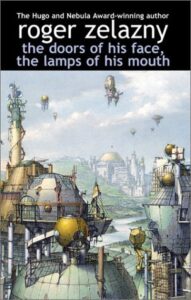
Here are strange, beautiful stories covering the full spectrum of the late Roger Zelazny's remarkable talents. In Doors of His Face, The Lamps of His Mouth, Zelazny's rare ability to mix the dream-like, disturbing imagery of fantasy with the real-life hardware of science fiction is on full display. His vivid imagination and fine prose made him one of the most highly acclaimed writers in his field. Contents: · The Doors of His Face, the Lamps of His Mouth · nv F&SF Mar ’65 · The Keys to December · nv New Worlds Aug ’66 · Devil Car [Sam Nurdock] · ss Galaxy Jun ’65 · A Rose for Ecclesiastes · nv F&SF Nov ’63 · The Monster and the Maiden · vi Galaxy Dec ’64 · Collector’s Fever · vi Galaxy Jun ’64 · This Mortal Mountain · nv If Mar ’67 · This Moment of the Storm · nv F&SF Jun ’66 · The Great Slow Kings · ss Worlds of Tomorrow Dec ’63 · A Museum Piece · ss Fantastic Jun ’63 · Divine Madness · ss Magazine of Horror Sum ’66 · Corrida · ss Anubis v1 #3 ’68 · Love Is an Imaginary Number · ss New Worlds Jan ’66 · The Man Who Loved the Faioli · ss Galaxy Jun ’67 · Lucifer · ss Worlds of Tomorrow Jun ’64
Harlan Ellison is probably best known as a script writer for sci-fi and fantasy movies and TV series such as the original Outer Limits, The Hunger, Logan's Run, and Babylon Five. But his range is much broader than that, encompassing stories, novels, essays, reviews, reminiscences, plays, even fake autobiographies. The Essential Ellison, a special limited edition personally signed and numbered by Ellison, contains 74 unabridged works, including such classics as "A Boy and His Dog," "Xenogenesis," and "Mefisto in Onyx."
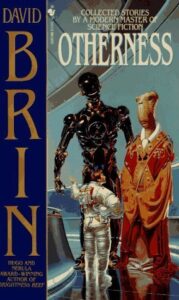
From multiple award-winning author David Brin comes this extraordinary collection of tales and essays of the near and distant future, as humans and aliens encounter the secrets of the cosmos--and of their own existence. In "Dr. Pak's Preschool" a woman discovers that her baby has been called upon to work while still in the womb. In "NatuLife" a married couple finds their relationship threatened by the wonders of sex by simulation. In "Sshhh . . . " the arrival of benevolent aliens on Earth leads to frenzy, madness . . . and unimaginable joy. In "Bubbles" a sentient starcraft reaches the limits of the universe--and dares to go beyond. These are but a few of the challenging speculations in Otherness, from the pen of an author whose urgent and compelling imaginative fiction challenges us to wonder at the shape and the nature of the universe--as well as at its future.
• The Giving Plague • (1988) • Myth Number 21 • (1990) • Story Notes (Transitions) • (1994) • Dr. Pak's Preschool • (1989) • Detritus Affected • (1993) • The Dogma of Otherness • [Editorial (Analog)] • (1986) • Sshhh ... • (1988) • Story Notes (Contact) • (1994) • Those Eyes • (1994) • What to Say to a UFO • (1994) • Bonding to Genji • (1992) • The Warm Space • (1985) • Whose Millennium? • (1994) • NatuLife ® • (1994) • Piecework • (1990) • Science versus Magic • (1990) • Bubbles • (1987) • Story Notes (Cosmos) • (1994) • Ambiguity • (1989) • What Continues ... And What Fails ... • (1991) • The Commonwealth of Wonder • (1990)
Wizardry, transforming its master into a cloud of fine mist...cloning, duplicating the ideal man ten times over...Utopia, in a city where almost everyone is perfectly happy...
Ursula Le Guin, author of The Earthsea Trilogy, has a special way of blending stirring adventure with fantasy that has made comparison with such masters as C.S. Lewis and J.R.R. Tolkien inevitable.
Now, in The Wind's Twelve Quarters, seventeen of her favorite stories reaffirm Ursula Le Guin as one of America's outstanding writers.
CONTENTS:
Foreword Semley's Necklace April in Paris The Masters Darkness Box The Word of Unbinding The Rule of Names Winter's King The Good Trip Nine Lives Things A Trip to the Head Vaster than Empires and More Slow The Stars Below The Field of Vision Direction of the Road The Ones Who Walk Away from Omelas The Day Before the Revolution
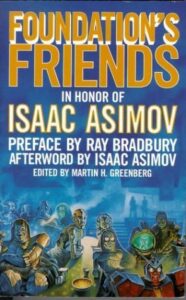
Original tales by such science fiction luminaries as Orson Scott Card, Harry Turtledove, and Connie Willis, written in honor of Isaac Asimov's fiftieth anniversary in the genre, are set in one of his fictional universes.
The recipient of numerous literary prizes, including the National Book Award, the Kafka Award, and the Pushcart Prize, Ursula K. Le Guin is renowned for her lyrical writing, rich characters, and diverse worlds. The Wind's Twelve Quarters collects seventeen powerful stories, each with an introduction by the author, ranging from fantasy to intriguing scientific concepts, from medieval settings to the future.
Including an insightful foreword by Le Guin, describing her experience, her inspirations, and her approach to writing, this stunning collection explores human values, relationships, and survival, and showcases the myriad talents of one of the most provocative writers of our time.
Maps in a Mirror brings together nearly all of Orson Scott Card's short fiction written between 1977 and 1990. For those readers who have followed this remarkable talent since the beginning, here are all those amazing stories gathered together in one place, with some extra surprises as well. For the many who are newly come to Card, here is chance to experience the wonder of a writer so versatile that he can handle everything from traditional narrative poetry to modern experimental fiction with equal ease and grace. The brilliant story-telling of the Alvin Maker books is no accident; the breathless excitement evoked by the Ender books is not a once-in-a-lifetime experience. In this enormous volume are forty-six stories, plus ten long, intensely personal essays, unique to this volume. In them the author reveals some of his reasons and motivations for writing, with a good deal of autobiography into the bargain. Contents: Introduction (Book 1: The Hanged Man, Tales of Dread) • essay by Orson Scott Card Eumenides in the Fourth Floor Lavatory (1979) / novelette by Orson Scott Card Quietus (1979) / short story by Orson Scott Card Deep Breathing Exercises (1979) / short story by Orson Scott Card Fat Farm (1980) / short story by Orson Scott Card Closing the Timelid (1979) / short story by Orson Scott Card Freeway Games (1979) / short story by Orson Scott Card A Sepulchre of Songs (1981) / novelette by Orson Scott Card Prior Restraint (1986) / short story by Orson Scott Card The Changed Man and the King of Words (1982) / novelette by Orson Scott Card Memories of My Head (1990) / short story by Orson Scott Card Lost Boys (1989) / short story by Orson Scott Card Afterword (Book 1: The Hanged Man, Tales of Dread) • essay by Orson Scott Card Introduction (Book 2: Flux, Tales of Human Futures) • essay by Orson Scott Card A Thousand Deaths [Tales of Capitol] (1978) / novelette by Orson Scott Card Clap Hands and Sing (1982) / short story by Orson Scott Card Dogwalker (1989) / novelette by Orson Scott Card But We Try Not to Act Like It (1979) / short story by Orson Scott Card I Put My Blue Genes On (1978) / short story by Orson Scott Card In the Doghouse (1978) / short story by Orson Scott Card and Jay A. Parry The Originist [Foundation] (1989) / novella by Orson Scott Card Afterword (Book 2: Flux, Tales of Human Futures) • essay by Orson Scott Card Introduction (Book 3: Maps in a Mirror, Fables and Fantasies) • essay by Orson Scott Card Unaccompanied Sonata (1979) / short story by Orson Scott Card A Cross-Country Trip to Kill Richard Nixon (1980) / novelette by Orson Scott Card The Porcelain Salamander (1981) • short story by Orson Scott Card Middle Woman (1981) / short story by Orson Scott Card The Bully and the Beast (1979) / novella by Orson Scott Card The Princess and the Bear (1980) / novelette by Orson Scott Card Sandmagic [Mither Mages] (1979) / novelette by Orson Scott Card The Best Day (1984) / short story by Orson Scott Card A Plague of Butterflies (1981) / short story by Orson Scott Card The Monkeys Thought 'Twas All in Fun (1979) / novelette by Orson Scott Card Afterword (Book 3: Maps in a Mirror, Fables and Fantasies) • essay by Orson Scott Card Introduction (Book 4: Cruel Miracles, Tales of Death, Hope, and Holiness) • essay by Orson Scott Card Mortal Gods (1979) / short story by Orson Scott Card Saving Grace (1987) / short story by Orson Scott Card Eye for Eye (1987) / novella by Orson Scott Card St. Amy's Tale (1980) / novelette by Orson Scott Card Kingsmeat (1978) / short story by Orson Scott Card Holy (1980) / novelette by Orson Scott Card Afterword (Book 4: Cruel Miracles, Tales of Death, Hope, and Holiness) • essay by Orson Scott Card Introduction (Book 5: Lost Songs, The Hidden Stories) • essay by Orson Scott Card Ender's Game [Ender Wiggin] (1977) / novelette by Orson Scott Card Mikal's Songbird (1978) / novelette by Orson Scott Card Prentice Alvin and the No-Good Plow [The Alvin Maker Saga] (1989) • poem by Orson Scott Card Malpractice (1977) / short story by Orson Scott Card Follower (1978) / short story by Orson Scott Card Hitching (1978) / short story by Orson Scott Card Damn Fine Novel (1989) / short story by Orson Scott Card Billy's Box (1978) / short story by Orson Scott Card The Best Family Home Evening Ever (1978) / short story by Orson Scott Card Bicicleta (1977) / short story by Orson Scott Card I Think Mom and Dad Are Going Crazy, Jerry (1979) / short story by Orson Scott Card Gert Fram (1977) / short story by Orson Scott Card Afterword (Book 5: Lost Songs, The Hidden Stories) • essay by Orson Scott Card
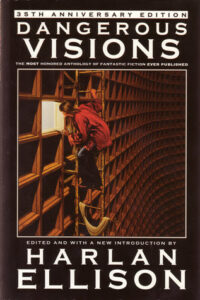
The most honored anthology of fantastic fiction ever published, featuring the works of such luminaries as Isaac Asimov, Robert Silverberg, Philip Jose Farmer, Robert Bloch, Philip K. Dick, Larry Niven, Fritz Leiber, Poul Anderson, Damon Knight, J.G. Ballard, John Brunner, Frederik Pohl, Roger Zelazny and Samuel Delany.
Contents xi • Foreword: Year 2002 (Dangerous Visions 35th Anniversary Edition) • (2002) • essay by Michael Moorcock xiii • Introduction: Year 2002 (Dangerous Visions 35th Anniversary Edition • (2002) • essay by Harlan Ellison xxiii • Foreword 1-The Second Revolution • (1967) • essay by Isaac Asimov xxxiii • Introduction: Thirty-Two Soothsayers • (1967) • essay by Harlan Ellison (variant of Thirty-Two Soothsayers) xxxix • Foreword 2-Harlan and I • (1967) • essay by Isaac Asimov 1 • Evensong • (1967) • shortstory by Lester del Rey 9 • Flies • (1967) • shortstory by Robert Silverberg 21 • The Day After the Day the Martians Came • (1967) • shortstory by Frederik Pohl (variant of The Day the Martians Came) 30 • Riders of the Purple Wage • (1967) • novella by Philip José Farmer 105 • The Malley System • (1967) • shortstory by Miriam Allen deFord 115 • A Toy for Juliette • (1967) • shortstory by Robert Bloch 128 • The Prowler in the City at the Edge of the World • (1967) • novelette by Harlan Ellison 154 • The Night That All Time Broke Out • (1967) • shortstory by Brian W. Aldiss 169 • The Man Who Went to the Moon - Twice • (1967) • shortstory by Howard Rodman 181 • Faith of Our Fathers • (1967) • novelette by Philip K. Dick 216 • The Jigsaw Man • [Known Space] • (1967) • shortstory by Larry Niven 231 • Gonna Roll the Bones • (1967) • novelette by Fritz Leiber 256 • Lord Randy, My Son • (1967) • shortstory by Joe L. Hensley 272 • Eutopia • (1967) • novelette by Poul Anderson 295 • Incident in Moderan • [Moderan] • (1967) • shortstory by David R. Bunch 299 • The Escaping • (1967) • shortstory by David R. Bunch 305 • The Doll-House • (1967) • shortstory by James Cross 326 • Sex and/or Mr. Morrison • (1967) • shortstory by Carol Emshwiller 338 • Shall the Dust Praise Thee? • (1967) • shortstory by Damon Knight 344 • If All Men Were Brothers, Would You Let One Marry Your Sister? • (1967) • novella by Theodore Sturgeon 390 • What Happened to Auguste Clarot? • (1967) • shortstory by Larry Eisenberg 396 • Ersatz • (1967) • shortstory by Henry Slesar 404 • Go, Go, Go, Said the Bird • (1967) • shortstory by Sonya Dorman 412 • The Happy Breed • (1967) • shortstory by John Sladek [as by John T. Sladek ] 433 • Encounter with a Hick • (1967) • shortstory by Jonathan Brand 439 • From the Government Printing Office • (1967) • shortstory by Kris Neville 447 • Land of the Great Horses • (1967) • shortstory by R. A. Lafferty 458 • The Recognition • (1967) • shortstory by J. G. Ballard 472 • Judas • (1967) • shortstory by John Brunner 483 • Test to Destruction • (1967) • novelette by Keith Laumer 510 • Carcinoma Angels • (1967) • shortstory by Norman Spinrad 523 • Auto-da-Fé • (1967) • shortstory by Roger Zelazny 532 • Aye, and Gomorrah . . . • (1967) • shortstory by Samuel R. Delany
Welcome Back!
Track your reading progress and sync your library.