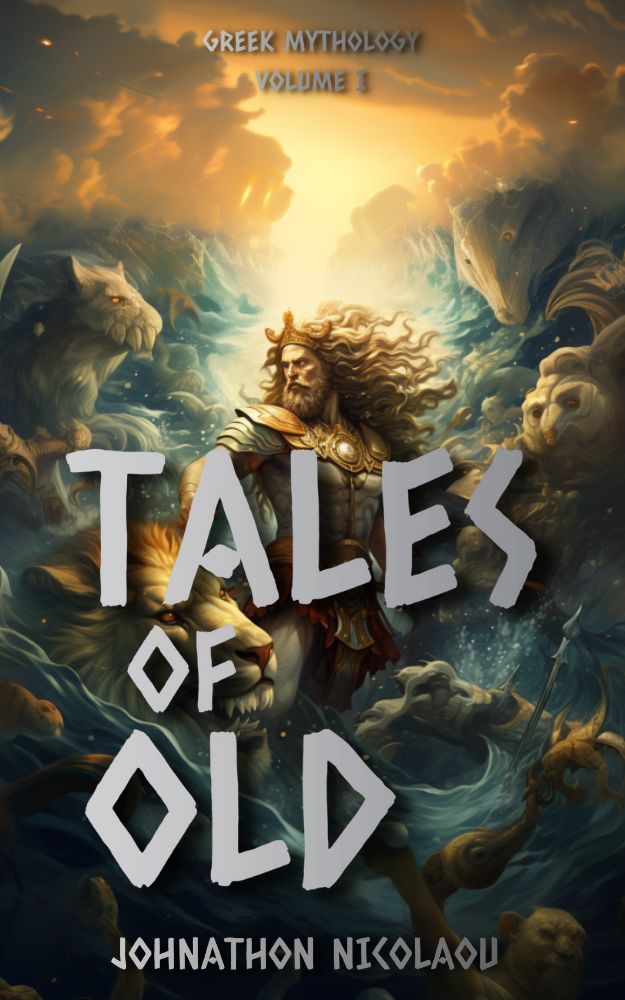
Greek mythology has stood the test of time as the stories are passed down from one generation to the next. Now the most exciting adventures have been brought to you as short stories. With eight action packed retellings, follow the adventures of gods and heroes alike as they attempt to slay monsters, and each other… Volume 1 retells the first three labours of Hercules, the heartbreaking tragedy and subsequent defeat of Medusa, Hades’ quest for love, and both the heroic and less than appealing sides of Zeus.
Books similar to Tales of Old: Greek Mythology: Volume 1
Humans and half-bloods agree—Percy Jackson and the Olympians is a series fit for heroes! Relive the adventure from the beginning with this boxed set of the first three books with glorious new cover art by John Rocco.
The Lightning Thief
Percy Jackson is a good kid, but he can't seem to focus on his schoolwork or control his temper. When his mom tells him the truth about where he came from, she takes him to the one place he'll be safe—Camp Half-Blood, a summer camp for demigods (on Long Island). There, Percy learns that the father he never knew is actually Poseidon, God of the Sea. Soon Percy finds himself caught up in a mystery that could lead to disastrous consequences. Together with his friends—a satyr and another the demigod daughter of Athena—Percy sets out on a quest to reach the gates of the Underworld (located in a recording studio in Hollywood) and prevent a catastrophic war between the gods.
The Sea of Monsters
After a summer spent trying to prevent a catastrophic war among the Greek gods, Percy Jackson finds his seventh-grade school year unnervingly calm. But things don't stay quiet for long. Percy soon discovers there is trouble at Camp Half-Blood: the magical borders which protect Half-Blood Hill have been poisoned by a mysterious enemy, and the only safe haven for demigods is on the verge of being overrun by mythological monsters. To save the camp, Percy needs the help of his best friend, Grover, who has been taken prisoner by the Cyclops Polyphemus on an island somewhere in the Sea of Monsters—the dangerous waters Greek heroes have sailed for millennia—only today, the Sea of Monsters goes by a new name: the Bermuda Triangle. Now Percy and his friends must retrieve the Golden Fleece from the Island of the Cyclops by the end of the summer or Camp Half-Blood will be destroyed. But first, Percy will learn a stunning new secret about his family—one that makes him question whether being claimed as Poseidon's son is an honor or simply a cruel joke…
The Titan's Curse
When Percy Jackson receives a distress call from his friend Grover, he immediately prepares for battle. He knows he'll need his powerful demigod allies, Annabeth and Thalia, at his side; his trusty bronze sword Riptide; and…a ride from his mom. The demigods race to the rescue, to find that Grover has made an important discovery: two new powerful half-bloods whose parentage is unknown. But that's not all that awaits them. The Titan lord, Kronos, has set up his most devious trap yet, and the young heroes have unwittingly fallen prey. Hilarious and action-packed, this third adventure in the series finds Percy faced with his most dangerous challenge so far: the chilling prophecy of the Titan's curse.
The world-renowned classic that has enthralled and delighted millions of readers with its timeless tales of gods and heroes.
Edith Hamilton's Mythology succeeds like no other book in bringing to life for the modern reader the Greek, Roman, and Norse myths that are the keystone of Western culture--the stories of gods and heroes that have inspired human creativity from antiquity to the present. We meet the Greek gods on Olympus and Norse gods in Valhalla. We follow the drama of the Trojan War and the wanderings of Odysseus. We hear the tales of Jason and the Golden Fleece, Cupid and Psyche, and mighty King Midas. We discover the origins of the names of the constellations. And we recognize reference points for countless works of art, literature, and cultural inquiry--from Freud's Oedipus complex to Wagner's Ring Cycle of operas to Eugene O'Neill's Mourning Becomes Electra. Praised throughout the world for its authority and lucidity, Mythology is Edith Hamilton's masterpiece--the standard by which all other books on mythology are measured.
At last, the breathtaking, action-packed finale of the #1 bestselling Trials of Apollo series is here! Will the Greek god Apollo, cast down to earth in the pathetic moral form of a teenager named Lester Papadopoulos, finally regain his place on Mount Olympus? Lester's demigod friends at Camp Jupiter just helped him survive attacks from bloodthirsty ghouls, an evil Roman king and his army of the undead, and the lethal emperors Caligula and Commodus. Now the former god and his demigod master Meg must follow a prophecy uncovered by Ella the harpy. Lester's final challenge will be at the Tower of Nero, back in New York. Will Meg have a last showdown with her father? Will this helpless form of Apollo have to face his arch nemesis, Python? Who will be on hand at Camp Half-Blood to assist? These questions and more will be answered in this book that all demigods are eagerly awaiting.
Ovid’s sensuous and witty poem, in an accessible translation by David Raeburn
In Metamophoses, Ovid brings together a dazzling array of mythological tales, ingeniously linked by the idea of transformation—often as a result of love or lust—where men and women find themselves magically changed into new and sometimes extraordinary beings. Beginning with the creation of the world and ending with the deification of Augustus, Ovid interweaves many of the best-known myths and legends of ancient Greece and Rome, including Daedalus and Icarus, Pyramus and Thisbe, Pygmalion, Perseus and Andromeda, and the fall of Troy. Erudite but light-hearted, dramatic and yet playful, Metamorphoses has influenced writers and artists throughout the centuries from Shakespeare and Titian to Picasso and Ted Hughes.
For more than seventy years, Penguin has been the leading publisher of classic literature in the English-speaking world. With more than 1,700 titles, Penguin Classics represents a global bookshelf of the best works throughout history and across genres and disciplines. Readers trust the series to provide authoritative texts enhanced by introductions and notes by distinguished scholars and contemporary authors, as well as up-to-date translations by award-winning translators.
In myth, Theseus was the slayer of the child-devouring Minotaur in Crete. What the founder-hero might have been in real life is another question, brilliantly explored in The King Must Die. Drawing on modern scholarship and archaeological findings at Knossos, Mary Renault's Theseus is an utterly lifelike figure—a king of immense charisma, whose boundless strivings flow from strength and weakness—but also one steered by implacable prophecy.
The story follows Theseus's adventures from Troizen to Eleusis, where the death in the book's title is to take place, and from Athens to Crete, where he learns to jump bulls and is named king of the victims. Richly imbued with the spirit of its time, this is a page-turner as well as a daring act of imagination.
Renault's story of Theseus continues with the sequel The Bull from the Sea.
The ancient city of Troy has withstood a decade under siege of the powerful Greek army, which continues to wage bloody war over a stolen woman—Helen. In the Greek camp, another woman—Briseis—watches and waits for the war's outcome. She was queen of one of Troy's neighboring kingdoms, until Achilles, Greece's greatest warrior, sacked her city and murdered her husband and brothers. Briseis becomes Achilles's concubine, a prize of battle, and must adjust quickly in order to survive a radically different life, as one of the many conquered women who serve the Greek army.
When Agamemnon, the brutal political leader of the Greek forces, demands Briseis for himself, she finds herself caught between the two most powerful of the Greeks. Achilles refuses to fight in protest, and the Greeks begin to lose ground to their Trojan opponents. Keenly observant and coolly unflinching about the daily horrors of war, Briseis finds herself in an unprecedented position, able to observe the two men driving the Greek army in what will become their final confrontation, deciding the fate not only of Briseis's people but also of the ancient world at large.
Briseis is just one among thousands of women living behind the scenes in this war—the slaves and prostitutes, the nurses, the women who lay out the dead—all of them erased by history. With breathtaking historical detail and luminous prose, Pat Barker brings the teeming world of the Greek camp to vivid life. She offers nuanced, complex portraits of characters and stories familiar from mythology, which, seen from Briseis's perspective, are rife with newfound revelations. Barker's latest builds on her decades-long study of war and its impact on individual lives—and it is nothing short of magnificent.
Escape from the realm of the dead is impossible when someone there wants you back.
Seventeen-year-old Pierce Oliviera isn’t dead.
Not this time.
But she is being held against her will in the dim, twilit world between heaven and hell, where the spirits of the deceased wait before embarking upon their final journey.
Her captor, John Hayden, claims it’s for her own safety. Because not all the departed are dear. Some are so unhappy with where they ended up after leaving the Underworld, they’ve come back as Furies, intent on vengeance…on the one who sent them there and on the one whom he loves.
But while Pierce might be safe from the Furies in the Underworld, far worse dangers could be lurking for her there…and they might have more to do with its ruler than with his enemies.
And unless Pierce is careful, this time there’ll be no escape.
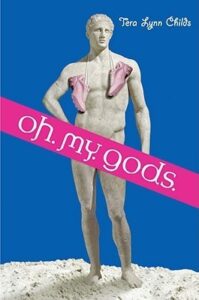
A modern girl's comedic odyssey in a school filled with the descendants of Greek gods.
When Phoebe's mom returns from Greece with a new husband and moves them to an island in the Aegean, Phoebe's plans for her senior year and track season are ancient history. Now she must attend the uber exclusive academy, where admission depends on pedigree, namely, ancestry from Zeus, Hera, and other Greek gods. That's right, they're real, not myth, and their teen descendants are like the classical heroes: supersmart and super beautiful with a few superpowers. And now they're on her track team! Armed only with her Nikes and the will to win, Phoebe races to find her place among the gods.
Welcome Back!
Track your reading progress and sync your library.