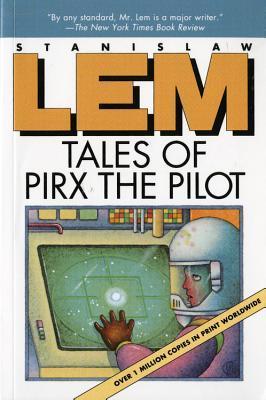
In Pilot Pirx, Lem has created an irresistibly likable character: an astronaut who gives the impression of still navigating by the seat of his pants-a bumbler but an inspired one. By investing Pirx with a range of human foibles, Lem offers a wonderful vision of the audacity, childlike curiosity, and intuition that can give humans the courage to confront outer space. Translated by Louis Iribarne.
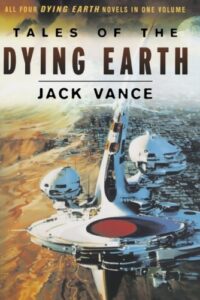
Jack Vance is one of the most remarkable talents to ever grace the world of science fiction. His unique, stylish voice has been beloved by generations of readers. One of his enduring classics is his 1964 novel, The Dying Earth, and its sequels--a fascinating, baroque tale set on a far-future Earth, under a giant red sun that is soon to go out forever.
This omnibus volume comprised all four books in the series The Dying Earth The Eyes of the Overworld Cugel's Saga Rialto the Marvellous
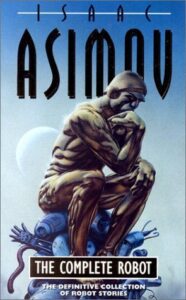
THE COMPLETE ROBOT is the definitive anthology of Asimov's stunning visions of a robotic future…
In these stories, Isaac Asimov creates the Three Laws of Robotics and ushers in the Robot Age: when Earth is ruled by master-machines and when robots are more human than mankind. Contents
9 • Introduction (The Complete Robot) • (1982) • essay by Isaac Asimov 15 • A Boy's Best Friend • (1975) • short story by Isaac Asimov 19 • Sally • (1953) • short story by Isaac Asimov 41 • Someday • (1956) • short story by Isaac Asimov 55 • Point of View • [Multivac] • (1975) • short story by Isaac Asimov 59 • Think! • (1977) • short story by Isaac Asimov 70 • True Love • (1977) • short story by Isaac Asimov 77 • Robot AL-76 Goes Astray • (1942) • short story by Isaac Asimov 93 • Victory Unintentional • (1942) • short story by Isaac Asimov 117 • Stranger in Paradise • (1974) • novelette by Isaac Asimov 151 • Light Verse • (1973) • short story by Isaac Asimov 157 • Segregationist • (1967) • short story by Isaac Asimov 164 • Robbie • (1940) • short story by Isaac Asimov (variant of Strange Playfellow) 191 • Let's Get Together • (1957) • short story by Isaac Asimov 211 • Mirror Image • [Elijah Bailey / R. Daneel Olivaw] • (1972) • short story by Isaac Asimov 231 • The Tercentenary Incident • (1976) • short story by Isaac Asimov 253 • First Law • [Mike Donovan] • (1956) • short story by Isaac Asimov 257 • Runaround • [Mike Donovan] • (1942) • novelette by Isaac Asimov 280 • Reason • [Mike Donovan] • (1941) • short story by Isaac Asimov 302 • Catch That Rabbit • [Mike Donovan] • (1944) • short story by Isaac Asimov 329 • Liar! • [Susan Calvin] • (1941) • short story by Isaac Asimov 350 • Satisfaction Guaranteed • [Susan Calvin] • (1951) • short story by Isaac Asimov 368 • Lenny • [Susan Calvin] • (1958) • short story by Isaac Asimov 385 • Galley Slave • [Susan Calvin] • (1957) • novelette by Isaac Asimov 427 • Little Lost Robot • [Susan Calvin] • (1947) • novelette by Isaac Asimov 459 • Risk • [Susan Calvin] • (1955) • novelette by Isaac Asimov 490 • Escape! • [Susan Calvin] • (1945) • short story by Isaac Asimov 518 • Evidence • [Susan Calvin] • (1946) • novelette by Isaac Asimov 546 • The Evitable Conflict • [Susan Calvin] • (1950) • novelette by Isaac Asimov 575 • Feminine Intuition • [Susan Calvin] • (1969) • novelette by Isaac Asimov 605 • ... That Thou Art Mindful of Him • (1974) • novelette by Isaac Asimov (variant of —That Thou Art Mindful of Him!) 635 • The Bicentennial Man • (1976) • novelette by Isaac Asimov 683 • A Last Word • (1982) • essay by Isaac Asimov
THE COMPLETE ROBOT is the ultimate collection of timeless, amazing and amusing robot stories from the greatest science fiction writer of all time, offering golden insights into robot thought processes. Asimov's Three Laws of Robotics were programmed into real computers thirty years ago at the Massachusetts Institute of Technology - with surprising results. Readers of today still have many surprises in store...
Isaac Asimov's I, Robot launches readers on an adventure into a not-so-distant future where man and machine , struggle to redefinelife, love, and consciousness—and where the stakes are nothing less than survival. Filled with unforgettable characters, mind-bending speculation, and nonstop action, I, Robot is a powerful reading experience from one of the master storytellers of our time.
I, ROBOT
They mustn't harm a human being, they must obey human orders, and they must protect their own existence...but only so long as that doesn't violate rules one and two. With these Three Laws of Robotics, humanity embarked on perhaps its greatest adventure: the invention of the first positronic man. It was a bold new era of evolution that would open up enormous possibilities—and unforeseen risks. For the scientists who invented the earliest robots weren't content that their creations should ' remain programmed helpers, companions, and semisentient worker-machines. And soon the robots themselves; aware of their own intelligence, power, and humanity, aren't either.
As humans and robots struggle to survive together—and sometimes against each other—on earth and in space, the future of both hangs in the balance. Human men and women confront robots gone mad, telepathic robots, robot politicians, and vast robotic intelligences that may already secretly control the world. And both are asking the same questions: What is human? And is humanity obsolete?
In l, Robot Isaac Asimov changes forever our perception of robots, and human beings and updates the timeless myth of man's dream to play god. with all its rewards—and terrors. --front flap
He can make you see things that have never been seen by human eyes.... feel things that no flesh-and-blood creature has ever felt. He can create visions so compelling that they literally seem to dance before your eyes. He can push you back to the beginnings of time and then suddenly, without warning, thrust you forward t the outmost limits of the future. He can make you so much a part of his strange worlds that you literally scream to get out.
Seventeen breathtaking stories by the master of the weird and wonderful, including the space-age classic, FROST AND FIRE.
Here in one monumental volume are all 21 of the stories, novellas and novels making up Heinlein's famous Future History—the rich, imaginative architecture of Man's destiny that many consider his greatest and most prophetic work.* Introduction - Damon Knight* Life-Line* The Roads Must Roll* Blowups Happen* The Man Who Sold the Moon* Delilah and the Space-Rigger* Space Jockey* Requiem* The Long Watch* Gentleman, Be Seated* The Black Pits of Luna* "It's Great to Be Back!"* "—We Also Walk Dogs"* Searchlight* Ordeal in Space* The Green Hills of Earth* Logic of Empire* The Menace from Earth* "If This Goes On—"* Coventry* Misfit* Methuselah's Children
The Golden Apples of the Sun is a collection of thirty-two of Ray Bradbury's most famous tales. From a lonely coastal lighthouse to the pouring rain of Venus to the ominous silence of a murder scene, Bradbury is our sure-handed guide not only to surprising manifestations of the future but also to the wonders of a present we could never have imagined on our own.
That The Illustrated Man has remained in print since being published in 1951 is fair testimony to the universal appeal of Ray Bradbury's work. Only his second collection (the first was Dark Carnival, later reworked into The October Country), it is a marvelous, if mostly dark, quilt of science fiction, fantasy, and horror. In an ingenious framework to open and close the book, Bradbury presents himself as a nameless narrator who meets the Illustrated Man--a wanderer whose entire body is a living canvas of exotic tattoos. What's even more remarkable, and increasingly disturbing, is that the illustrations are themselves magically alive, and each proceeds to unfold its own story, such as "The Veldt," wherein rowdy children take a game of virtual reality way over the edge. Or "Kaleidoscope," a heartbreaking portrait of stranded astronauts about to reenter our atmosphere--without the benefit of a spaceship. Or "Zero Hour," in which invading aliens have discovered a most logical ally--our own children. Even though most were written in the 1940s and 1950s, these 18 classic stories will be just as chillingly effective 50 years from now. --Stanley Wiater
Contents:
· Prologue: The Illustrated Man · ss * · The Veldt [“The World the Children Made”] · ss The Saturday Evening Post Sep 23 ’50 · Kaleidoscope · ss Thrilling Wonder Stories Oct ’49 · The Other Foot · ss New Story Magazine Mar ’51 · The Highway [as by Leonard Spalding] · ss Copy Spr ’50 · The Man · ss Thrilling Wonder Stories Feb ’49 · The Long Rain [“Death-by-Rain”] · ss Planet Stories Sum ’50 · The Rocket Man · ss Maclean’s Mar 1 ’51 · The Fire Balloons [“‘In This Sign...’”] · ss Imagination Apr ’51 · The Last Night of the World · ss Esquire Feb ’51 · The Exiles [“The Mad Wizards of Mars”] · ss Maclean’s Sep 15 ’49; F&SF Win ’50 · No Particular Night or Morning · ss * · The Fox and the Forest [“To the Future”] · ss Colliers May 13 ’50 · The Visitor · ss Startling Stories Nov ’48 · The Concrete Mixer · ss Thrilling Wonder Stories Apr ’49 · Marionettes, Inc. [Marionettes, Inc.] · ss Startling Stories Mar ’49 · The City [“Purpose”] · ss Startling Stories Jul ’50 · Zero Hour · ss Planet Stories Fll ’47 · The Rocket [“Outcast of the Stars”] · ss Super Science Stories Mar ’50 · Epilogue · aw *
Welcome Back!
Track your reading progress and sync your library.